What Plants Benefit From Grow Lights?
The plants that gain most are not the ones that want the most light — they are the ones with the biggest gap between what they want and what a room actually supplies.
By Scooter M. — An enthusiast who's genuinely into this. I read the manuals, compile the published specs, and do the math. No lab coat.
Published · How we pick
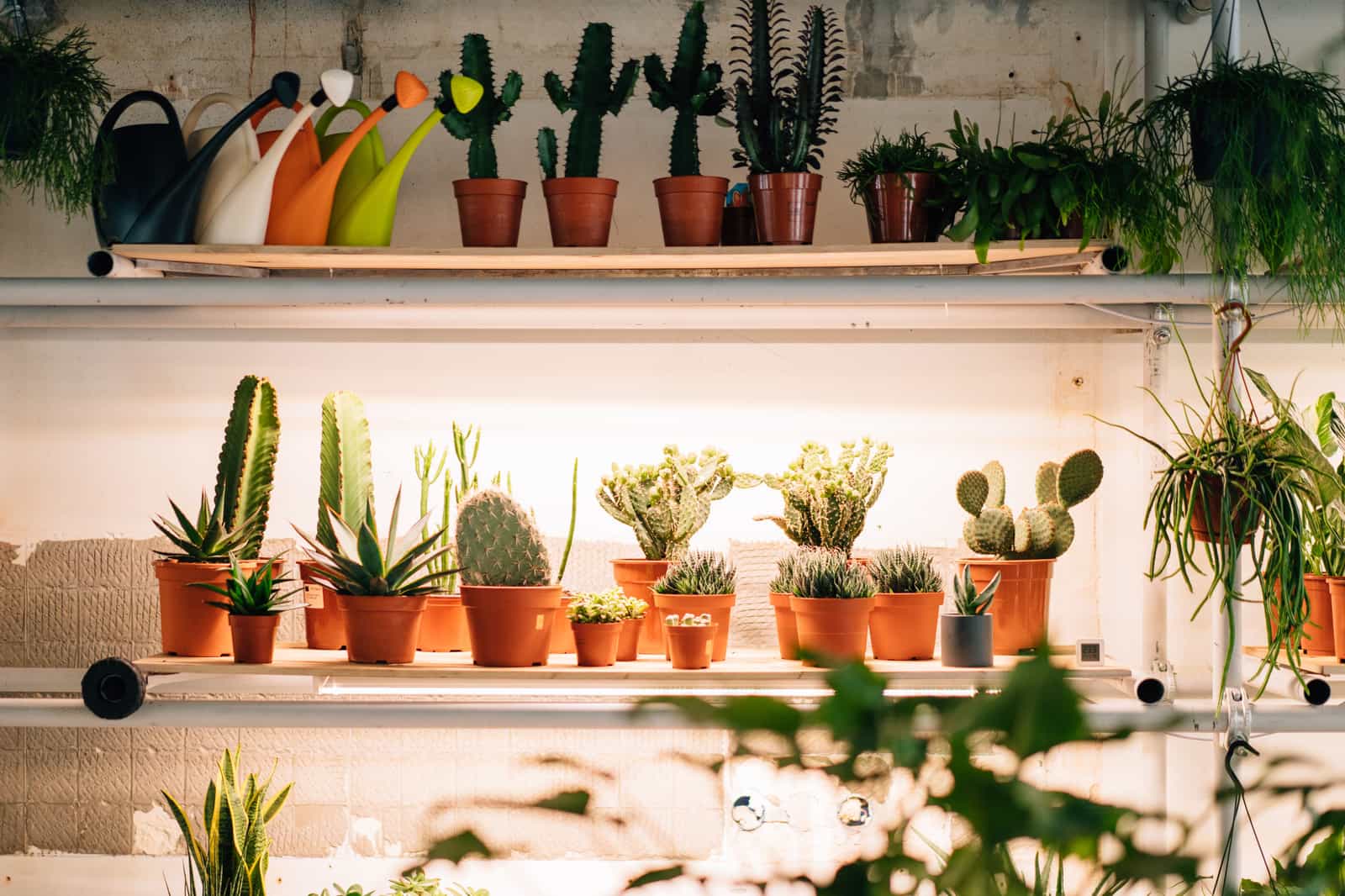
Photographs on this site are licensed stock and are illustrative of the fixture type. We do not own the units we write about.
How this page is funded: the buy links here are Amazon Associates links, and we earn a commission on qualifying purchases at no extra cost to you. We have not been paid to feature anything on this page, we accept no free product, and commission plays no part in the ranking. Full disclosure.
We have not tested these units. Everything below comes from the manufacturer’s own published specifications, or from arithmetic we have shown our working for. Where a figure is not published, we say so instead of estimating one. Read the method.
Quick picks
Efficacy is photons out per joule in. Where a manufacturer publishes it we quote theirs; where they publish photon output and wattage but not efficacy, we divide and label it as ours; where they publish neither, the cell says so rather than guessing. Tap a row for the full write-up.
| # | Product | Best for | Efficacy | Price |
|---|---|---|---|---|
| 1 | 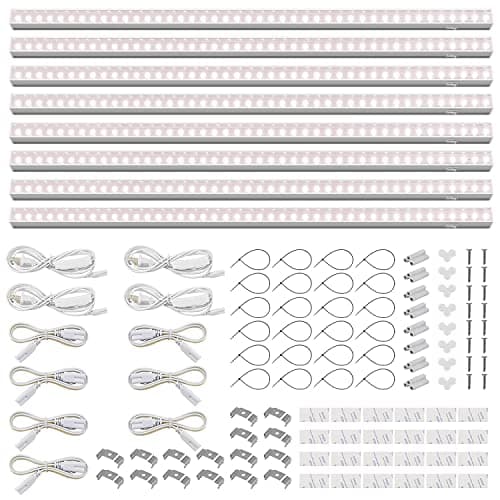 Barrina T5 4ft Grow Light Strips The default seed-starting bar for good reasons — 4 ft long, linkable in series, cheap per foot — and the reason we built a coverage calculator, because Barrina publishes no photon data whatsoever. | A shelf of high-gap plants | Not published | |
| 2 | 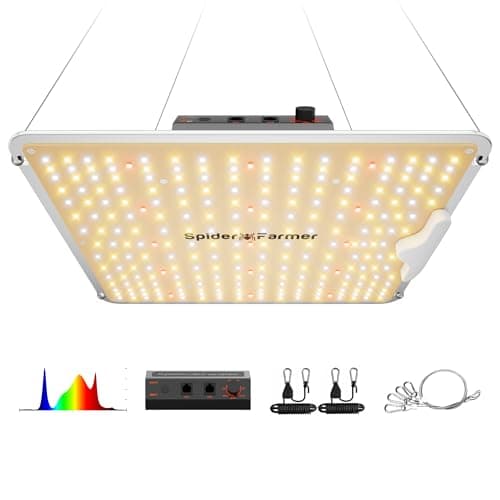 Spider Farmer SF1000 Publishes PPF to two decimal places and an efficacy figure that actually divides out of it. That internal consistency is rarer in this category than it should be. | A dense high-light block | 2.5 umol/J | |
| 3 | 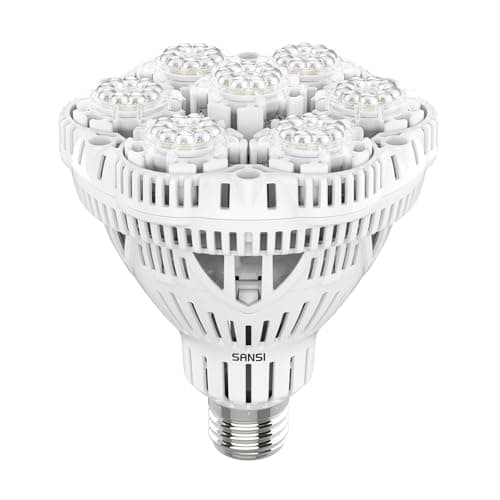 SANSI 36W BR30 Grow Light Bulb The rare grow bulb that publishes both PPF and a PPFD figure with the measurement distance attached, which is the only reason it can be sized honestly. | One plant, placed by numbers | 1.82 umol/J (ours) | |
| 4 | 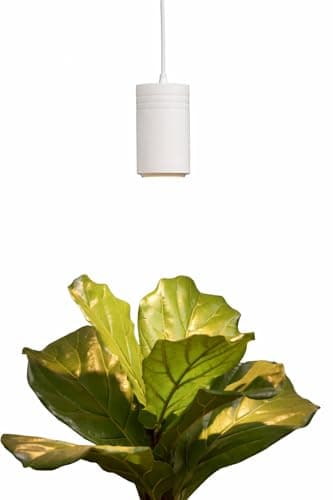 Soltech Aspect Gen 2 The only fixture here you would willingly hang in a living room, and the only one publishing PPFD at three separate distances so it can actually be placed by the numbers. | A specimen on display | 1.39 umol/J (ours) | |
| 5 | 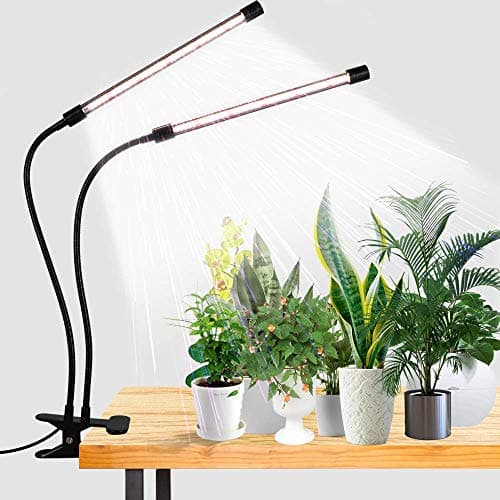 GooingTop Clip Grow Light The cheapest way to put real light on one plant on one desk, and honest about being exactly that — a 10 W clip lamp with a repeating timer. | Testing a marginal case | Not published |
The reasoning
Most answers to this question are a list of plants that like bright light. That is the wrong list, and following it leads people to buy a fixture for the plant that needed it least.
Benefit is a gap, not a level. What decides whether a grow light changes anything is the distance between what the plant wants and what its current position actually supplies. A plant that wants a lot and already gets a lot gains nothing. A plant that wants little and gets almost nothing can gain a great deal.
Not the one with the highest published target. A basil plant in a north kitchen and a basil plant on a south sill in July have the same requirement and completely different amounts to gain.
How we ranked benefit
Three inputs, all of which we can source or compute rather than assert:
- The published band the plant sits in. University of Minnesota Extension gives low as 50–150 µmol/m²/s, medium as 150–250 and high as 250–450. That is the demand side.
- What a typical indoor position supplies. This is where the gap opens. Ordinary rooms away from a window supply very little; a bright sill in summer supplies a lot; the same sill in January supplies a fraction of its June figure.
- Whether the plant visibly converts extra light. Some plants respond fast and obviously — seedlings within days. Others are slow enough that the improvement is real but hard to perceive for a season.
The published targets themselves are tabulated in PPFD targets by plant type. This page is the layer on top: what those targets are worth acting on.
The ranking
| Plant group | Published band | Benefit | Why |
|---|---|---|---|
| Seedlings and transplants | Medium–high (200–300) | Transformative | The gap is enormous and the response is visible in days. Under-lit seedlings stretch permanently within a week |
| Herbs — basil, mint, leafy types | High (250–400) | Transformative | The most under-lit plant in most homes. Kitchens rarely supply the high band, and herbs go leggy and flavorless below it |
| Salad greens and microgreens | High (250–400) | Transformative | Growth rate is the entire point of the crop, and growth rate tracks light closely here |
| Succulents, cacti, jade | High (300–450) | Transformative in winter | Etiolation on windowsill succulents is a light deficit. The stretched growth never reverses, so preventing it is the whole value |
| Citrus and fruiting plants | Above the published bands (450+) | High, with a ceiling | A fixture reliably prevents winter leaf drop. Reaching the fruiting level over a full canopy is beyond one consumer light |
| Orchids | Low–medium (100–200) | Worthwhile | Reblooming is light-sensitive, and many indoor orchids sit just below the level that triggers it |
| Monstera, philodendron, rubber plant | Low–medium (100–200) | Worthwhile | Bigger leaves and shorter gaps between them near the top of the range. Real, but slow to become obvious |
| Ferns, calathea, peace lily | Low (50–150) | Situational | Genuinely helped in a dark room, easily overdone. These scorch under high-intensity light |
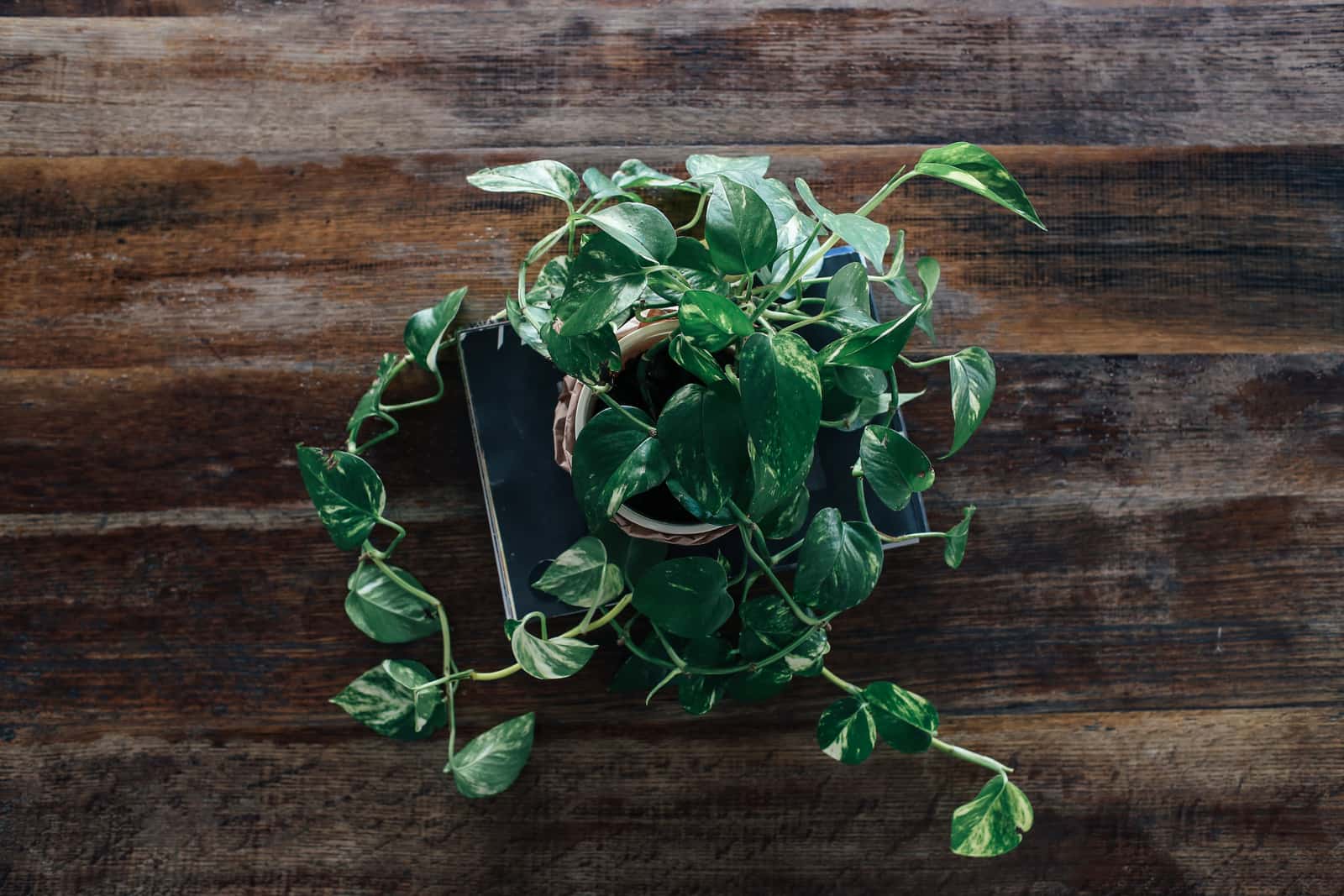
| Pothos, snake plant, ZZ | Low (50–150) | Marginal unless the spot is dark | These tolerate low light well. In a room with any usable window a fixture changes little |
The transformative group, and why the gap is so large
Herbs make the clearest case, because almost everyone has tried and failed at a kitchen basil plant.
Herbs want roughly 250–400 µmol/m²/s. Call it 300 as a working target.
A kitchen counter set back from a window is commonly a low-light position — the bottom end of the published bands, well under 150.
So the plant is receiving somewhere under half of what it wants, and frequently far less. That is why supermarket basil declines on a counter within weeks: the failure is not care, it is arithmetic.
Closing that gap over a small area is cheap. A 3 × 1 ft strip of counter at 300 µmol/m²/s needs 300 × 0.279 ÷ 0.8 = 105 µmol/s — well under half a single 100 W panel.
Seedlings are the other clear case, and the one where the response is fastest. University of New Hampshire Extension puts the seedling target at about 12 moles per square meter per day; under-supplied seedlings stretch into pale floppy stems within days and never fully recover. That combination — large gap, fast irreversible response — is what “transformative” means in the table above. The detail is in how much light seedlings need.
The marginal group, stated honestly
A page like this is only useful if it also tells you when not to bother.
Pothos, snake plants and ZZ plants genuinely tolerate low light. In a room with any usable window they sit inside their published band already, and adding a fixture buys you a somewhat faster growth rate rather than a different plant. If your snake plant is stable and you are choosing where to spend, spend it on the herbs.
The exception is a genuinely dark position — an interior hallway, a windowless office, a north room with the blind half down. There the same plant can be below the band entirely, and the characteristic symptom is a plant that has produced no new growth in a year. That is worth fixing, and it is covered in grow lights for snake plants.
Ferns and calathea deserve their own warning. They are low-band plants that are actively harmed by high-intensity light — a fixture sized for herbs and pointed at a maidenhair fern will scorch it. Benefit here is entirely about the position, and the fixture must be sized down or placed at the edge of the footprint.
The same plant changes tier with the season
This is the part most plant lists miss. Benefit is not a fixed property of a species, because the supply side moves.
| Plant and position | June | January |
|---|---|---|
| Basil on a south sill | Marginal — the window supplies the high band | Transformative — the same sill falls far short |
| Monstera 6 ft into a bright room | Worthwhile | Transformative — the ambient level drops with the day length |
| Jade on a west sill | Marginal | Transformative — this is when the stretching happens |
| Snake plant in a hallway | Worthwhile — the spot is dark year-round | Worthwhile — little seasonal change in an interior room |
| Seed trays in a basement | Not applicable | Transformative — there is no natural supply at all |
The practical reading: the plants worth lighting in winter are a much longer list than the plants worth lighting in summer, and a plant that declines every January and recovers every April is telling you exactly which list it belongs on. The seasonal arithmetic is in winter daylight loss and what to add.
How to tell which tier YOUR plant is in
Without a meter you cannot measure the supply side directly, and we will not pretend a phone app substitutes for a quantum sensor. What works is observation:
- Stretched growth with long gaps between leaves — the plant is below its band. High benefit, whatever the species.
- New leaves smaller and paler than the old ones — same conclusion, on a slower timescale.
- No new growth for a year — the classic low-light plant in a too-dark spot. Worth fixing.
- Leaning hard toward the window — directional growth means the plant is hunting for light it is not getting.
- Steady compact growth and good color — the supply is adequate. A fixture will speed things up and not much more.
- The shadow test. Extension guidance on indoor plant lighting uses shadow sharpness as a rough proxy: a hard-edged shadow means high light, a soft one medium, barely any shadow means low.
What to buy, by tier
Every pick below carries its real weakness, because none of these is without one.
A shelf of transformative-tier plants — linked 4 ft strips
Herbs, greens, seedlings and succulents all want the high band, and they are usually on a shelf, which is a long shallow rectangle. Linear strips put emitters along that shape; they draw 20 W each and link up to 8 in series from one plug.
The con: Barrina publishes no photon flux, no light density and no efficiency figure for any strip in the range. We checked the product page directly. You cannot size these in advance — you are buying on shape and price and judging by result.
A dense high-light block — Spider Farmer SF1000
Publishes 249.21 µmol/s, 100 W and 2.5 µmol/J, and those figures confirm each other: 249.21 ÷ 100 = 2.49. Over a 2 × 2 ft block it computes to roughly 536 µmol/m²/s, which is above the high band, so you would raise or dim it.
The con: no light-density figure at any stated distance, so unlike a bulb you cannot place it by arithmetic. And over a long shelf a square panel lights the middle and misses the ends.
One worthwhile-tier plant — SANSI 36W BR30
The only fixture we cover publishing a light-density figure with its measurement distance: 265.58 µmol/m²/s at 1 ft. That lets you set the lamp height on paper — roughly 12 inches for a succulent, 18 for a monstera.
The con: 65.6 µmol/s from 36 W is 1.82 µmol/J, about a third less efficient than a panel, and it lights one plant. By the third bulb a panel would have been cheaper.
A specimen on display — Soltech Aspect Gen 2
The only fixture here you would hang in a living room, and it publishes light density at three distances — about 50 µmol/m²/s at 1 m, 34.9 at 4 ft, 15.5 at 6 ft — which obey the inverse-square relationship almost exactly.
The con: those numbers show how modest it is. 50 µmol/m²/s at 1 m is the floor of the low band, so this suits a worthwhile-tier foliage plant and will not serve a herb. At 1.39 µmol/J it is also the least efficient fixture we cover.
Testing a marginal case — GooingTop clip light
About 10 W and roughly $4.00 of electricity across an entire October-to-March winter. If you are unsure whether a plant is in the marginal tier or the dark-spot exception, this is the cheapest way to find out.
The con: no manufacturer spec sheet exists at all — the figures we can report come from the retail listing. Nothing about its output can be computed or compared, and it lights one small plant.
The short version
If you are buying one fixture, put it over the plants with the largest gap: seedlings, herbs, salad greens and winter succulents. Those are the cases where a light changes the outcome rather than nudging it, and where the arithmetic says a modest fixture closes the gap for a few dollars a month.
Leave the pothos where it is, unless it is somewhere genuinely dark. It is not the plant that needed the money.
Every pick in full
Barrina T5 4ft Grow Light Strips
LED barA shelf of high-gap plants
The default seed-starting bar for good reasons — 4 ft long, linkable in series, cheap per foot — and the reason we built a coverage calculator, because Barrina publishes no photon data whatsoever.
What Barrina publishes
- Power draw
- 20 W per fixture; an 8-pack draws 160 W (source)
- Spectrum
- 5000 K (source)
- Dimming
- No; on/off switch per fixture, linkable up to 8 in series (source)
- Dimensions
- 4 ft strip, 120-degree beam angle, 120 V AC (source)
What Barrina does not publish
- PPF in umol/s — for any strip in the range
- PPFD at any stated distance
- Photon efficacy in umol/J
- LED count per strip, and rated lifespan
Who should skip it
Skip it if you need to know what you are getting before it arrives. There is no published PPF, no PPFD and no efficacy figure, so nothing about its output can be verified in advance.
Spider Farmer SF1000
LED panelA dense high-light block
Publishes PPF to two decimal places and an efficacy figure that actually divides out of it. That internal consistency is rarer in this category than it should be.
What Spider Farmer publishes
- Power draw
- 100 W +/-5% at 100-277 V AC (source)
- PPF (photon output)
- 249.21 umol/s (source)
- Efficacy
- 2.5 umol/J (source)
- Stated coverage
- 2 x 2 ft core, 3 x 3 ft maximum (source)
- Spectrum
- 650-665 nm, 730-740 nm, 2800-3000 K, 4800-5000 K (source)
- Diodes
- Bridgelux (source)
- Dimming
- Yes, dimming knob (source)
- Dimensions
- 32.5 x 29.0 x 5.9 cm (source)
- Rated life
- 55,000 hours (source)
Our arithmetic
- Does the published efficacy check out against the published PPF?: Yes — 2.49 umol/J computed against 2.5 umol/J published
249.21 umol/s / 100 W = 2.4921 umol/J. The published 2.5 umol/J is that number rounded. Not every brand's two figures agree like this, which is exactly why we divide them. - Average PPFD across its 2 x 2 ft core footprint: about 536 umol/m2/s
2 ft x 2 ft = 4 sq ft = 0.372 m2. 249.21 / 0.372 = 670 umol/m2/s at perfect uniformity; at a 0.8 uniformity factor, about 536 umol/m2/s.
Who should skip it
Skip it if raw output is what you are buying — the TS 1000 delivers 38% more photons per second, at the cost of 50 W more draw.
SANSI 36W BR30 Grow Light Bulb
Grow bulbOne plant, placed by numbers
The rare grow bulb that publishes both PPF and a PPFD figure with the measurement distance attached, which is the only reason it can be sized honestly.
What SANSI publishes
- Power draw
- 36 W (source)
- PPF (photon output)
- 65.6 umol/s (source)
- PPFD
- 265.58 umol/m2/s at 1 ft (source)
- Spectrum
- 4000 K, 400-780 nm, CRI close to 100 (source)
- Rated life
- 25,000 hours (source)
Our arithmetic
- Efficacy, computed from the published figures: 1.82 umol/J
65.6 umol/s / 36 W = 1.82 umol/J. That is roughly a third less efficient than the panels on this page — the price of a screw-in form factor. - Electricity used at 12 hours a day for 30 days: 12.96 kWh a month
36 W x 12 h x 30 d / 1000 = 12.96 kWh.
What SANSI does not publish
- Beam angle
- Fixture dimensions
Who should skip it
Skip it if you are lighting more than one plant. 65.6 umol/s is a small amount of light spread over a cone — it lights a single specimen, not a shelf.
Soltech Aspect Gen 2
PendantA specimen on display
The only fixture here you would willingly hang in a living room, and the only one publishing PPFD at three separate distances so it can actually be placed by the numbers.
What Soltech publishes
- Power draw
- 36 W (source)
- PPF (photon output)
- 50 umol/s (source)
- PPFD
- about 50 umol/m2/s at 1 m, 34.9 at 4 ft, 15.5 at 6 ft (source)
- Spectrum
- 3000 K warm white, CRI 98 (source)
- Dimming
- Yes, in-line dimmer 10-100% (source)
- Dimensions
- 3.5 x 3.5 x 6.2 inches (source)
- Rated life
- 50,000 hours (source)
Our arithmetic
- Efficacy, computed from the published figures: 1.39 umol/J
50 umol/s / 36 W = 1.39 umol/J. Roughly half the efficacy of a 2.7 umol/J board — the design premium is paid twice, once at purchase and again every month on the meter.
Who should skip it
Skip it if photons per watt is the metric that matters. At 50 umol/s from 36 W it is the least efficient fixture on this page, and much of the price is industrial design.
GooingTop Clip Grow Light
Clip lightTesting a marginal case
The cheapest way to put real light on one plant on one desk, and honest about being exactly that — a 10 W clip lamp with a repeating timer.
What GooingTop publishes
- Power draw
- About 10 W (source)
- Spectrum
- 6000 K, 74 white plus 10 red LEDs, CRI 95 (source)
- Dimming
- Five brightness levels; repeating 4 / 8 / 12 hour timer (source)
What GooingTop does not publish
- PPF in umol/s
- PPFD at any distance
- Photon efficacy in umol/J
- The manufacturer publishes no spec sheet at all; the figures above come from the retail listing
Who should skip it
Skip it if the plant is more than about a foot across, or if you want any number at all before you buy — nobody publishes photon data for this fixture.
Questions people actually ask
+Which plants benefit most from grow lights?
+Do pothos and snake plants need a grow light?
+Can a grow light harm a plant that does not need one?
+Does the same plant need a light in summer and winter?
+How do I tell if my plant needs more light?
+Have you tested these lights on these plants?
Sources
- University of Minnesota Extension — Lighting for indoor plants and starting seeds — consulted September 2, 2026
- Iowa State University Extension — Important Considerations for Providing Supplemental Light to Indoor Plants — consulted September 2, 2026
- University of New Hampshire Extension — Growing Seedlings Under Lights — consulted September 2, 2026
- Virginia Cooperative Extension — Calculating and Using Daily Light Integral (DLI), SPES-720 — consulted September 2, 2026
- Spider Farmer — SF1000 published specification table — consulted September 2, 2026
- SANSI — BR30 36W grow light bulb product page — consulted September 2, 2026
- Soltech — Aspect Gen 2 published specifications — consulted September 2, 2026
- Barrina — T5 ML20 4ft 20W product page — consulted September 2, 2026
- GooingTop clip grow light — retail listing specifications (no manufacturer spec sheet published) — consulted September 2, 2026
Read next
Houseplants
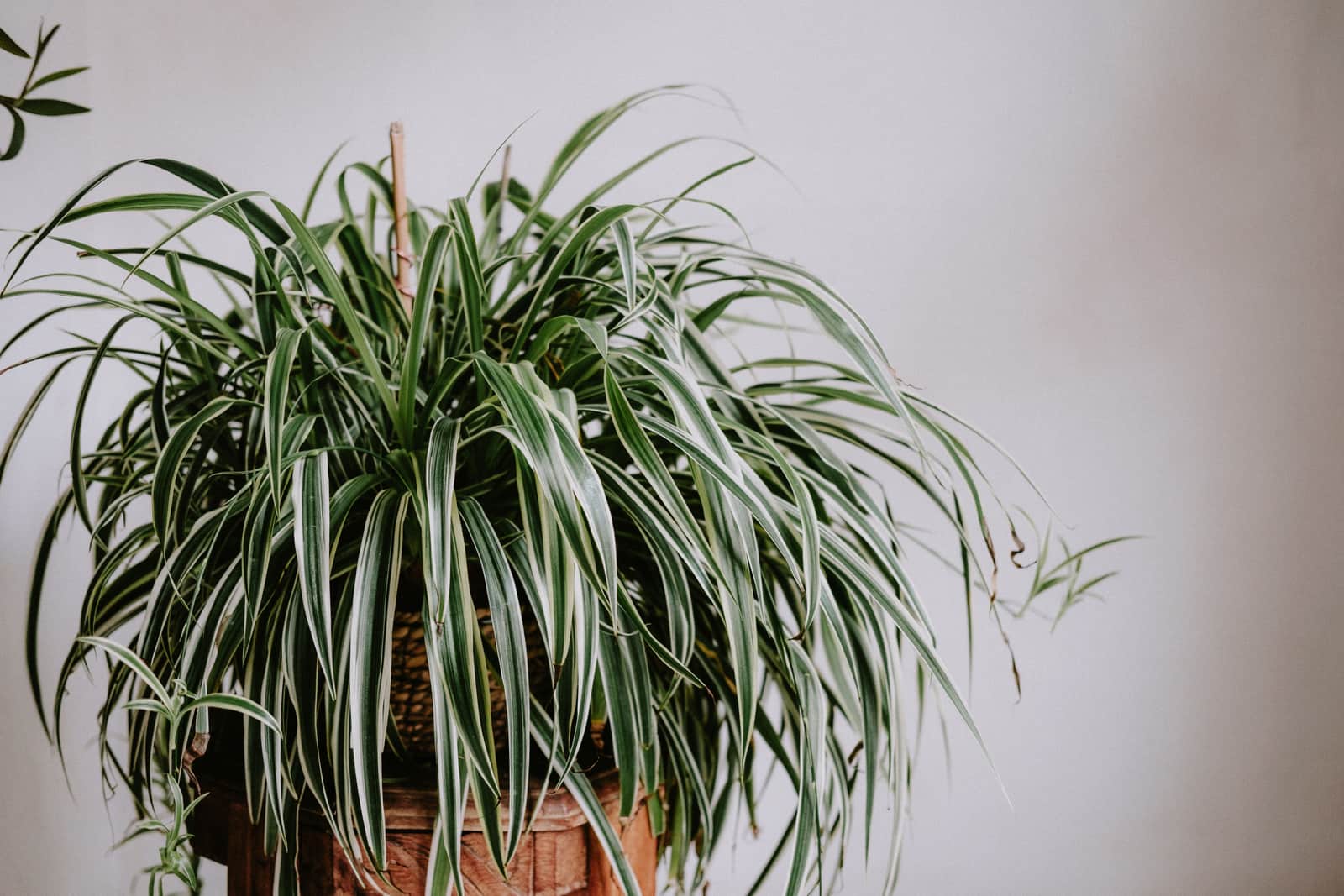
Grow Lights for Spider Plants
The band spider plants want, the hanging-basket distance, and why brown tips are not a light problem.
Top pick
GooingTop Clip Grow Light
Houseplants
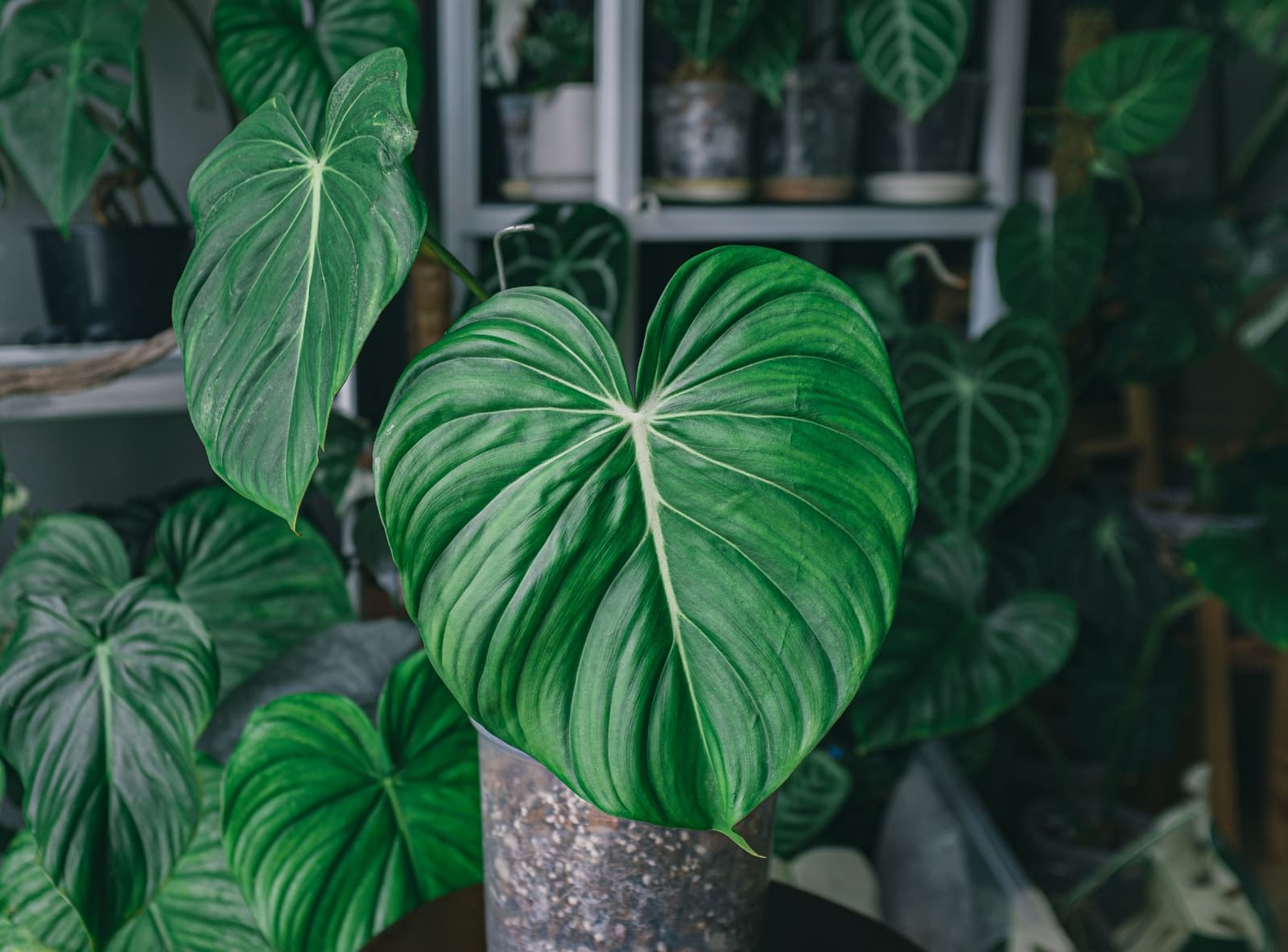
Grow Lights for Philodendrons
Why plain and variegated philodendrons need different light, with placement for each.
Top pick
AC Infinity IONBOARD S22
Houseplants
Grow Lights for Pothos
When a pothos needs a fixture, the lamp distance that hits the low band, and the variegation exception.
Top pick
SANSI 36W BR30 Grow Light Bulb
Coverage & Sizing
PPFD Targets by Plant Type
Published light bands mapped to common indoor plants, with the DLI each implies.
Top pick
GooingTop Clip Grow Light
Houseplants
The Best Grow Lights for Indoor Plants
Sized to a 3-10 mol/m2/day houseplant target rather than a grow-tent target, with running cost for each.
Top pick
SANSI 36W BR30 Grow Light Bulb
Spectrum & PPFD
Grow Light vs Window Light
Sunlight against fixtures, and how to find the month your window stops being enough.
Top pick
SANSI 36W BR30 Grow Light Bulb
Houseplants
How Much Light Do Houseplants Need in Winter?
Published DLI bands by plant type, and how to work out what your winter window is short by.
Top pick
SANSI 36W BR30 Grow Light Bulb
Reviews
Grow Lights for Bathrooms
Damp and wet location ratings, the 3-6 mol/m2/day target, and the three fixtures that actually publish a rating.
Top pick
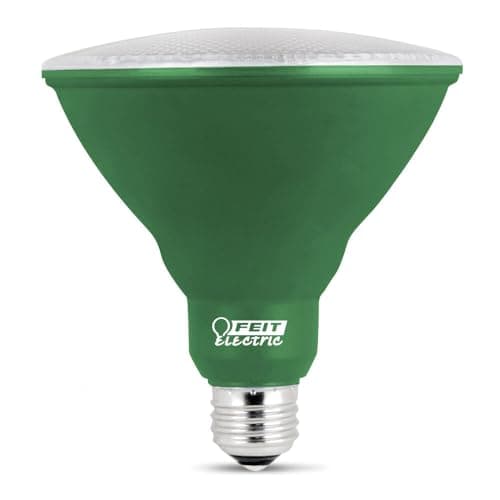
Feit Electric 16W PAR38 Grow Bulb
Houseplants
Grow Lights for Bonsai
Indoor bonsai sit in the 6-10 mol/m2/day band. The target, the distance, and why junipers indoors fail anyway.
Top pick
SANSI 36W BR30 Grow Light Bulb
Houseplants
Grow Lights for Peace Lily
Survives at 3-6 mol/m2/day, flowers at 6-10. The distance that separates them, and why a light is not a bloom switch.
Top pick
SANSI 36W BR30 Grow Light Bulb
Where this sits
This page belongs to Grow Lights for Houseplants and Winter. Every figure on it is either quoted from a named published source or derived in view — the full method is on our methodology page, and how the site is funded is on the affiliate disclosure.