Grow Lights for Pothos
The plant that survives anywhere is also the plant most often kept just above survival. Here is the number it wants, and the one case where a fixture genuinely changes it.
By Scooter M. — An enthusiast who's genuinely into this. I read the manuals, compile the published specs, and do the math. No lab coat.
Published · How we pick
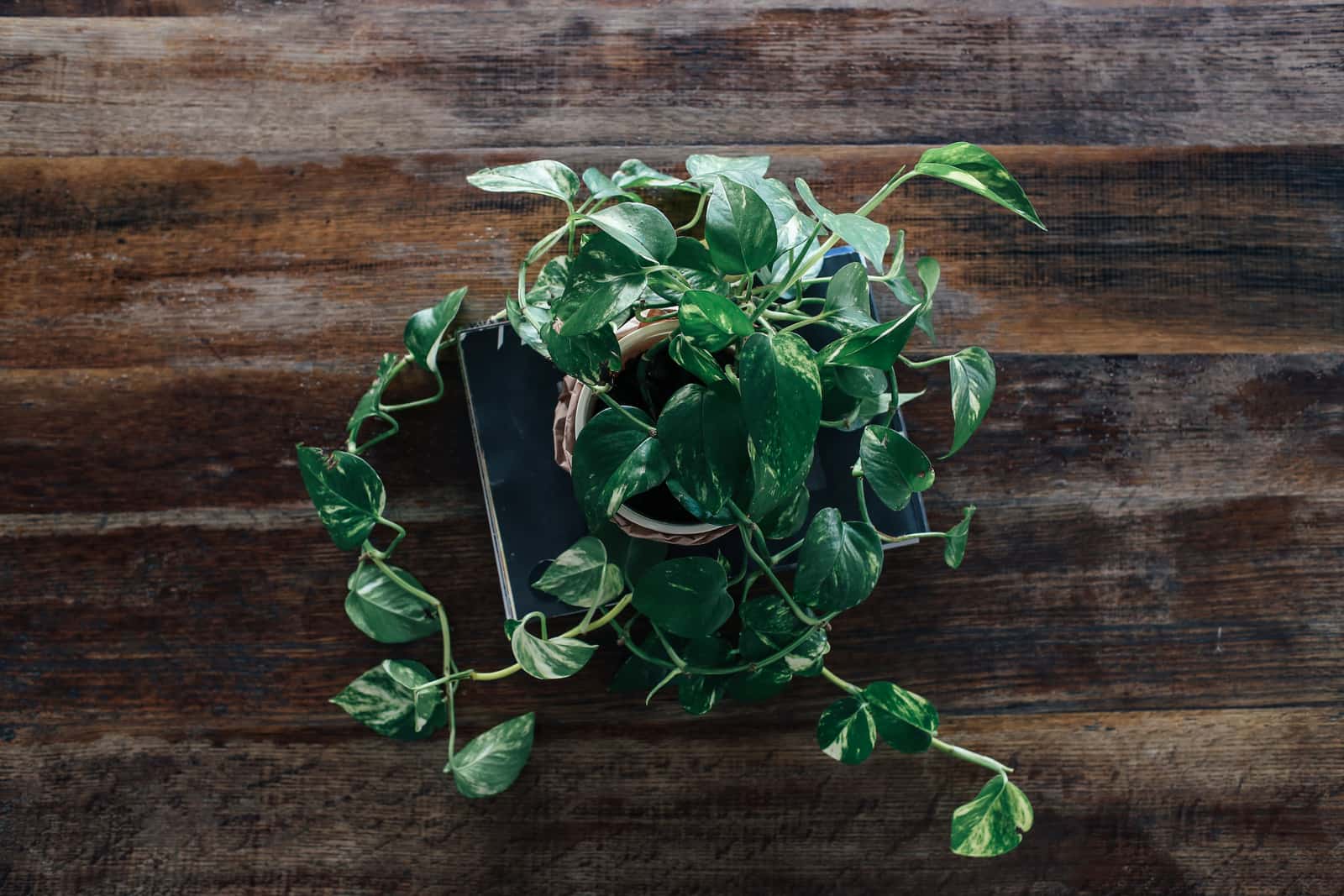
Photographs on this site are licensed stock and are illustrative of the fixture type. We do not own the units we write about.
How this page is funded: the buy links here are Amazon Associates links, and we earn a commission on qualifying purchases at no extra cost to you. We have not been paid to feature anything on this page, we accept no free product, and commission plays no part in the ranking. Full disclosure.
We have not tested these units. Everything below comes from the manufacturer’s own published specifications, or from arithmetic we have shown our working for. Where a figure is not published, we say so instead of estimating one. Read the method.
Quick picks
Efficacy is photons out per joule in. Where a manufacturer publishes it we quote theirs; where they publish photon output and wattage but not efficacy, we divide and label it as ours; where they publish neither, the cell says so rather than guessing. Tap a row for the full write-up.
| # | Product | Best for | Efficacy | Price |
|---|---|---|---|---|
| 1 | 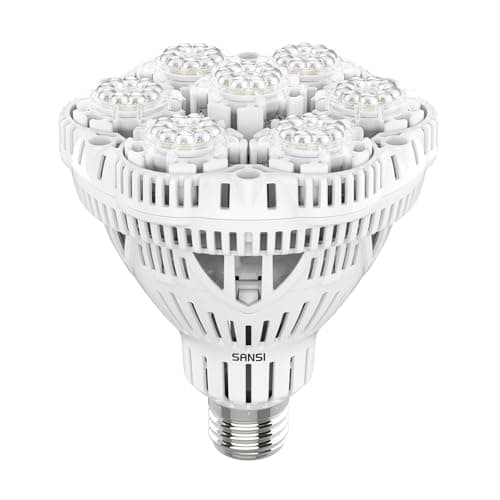 SANSI 36W BR30 Grow Light Bulb The rare grow bulb that publishes both PPF and a PPFD figure with the measurement distance attached, which is the only reason it can be sized honestly. | Placeable at 18–24 in | 1.82 umol/J (ours) | |
| 2 | 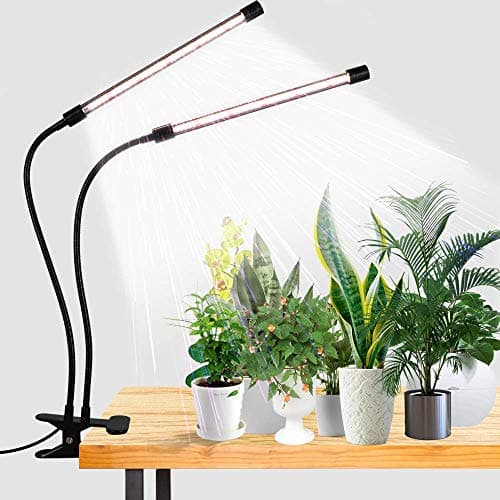 GooingTop Clip Grow Light The cheapest way to put real light on one plant on one desk, and honest about being exactly that — a 10 W clip lamp with a repeating timer. | A hanging pot, no socket | Not published | |
| 3 | 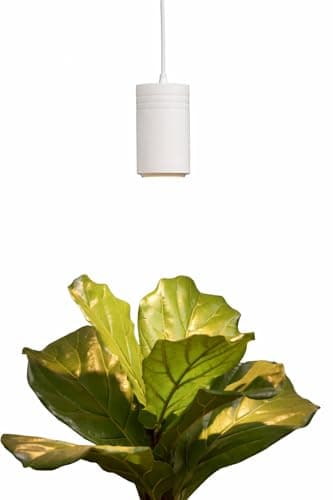 Soltech Aspect Gen 2 The only fixture here you would willingly hang in a living room, and the only one publishing PPFD at three separate distances so it can actually be placed by the numbers. | A trailing vine on display | 1.39 umol/J (ours) |
The reasoning
Start with the honest answer, because it is not the one a page selling grow lights usually opens with: most pothos do not need a grow light. They tolerate low light genuinely well, and a pothos in a room with any usable window is inside its published band already.
The useful question is narrower. There are two situations where a fixture changes a pothos from a plant that is surviving into one that is growing, and one of them is about the leaves rather than the light.
µmol/m²/s — University of Minnesota Extension's low-light band, alongside snake plants and ZZ. Survival at the bottom, real growth at the top.
Situation 1: the spot is genuinely dark
Pothos are put in the places nothing else survives — bathrooms with no window, interior hallways, the top of a bookcase across the room from the glass. In those positions the plant can be below the band entirely, and the symptom is distinctive: the vine keeps lengthening, but the leaves get smaller and further apart, so the plant ends up as a long bare stem with a tuft at the end. That is not the plant being “leggy” by nature. It is a light deficit expressed as sparse growth.
Here a fixture is worth it, and the requirement is small.
Situation 2: it is variegated
This is the case people miss. Golden pothos, marble queen, N’Joy, manjula — the cream and white patches on those leaves are tissue with little or no chlorophyll. Variegated tissue cannot photosynthesize, so a variegated plant is running on a fraction of its leaf area, and it needs proportionally more light to keep up.
In too little light the plant responds by producing greener leaves — the variegation fades toward plain green, because green tissue is what keeps it alive. If your marble queen is turning into an ordinary pothos, that is a light problem, and it is one a fixture directly fixes. Aim these plants at the top of the low band or the bottom of the medium one, around 150 µmol/m²/s.
The lamp distance, computed
SANSI is the only bulb we cover that publishes light density with the distance it was measured at — 265.58 µmol/m²/s at 1 ft. Scale that by the inverse-square relationship and the placement becomes arithmetic:
At 15 in (1.25 ft): 265.58 × (1 ÷ 1.25)² = 170 µmol/m²/s — right for a variegated plant.
At 18 in (1.5 ft): 265.58 × (1 ÷ 1.5)² = 118 µmol/m²/s — the upper half of the band. The setting we would use for a plain green pothos.
At 24 in (2 ft): 265.58 × (1 ÷ 2)² = 66 µmol/m²/s — inside the band, near the floor. Enough to stop a dark-corner plant going backwards.
Note that all three settings are further from the plant than most people hang a grow light. Pothos is the case where the mistake runs toward too much, not too little. The general method is in how far a grow light should be from plants.
Hours
Twelve is plenty. Iowa State University Extension suggests 12 to 14 hours generally for indoor plants under supplemental light, with 10 as a floor. Because the intensity target is modest, hours do most of the work:
118 µmol/m²/s for 12 hours: 118 × 12 × 3600 ÷ 1,000,000 = 5.1 mol/m²/day.
For scale, seedlings want about 12 mol/m²/day per University of New Hampshire Extension. A pothos is asking for well under half of that, which is why one modest bulb covers it.
The three fixtures that suit a pothos
| Fixture | Published output | Suits | The catch |
|---|---|---|---|
| SANSI 36W BR30 | 65.6 µmol/s; 265.58 µmol/m²/s at 1 ft | A pot on a shelf or table, lamp already owned | Needs an E26 socket; 1.82 µmol/J is a third less efficient than a panel |
| GooingTop clip light | About 10 W; no photon data published | A hanging pot — the gooseneck reaches where a lamp cannot | No manufacturer spec sheet at all; cannot be placed by arithmetic |
| Soltech Aspect Gen 2 | 50 µmol/s; about 50 µmol/m²/s at 1 m | A trailing vine in a room people sit in | 1.39 µmol/J is the least efficient fixture we cover; its published output lands at the low-band floor |
What is deliberately absent: every panel. A 100 W panel over one pothos is roughly ten times the light it will use, in a fixture you would have to hang. If the pothos shares a shelf with high-light plants, size for those and let the pothos sit at the edge of the footprint — see our houseplant picks.
What it costs
36 W × 12 h ÷ 1000 = 0.432 kWh a day.
Over 182 days: 78.6 kWh. At 18.34 cents per kWh: $14.42 for the winter, about $2.40 a month.
The clip light, at roughly 10 W, comes to about $4.00 for the entire season.
Signs it needs one — and signs it does not
- Needs one: long stretches of bare vine between leaves; new leaves noticeably smaller than old ones; variegation fading to green; no new growth in a year; a vine that only grows toward the window.
- Does not: steady new leaves of consistent size, variegation holding, vine filling in. Leave it alone.
- Not a light problem at all: yellow leaves with a soft base — that is water. Brown crispy edges — usually humidity or underwatering. A fixture will not fix either.
The honest summary
A plain green pothos in a room with a window does not need this page. A pothos in a windowless bathroom, or a variegated one going green, does — and for those the answer is one bulb at 15 to 24 inches, on a 12-hour timer, for a few dollars a season. If you are choosing where to spend on a fixture and the pothos is fine, spend it on the plant that is not. The ranking is in what plants benefit from grow lights.
Every pick in full
SANSI 36W BR30 Grow Light Bulb
Grow bulbPlaceable at 18–24 in
The rare grow bulb that publishes both PPF and a PPFD figure with the measurement distance attached, which is the only reason it can be sized honestly.
What SANSI publishes
- Power draw
- 36 W (source)
- PPF (photon output)
- 65.6 umol/s (source)
- PPFD
- 265.58 umol/m2/s at 1 ft (source)
- Spectrum
- 4000 K, 400-780 nm, CRI close to 100 (source)
- Rated life
- 25,000 hours (source)
Our arithmetic
- Efficacy, computed from the published figures: 1.82 umol/J
65.6 umol/s / 36 W = 1.82 umol/J. That is roughly a third less efficient than the panels on this page — the price of a screw-in form factor. - Electricity used at 12 hours a day for 30 days: 12.96 kWh a month
36 W x 12 h x 30 d / 1000 = 12.96 kWh.
What SANSI does not publish
- Beam angle
- Fixture dimensions
Who should skip it
Skip it if you are lighting more than one plant. 65.6 umol/s is a small amount of light spread over a cone — it lights a single specimen, not a shelf.
GooingTop Clip Grow Light
Clip lightA hanging pot, no socket
The cheapest way to put real light on one plant on one desk, and honest about being exactly that — a 10 W clip lamp with a repeating timer.
What GooingTop publishes
- Power draw
- About 10 W (source)
- Spectrum
- 6000 K, 74 white plus 10 red LEDs, CRI 95 (source)
- Dimming
- Five brightness levels; repeating 4 / 8 / 12 hour timer (source)
What GooingTop does not publish
- PPF in umol/s
- PPFD at any distance
- Photon efficacy in umol/J
- The manufacturer publishes no spec sheet at all; the figures above come from the retail listing
Who should skip it
Skip it if the plant is more than about a foot across, or if you want any number at all before you buy — nobody publishes photon data for this fixture.
Soltech Aspect Gen 2
PendantA trailing vine on display
The only fixture here you would willingly hang in a living room, and the only one publishing PPFD at three separate distances so it can actually be placed by the numbers.
What Soltech publishes
- Power draw
- 36 W (source)
- PPF (photon output)
- 50 umol/s (source)
- PPFD
- about 50 umol/m2/s at 1 m, 34.9 at 4 ft, 15.5 at 6 ft (source)
- Spectrum
- 3000 K warm white, CRI 98 (source)
- Dimming
- Yes, in-line dimmer 10-100% (source)
- Dimensions
- 3.5 x 3.5 x 6.2 inches (source)
- Rated life
- 50,000 hours (source)
Our arithmetic
- Efficacy, computed from the published figures: 1.39 umol/J
50 umol/s / 36 W = 1.39 umol/J. Roughly half the efficacy of a 2.7 umol/J board — the design premium is paid twice, once at purchase and again every month on the meter.
Who should skip it
Skip it if photons per watt is the metric that matters. At 50 umol/s from 36 W it is the least efficient fixture on this page, and much of the price is industrial design.
Questions people actually ask
+Do pothos need a grow light?
+How far should a grow light be from a pothos?
+Why is my golden pothos turning green?
+Can I use a regular lamp for a pothos?
+Have you grown pothos under these lights?
Sources
- University of Minnesota Extension — Lighting for indoor plants and starting seeds — consulted September 2, 2026
- Iowa State University Extension — Important Considerations for Providing Supplemental Light to Indoor Plants — consulted September 2, 2026
- University of New Hampshire Extension — Growing Seedlings Under Lights — consulted September 2, 2026
- SANSI — BR30 36W grow light bulb product page — consulted September 2, 2026
- Soltech — Aspect Gen 2 published specifications — consulted September 2, 2026
- GooingTop clip grow light — retail listing specifications (no manufacturer spec sheet published) — consulted September 2, 2026
- US Energy Information Administration — Electric Power Monthly, Table 5.3 (US residential average, June 2026) — consulted September 2, 2026
Read next
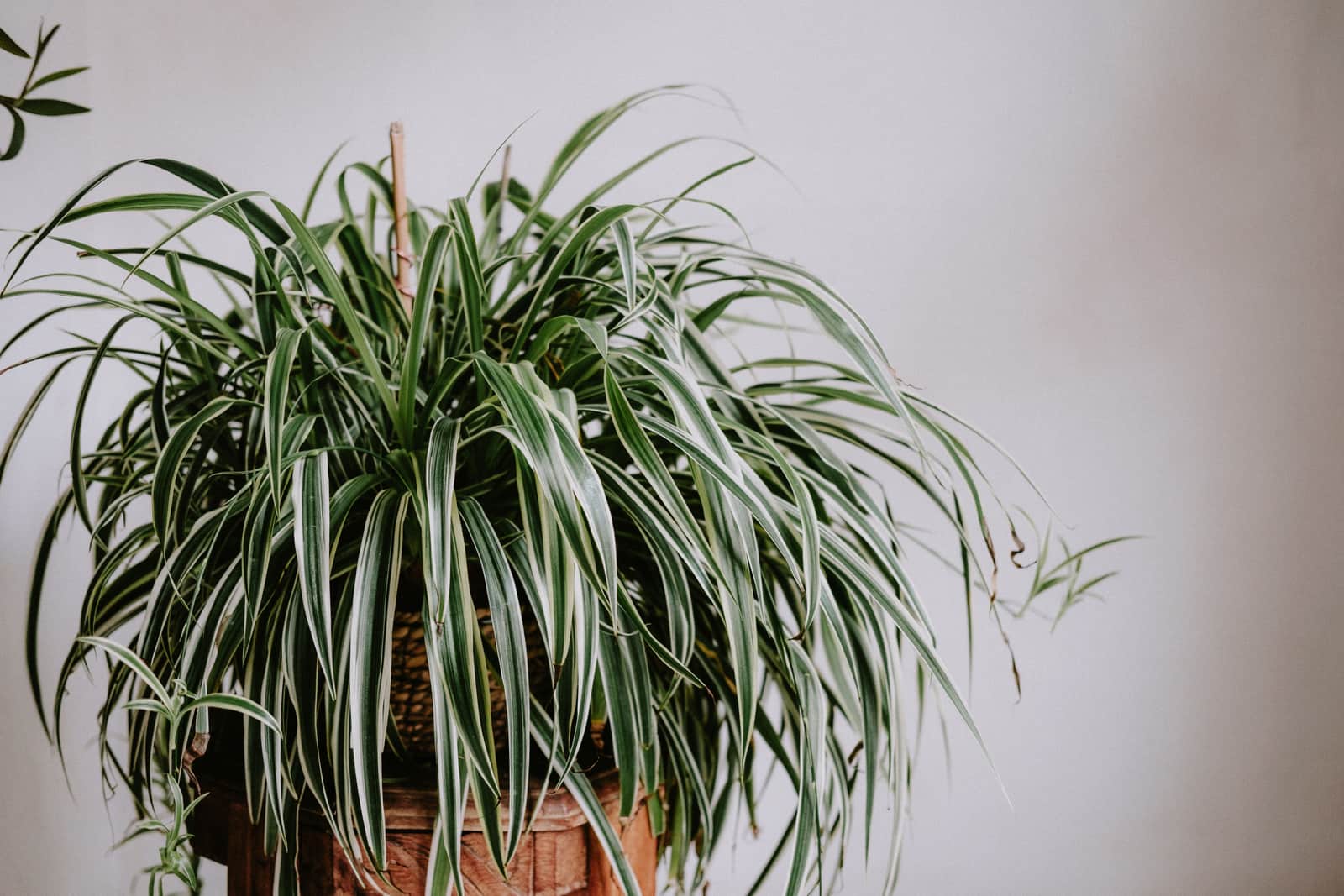
Houseplants
Grow Lights for Spider Plants
The band spider plants want, the hanging-basket distance, and why brown tips are not a light problem.
Top pick
GooingTop Clip Grow Light
Houseplants
What Plants Benefit From Grow Lights?
Plants ranked by how much a fixture actually changes the outcome, not by their light band.
Top pick
Barrina T5 4ft Grow Light Strips
Houseplants
Grow Lights for Snake Plants
The low-light band, the exact lamp height that hits it, and why tolerating is not the same as thriving.
Top pick
SANSI 36W BR30 Grow Light Bulb
Coverage & Sizing
PPFD Targets by Plant Type
Published light bands mapped to common indoor plants, with the DLI each implies.
Top pick
GooingTop Clip Grow Light
Coverage & Sizing
How Far Should a Grow Light Be From Plants?
The inverse-square rule, published PPFD-at-distance figures, and a by-plant table.
Top pick
Soltech Aspect Gen 2
Reviews
Grow Lights for Bathrooms
Damp and wet location ratings, the 3-6 mol/m2/day target, and the three fixtures that actually publish a rating.
Top pick
Feit Electric 16W PAR38 Grow Bulb
Houseplants
Grow Lights for Calathea
A 3-6 mol/m2/day low-band plant. Why the small bulb wins, and why crispy edges are not a light problem.
Top pick
GE Grow Light BR30 Bulb, Seeds and Greens (2-pack)
Where this sits
This page belongs to Grow Lights for Houseplants and Winter. Every figure on it is either quoted from a named published source or derived in view — the full method is on our methodology page, and how the site is funded is on the affiliate disclosure.