Roundup
The Best Full Spectrum Grow Lights
Five fixtures ranked on published photon output and efficacy, because the words on the box are identical.
Top pick
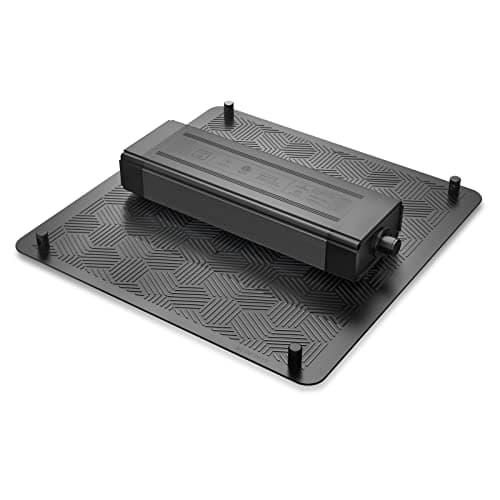
AC Infinity IONBOARD S22
Full spectrum is a marketing phrase with no standard behind it. These pages replace it with the three figures that actually decide whether a plant grows.
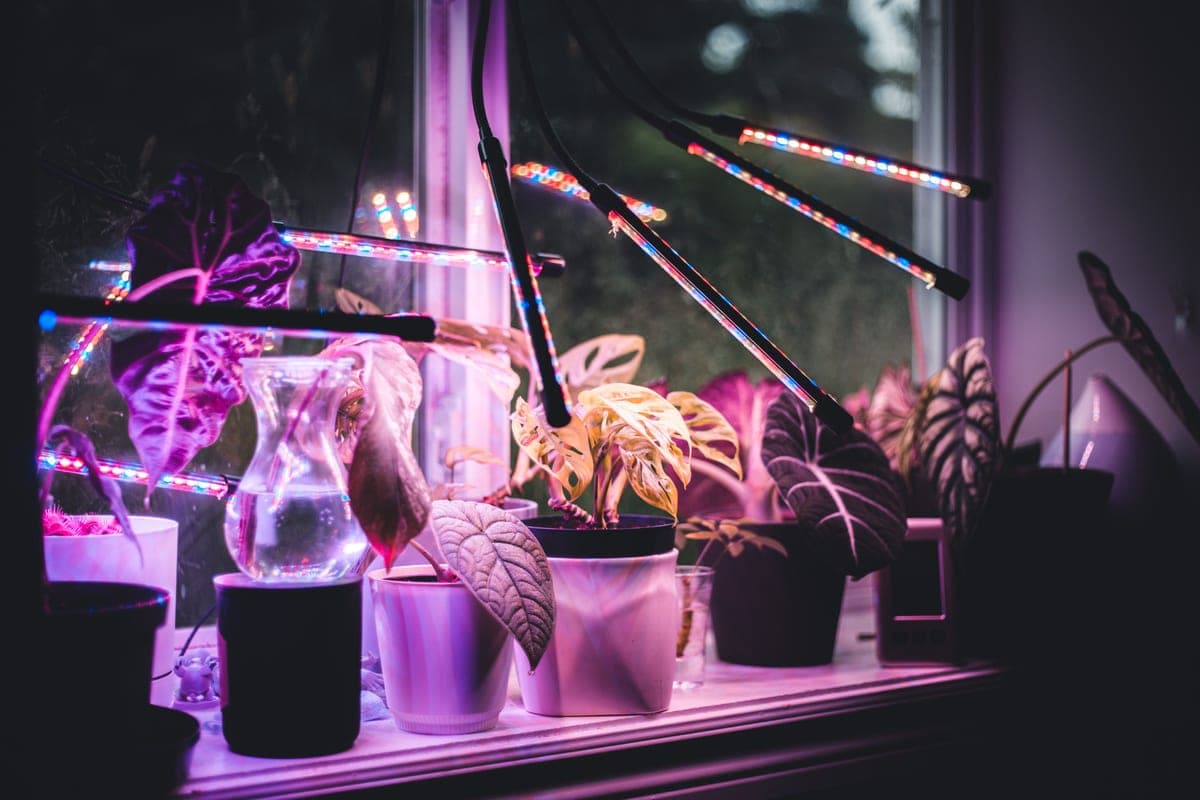
“Full spectrum” is not a regulated term. No standards body defines it, no test verifies it, and no manufacturer can be held to it. A fixture emitting 3000 K white can be called full spectrum. So can one emitting a narrow blue-and-red mix. So can a fixture with a visible gap where a plant would like photons. The phrase survives because it is reassuring and costs nothing to print.
This section replaces it with three figures that do mean something, because they are defined, measurable and published by the better manufacturers:
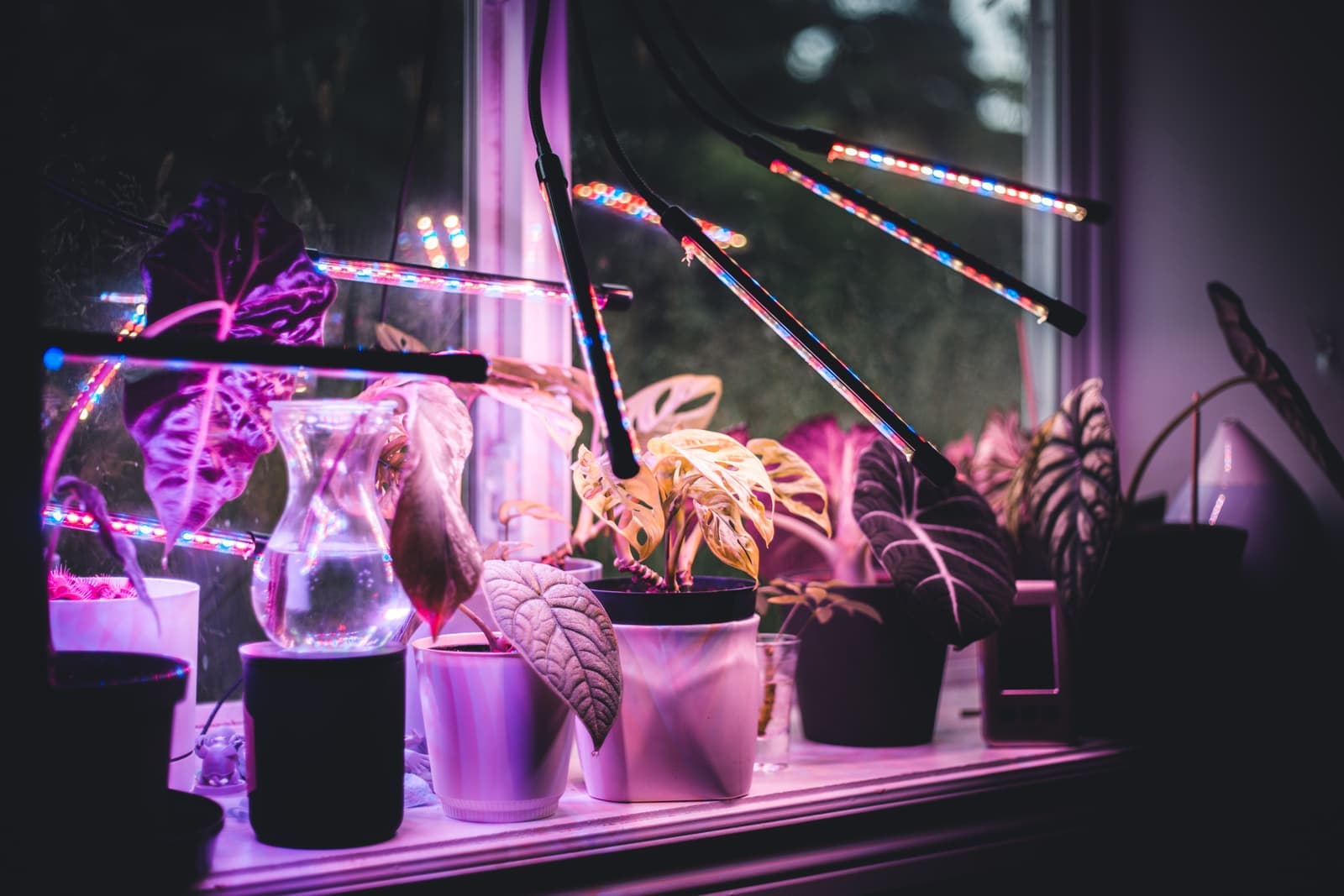
Less than the marketing implies, and the research is fairly clear about it. A peer-reviewed comparison published in PLOS ONE grew seedlings of begonia, geranium, petunia and snapdragon under six LED treatments at a fixed 160 µmol/m²/s and found that white light had “generally similar effects on seedling growth” to a blue-plus-red mixture at the same intensity and similar energy consumption — while making the plants far easier to look at.
There is an efficiency nuance worth stating rather than glossing: in that study the blue+red treatment achieved a higher photon efficacy (2.25 µmol/J) than the white treatments (1.51 to 2.13 µmol/J). So the purple fixtures are not simply a gimmick — they buy real efficiency. They just do not buy better growth per photon delivered, and they turn a room magenta.
Not the spectrum. Two fixtures with near-identical published spectra can differ by a factor of two in efficacy, and that difference is about the diodes and the driver rather than the color mix. Where a manufacturer names its diodes — Samsung LM301H, Bridgelux — you are usually looking at the more expensive and more efficient end.
Comparing fixtures by lumens. Lumens weight light by the sensitivity of the human eye, which peaks in green around 555 nm — the part of the spectrum leaves reflect most. There is no valid conversion from lumens to PPFD without knowing a fixture’s exact spectrum, so every published conversion factor has quietly assumed one. We do not publish such a factor, and a site that does is guessing on your behalf.
Start with what full spectrum actually means and PPFD, PAR and DLI explained.
Each of these names a top pick and links straight out to it. Prices come from the live price layer, which is why they read “check price” rather than showing a figure we cannot verify at the moment you load the page.
Roundup
Five fixtures ranked on published photon output and efficacy, because the words on the box are identical.
Top pick
AC Infinity IONBOARD S22
Guide
The phrase is unregulated and carries no threshold. These are the numbers that replace it.
Top pick
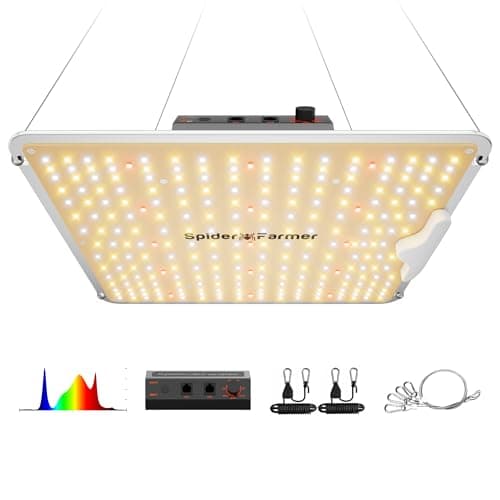
Spider Farmer SF1000
Comparison
White versus blue-plus-red on the published comparison, and why visibility settles it at home.
Top pick
Spider Farmer SF1000
Guide
The three photon units, what each measures, and the conversions between them, shown.
Top pick
Spider Farmer SF1000
Comparison
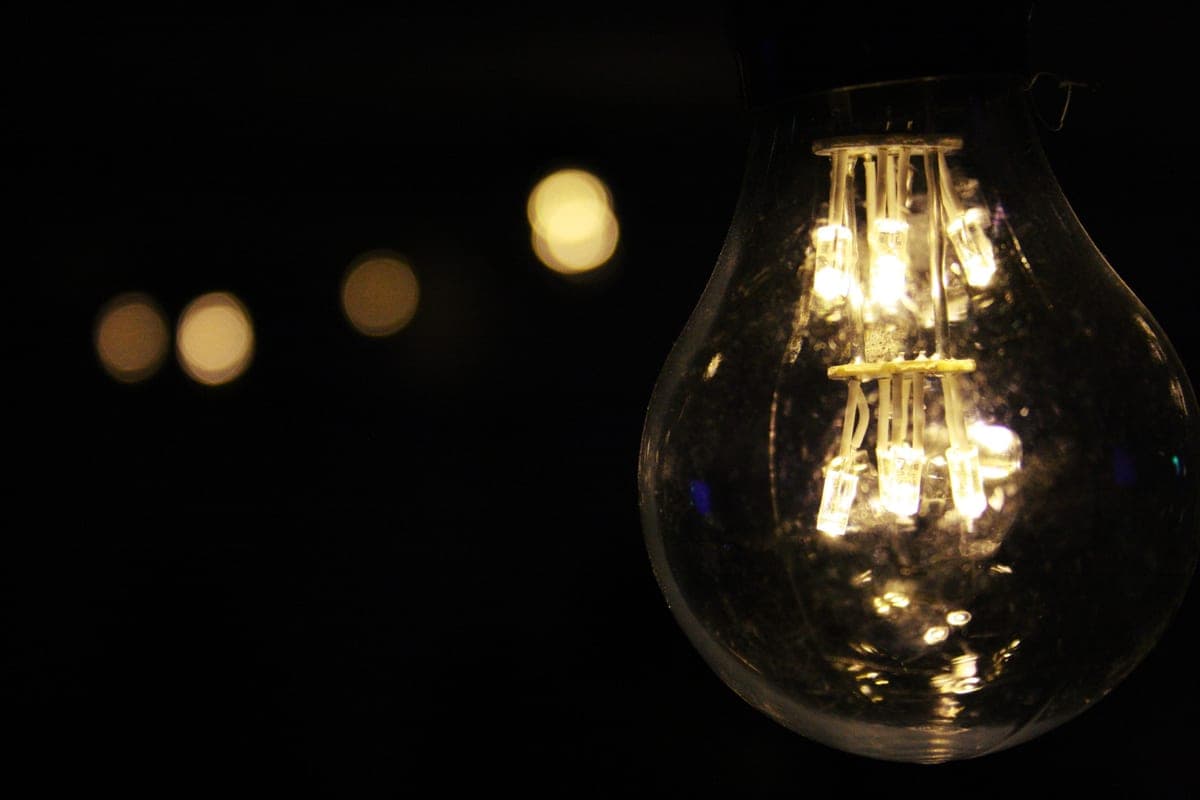
Household bulbs emit usable light but cannot be sized. Where the line actually falls.
Top pick
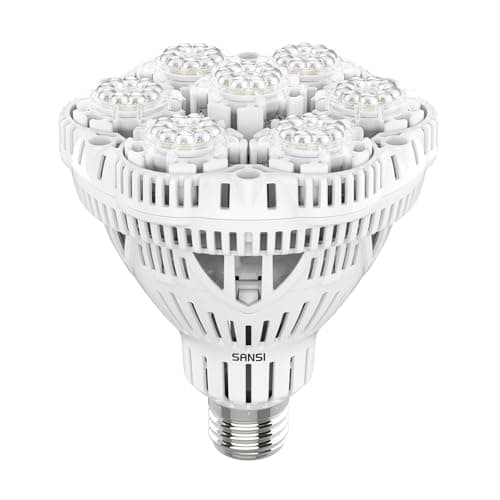
SANSI 36W BR30 Grow Light Bulb
Comparison
Sunlight against fixtures, and how to find the month your window stops being enough.
Top pick
SANSI 36W BR30 Grow Light Bulb
Guide
What Kelvin measures, what it does not, and why intensity settles the seedling question.
Top pick
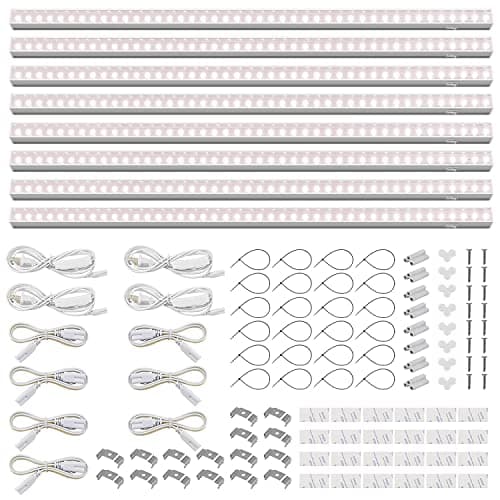
Barrina T5 4ft Grow Light Strips
Guide
What IEC 62471 risk groups mean, the one real hazard, and sensible home precautions.
Guide
What the published spectral ranges say about UV, fixture by fixture, with the gaps named.