Are Grow Lights Safe for Eyes and Pets?
The honest answer involves a real safety standard, one genuine risk, and several claims that get repeated online without support.
By Scooter M. — An enthusiast who's genuinely into this. I read the manuals, compile the published specs, and do the math. No lab coat.
Published · How we pick
The reasoning
This page carries no product recommendations and no affiliate links. It is a safety question, and attaching a buy button to one would be a reason to distrust the answer.
There is a real standard, and it is worth knowing about
Photobiological safety of lamps is covered by IEC/EN 62471, which classifies light sources into risk groups based on how long a person can be exposed before a hazard threshold is reached. ams OSRAM publishes an accessible technical explanation of how LED sources are assessed against it, which is the reference we use here.
The groups run from the exempt group — no photobiological hazard under reasonably foreseeable conditions — through risk groups 1 and 2, to risk group 3 for high-intensity sources. The important framing is that classification depends on exposure duration and distance, not simply on whether a lamp looks bright.
The one real hazard: blue light at close range, for a long time
White LEDs are built on a blue emitter, and the assessment that matters for them is the blue-light hazard — a cumulative exposure question rather than an instantaneous one. In practice that means the sensible precautions are the boring ones:
- Do not stare into the fixture. This sounds trivial and it is the entire practical instruction. Glancing at a grow light while watering is not a hazard; working directly under one at close range for hours is a different exposure.
- Mount it so the emitters are not at eye level for anyone sitting or standing in the room. Above the plants and above head height solves it.
- Prefer a fixture with a diffuser or a wide beam if it is in a room you occupy. Concentrated point sources are the ones that are uncomfortable to be near.
- Use a timer so the light runs when nobody is in the room, which removes the exposure question almost entirely.
Pets
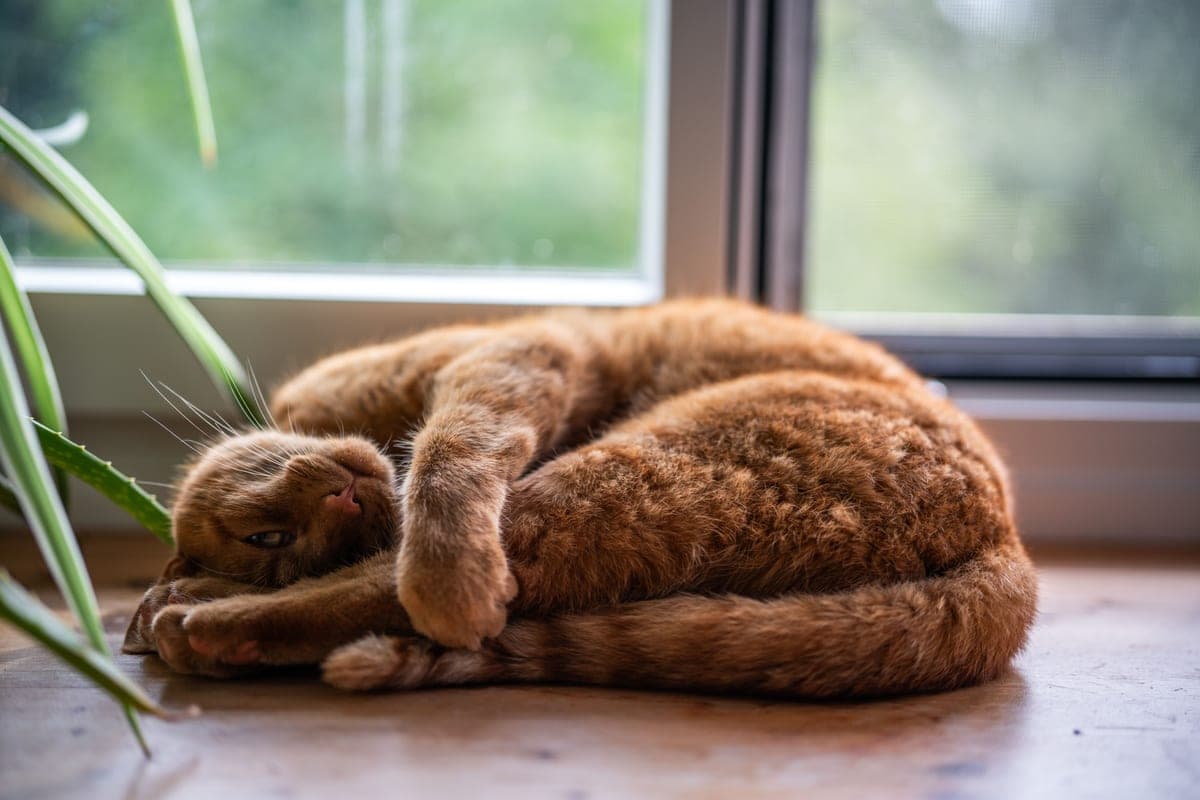
We can say two useful things and will not invent a third. First, the same exposure logic applies: a cat that sleeps directly under a bright fixture at close range is in a different situation from one that walks past it. Second, and more concretely, the physical hazards around a grow-light setup are the ones we would actually worry about in a home with animals — trailing power leads, a fixture that can be pulled off a shelf, warm driver housings, and water near an electrical connection.
We have not found published, species-specific ocular exposure guidance for household pets under consumer horticultural LEDs, and we are not going to extrapolate one from human standards. If you have a specific concern about an animal, a veterinarian is the right source, not a grow-light publisher.
Claims we could not substantiate
Several assertions circulate widely and we found no support for them in the sources we consulted, so we are recording them as unsupported rather than repeating them:
- That consumer LED grow lights emit dangerous levels of UV. Most publish a range starting around 400 nm, the bottom edge of visible light. See do grow lights emit UV.
- That they cause skin damage in a room. Nothing in the material we consulted supports that for the fixtures covered here.
- That purple fixtures are inherently more hazardous than white ones. The assessment depends on the actual spectral power distribution and intensity, which consumer brands rarely publish in enough detail for anyone to determine.
What we would actually do
Mount the fixture above head height, aim it down, put it on a timer that runs it while the room is empty, and route the cable so nothing can pull it down. That handles the exposure question and the far more probable household hazards at the same time.
For the heat side of the same question, see do LED grow lights get hot.
Questions people actually ask
+Are LED grow lights safe for human eyes?
+Should I wear glasses when working under a grow light?
+Can grow lights hurt my cat or dog?
+Do grow lights cause sunburn?
Sources
- ams OSRAM — Details on photobiological safety of LED light sources (IEC/EN 62471 risk groups) — consulted September 2, 2026
- University of Minnesota Extension — Lighting for indoor plants and starting seeds — consulted September 2, 2026
Read next
Spectrum & PPFD
Do Grow Lights Emit UV?
What the published spectral ranges say about UV, fixture by fixture, with the gaps named.
Spectrum & PPFD
What “Full Spectrum” Actually Means
The phrase is unregulated and carries no threshold. These are the numbers that replace it.
Top pick
Spider Farmer SF1000
Running Cost
Do LED Grow Lights Get Hot?
Where the heat actually goes, what it means for plants and rooms, and the safety basics.
Houseplants
The Best Grow Lights for Indoor Plants
Sized to a 3-10 mol/m2/day houseplant target rather than a grow-tent target, with running cost for each.
Top pick
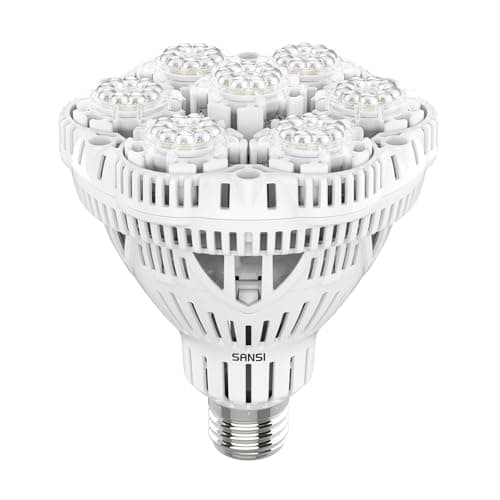
SANSI 36W BR30 Grow Light Bulb
Where this sits
This page belongs to Spectrum and PPFD, Honestly. Every figure on it is either quoted from a named published source or derived in view — the full method is on our methodology page, and how the site is funded is on the affiliate disclosure.