Kelvin vs Spectrum for Seedlings
Which color temperature to buy for seed starting, and why the answer matters much less than how close you hang it.
By Scooter M. — An enthusiast who's genuinely into this. I read the manuals, compile the published specs, and do the math. No lab coat.
Published · How we pick
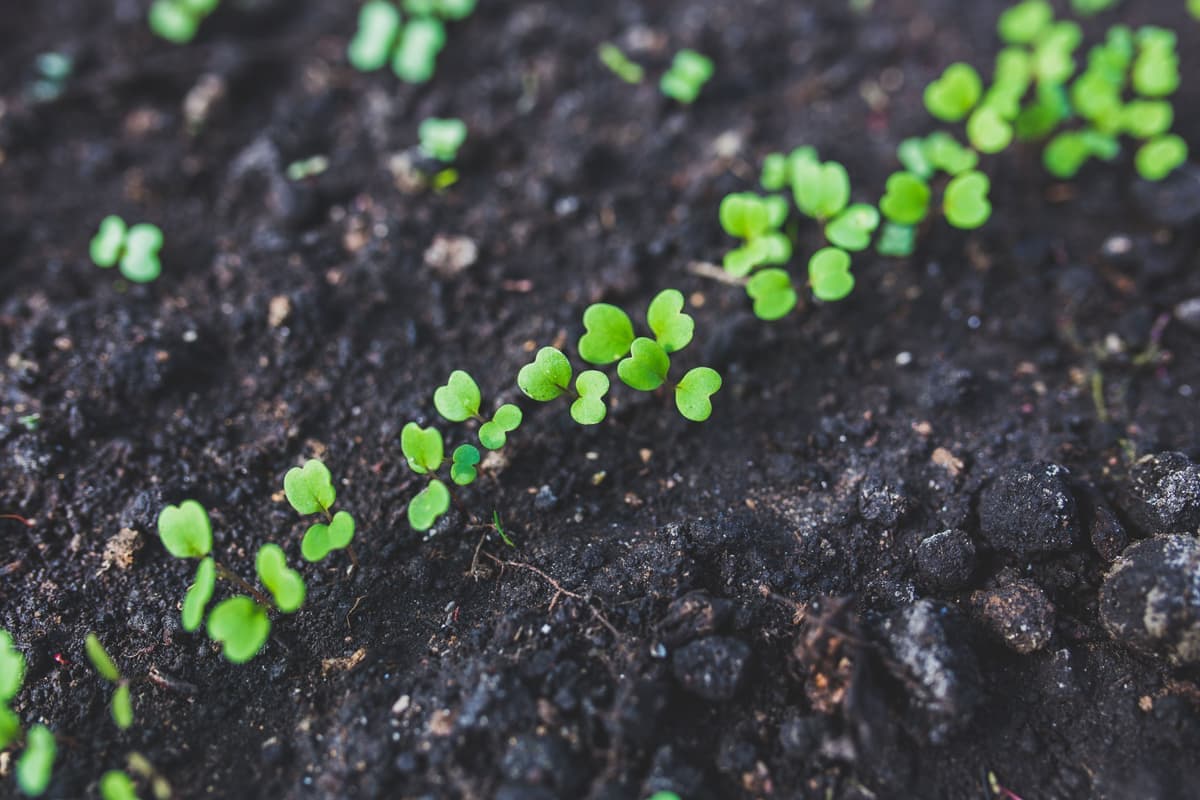
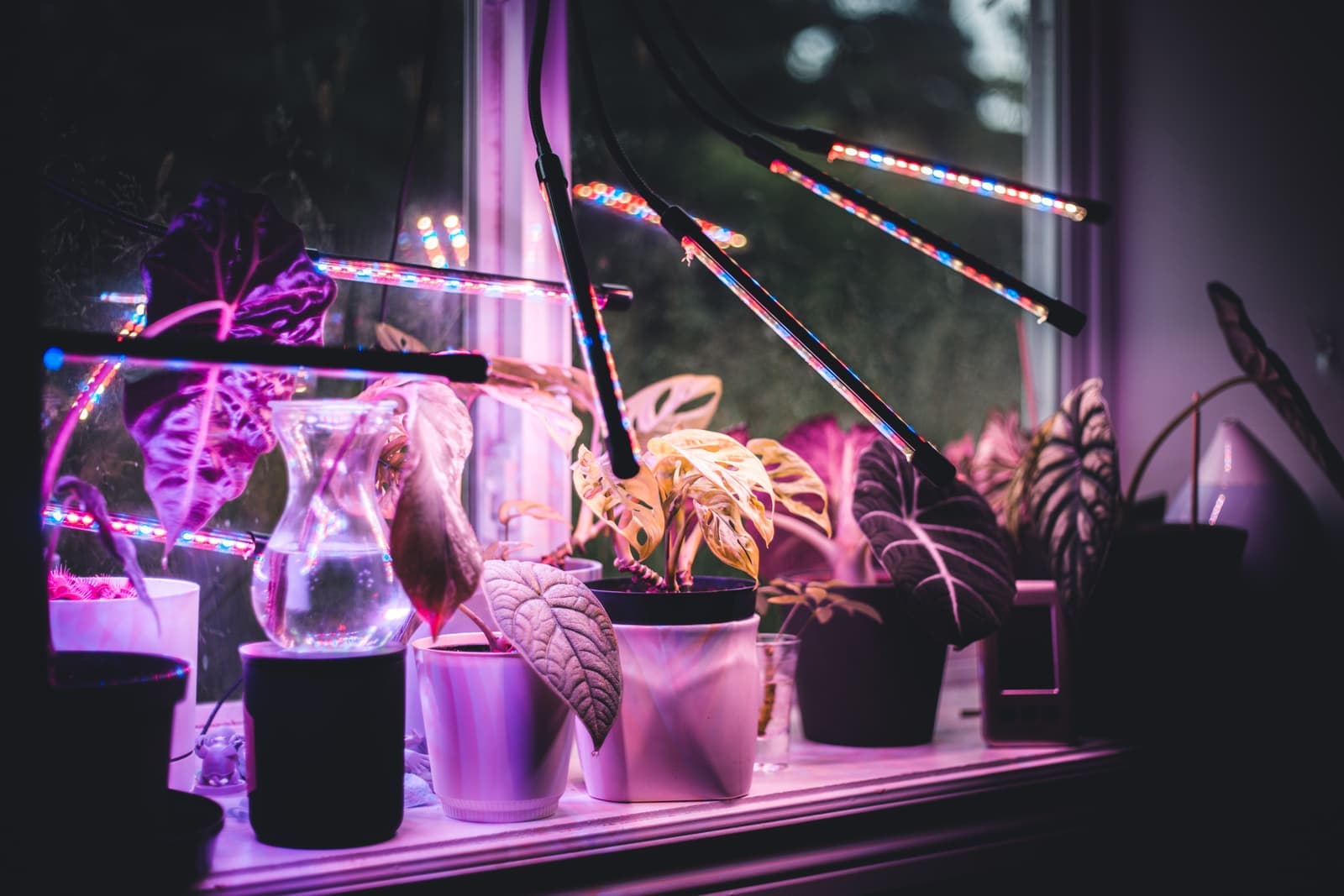
Photographs on this site are licensed stock and are illustrative of the fixture type. We do not own the units we write about.
How this page is funded: the buy links here are Amazon Associates links, and we earn a commission on qualifying purchases at no extra cost to you. We have not been paid to feature anything on this page, we accept no free product, and commission plays no part in the ranking. Full disclosure.
We have not tested these units. Everything below comes from the manufacturer’s own published specifications, or from arithmetic we have shown our working for. Where a figure is not published, we say so instead of estimating one. Read the method.
Quick picks
Efficacy is photons out per joule in. Where a manufacturer publishes it we quote theirs; where they publish photon output and wattage but not efficacy, we divide and label it as ours; where they publish neither, the cell says so rather than guessing. Tap a row for the full write-up.
| # | Product | Best for | Efficacy | Price |
|---|---|---|---|---|
| 1 | 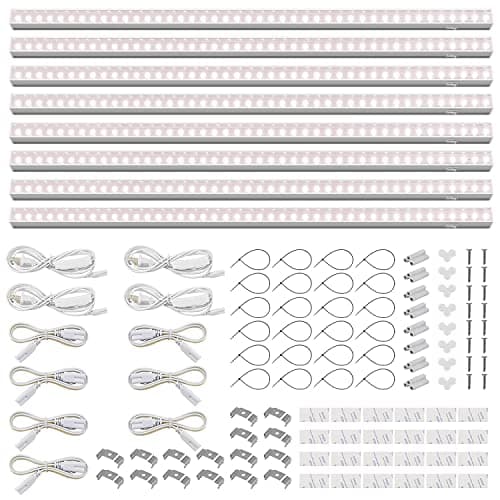 Barrina T5 4ft Grow Light Strips The default seed-starting bar for good reasons — 4 ft long, linkable in series, cheap per foot — and the reason we built a coverage calculator, because Barrina publishes no photon data whatsoever. | 5000 K across a shelf | Not published | |
| 2 | 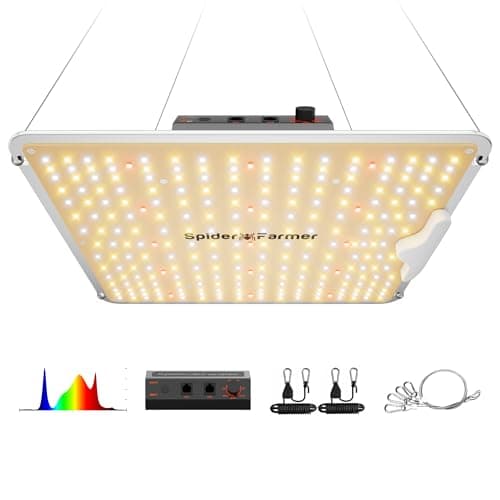 Spider Farmer SF1000 Publishes PPF to two decimal places and an efficacy figure that actually divides out of it. That internal consistency is rarer in this category than it should be. | Warm and cool channels | 2.5 umol/J | |
| 3 | 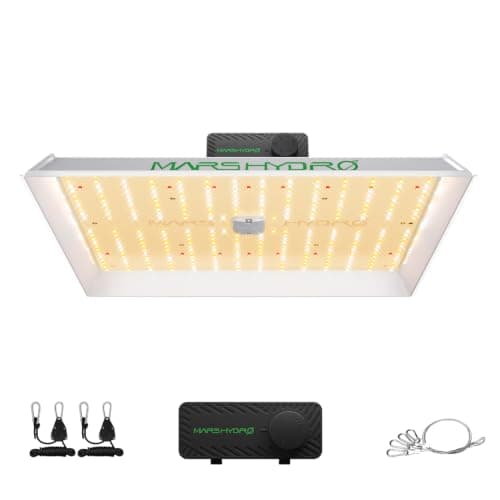 Mars Hydro TS 1000 The most photons of anything on this list, and one of only three fixtures here that publishes both PPF and efficacy so the claim can be checked against itself. | Two whites plus red | 2.3 umol/J |
The reasoning
Search for the best light color for seed starting and you will find confident recommendations for 5000 K, 6500 K and “full spectrum,” usually without explaining what the number means. Here is what it means, and why it is close to the least important decision you will make about a seedling light.
What Kelvin actually describes
Correlated color temperature describes how white light looks: lower numbers appear warm and orange, higher numbers appear cool and blue. It is a perceptual summary, not a photon measurement. Two fixtures rated 5000 K can have noticeably different spectral distributions and identical appearance.
Critically, Kelvin says nothing about how much light there is. A 20 W strip and a 150 W panel can both be 5000 K. If you are choosing between them on the Kelvin figure, you are choosing on the one attribute that does not vary in the way you care about.
Daily light integral for seedlings per University of New Hampshire Extension. No color temperature gets you there or stops you getting there — intensity and hours do.
What the published fixtures actually offer
| Fixture | Published white output | Extra emitters |
|---|---|---|
| Barrina T5 4ft | 5000 K | None published |
| Spider Farmer SF1000 | 2800–3000 K and 4800–5000 K | 650–665 nm, 730–740 nm |
| Mars Hydro TS 1000 | 3000 K and 5000 K | 660–665 nm, 730–740 nm |
| AC Infinity IONBOARD S22 | 3000 K and 6500 K | 660 nm, 730 nm |
| SANSI 36W BR30 | 4000 K, 400–780 nm, CRI close to 100 | None published |
| Soltech Aspect Gen 2 | 3000 K warm white, CRI 98 | None published |
Note the pattern: the panels all combine a warm and a cool white channel plus red emitters. There is no single Kelvin number to compare across them, which is itself most of the answer to the question.
Where color temperature has a modest real effect
Cooler white contains proportionally more blue. Blue light is associated with compact, sturdy growth, which is exactly what you want in a seedling — the failure mode being the pale, floppy stretch that happens under insufficient light. That gives a weak preference for cooler over very warm white for seed starting.
But “weak preference” is the honest strength of the claim. A seedling stretching under a 6500 K light that is too far away will stretch anyway; a seedling four inches under a 3000 K light with adequate intensity will be fine. Distance is worth an order of magnitude more than the Kelvin rating, and it is covered in how far grow lights should be from seedlings.
Hang a fixture at 6 inches instead of 12 and the photon density beneath it rises roughly fourfold, because density falls with approximately the square of distance.
No change of color temperature available on the market produces anything remotely like a fourfold change in the growth response of a seedling.
Conclusion: buy on photon output and hang it correctly. Treat Kelvin as a tiebreaker between two otherwise equal fixtures, if at all.
A practical recommendation
- Anything from 4000 K to 6500 K is fine for seedlings. Within that range the difference is not worth paying for.
- Prefer a fixture that publishes photon output over one that publishes only a Kelvin rating. The first can be sized; the second cannot.
- If a fixture offers both warm and cool channels, that is a genuine convenience — it will look better in a living space and still deliver the blue content seedlings benefit from.
The picks that follow from this are in the best grow lights for seed starting, and the intensity target itself is in how much light seedlings need.
Every pick in full
Barrina T5 4ft Grow Light Strips
LED bar5000 K across a shelf
The default seed-starting bar for good reasons — 4 ft long, linkable in series, cheap per foot — and the reason we built a coverage calculator, because Barrina publishes no photon data whatsoever.
What Barrina publishes
- Power draw
- 20 W per fixture; an 8-pack draws 160 W (source)
- Spectrum
- 5000 K (source)
- Dimming
- No; on/off switch per fixture, linkable up to 8 in series (source)
- Dimensions
- 4 ft strip, 120-degree beam angle, 120 V AC (source)
What Barrina does not publish
- PPF in umol/s — for any strip in the range
- PPFD at any stated distance
- Photon efficacy in umol/J
- LED count per strip, and rated lifespan
Who should skip it
Skip it if you need to know what you are getting before it arrives. There is no published PPF, no PPFD and no efficacy figure, so nothing about its output can be verified in advance.
Spider Farmer SF1000
LED panelWarm and cool channels
Publishes PPF to two decimal places and an efficacy figure that actually divides out of it. That internal consistency is rarer in this category than it should be.
What Spider Farmer publishes
- Power draw
- 100 W +/-5% at 100-277 V AC (source)
- PPF (photon output)
- 249.21 umol/s (source)
- Efficacy
- 2.5 umol/J (source)
- Stated coverage
- 2 x 2 ft core, 3 x 3 ft maximum (source)
- Spectrum
- 650-665 nm, 730-740 nm, 2800-3000 K, 4800-5000 K (source)
- Diodes
- Bridgelux (source)
- Dimming
- Yes, dimming knob (source)
- Dimensions
- 32.5 x 29.0 x 5.9 cm (source)
- Rated life
- 55,000 hours (source)
Our arithmetic
- Does the published efficacy check out against the published PPF?: Yes — 2.49 umol/J computed against 2.5 umol/J published
249.21 umol/s / 100 W = 2.4921 umol/J. The published 2.5 umol/J is that number rounded. Not every brand's two figures agree like this, which is exactly why we divide them. - Average PPFD across its 2 x 2 ft core footprint: about 536 umol/m2/s
2 ft x 2 ft = 4 sq ft = 0.372 m2. 249.21 / 0.372 = 670 umol/m2/s at perfect uniformity; at a 0.8 uniformity factor, about 536 umol/m2/s.
Who should skip it
Skip it if raw output is what you are buying — the TS 1000 delivers 38% more photons per second, at the cost of 50 W more draw.
Mars Hydro TS 1000
LED panelTwo whites plus red
The most photons of anything on this list, and one of only three fixtures here that publishes both PPF and efficacy so the claim can be checked against itself.
What Mars Hydro publishes
- Power draw
- 150 W +/-5% at 100-277 V AC (source)
- PPF (photon output)
- 343 umol/s (source)
- Efficacy
- 2.3 umol/J (source)
- Stated coverage
- 2.5 x 2.5 ft vegetative, 2.3 x 2.3 ft flowering (source)
- Spectrum
- 660-665 nm, 730-740 nm, 3000 K, 5000 K (source)
- Diodes
- Bridgelux (source)
- Dimming
- Yes, 0-100% dimmer knob (source)
- Dimensions
- 406 x 326 x 50 mm (source)
Our arithmetic
- Average PPFD across its stated 2.5 x 2.5 ft vegetative footprint: about 470 umol/m2/s
2.5 ft x 2.5 ft = 6.25 sq ft = 0.581 m2. 343 umol/s divided by 0.581 m2 = 590 umol/m2/s at perfect uniformity; applying a 0.8 uniformity factor gives about 472 umol/m2/s average. - Electricity used at 14 hours a day for 30 days: 63.0 kWh a month
150 W x 14 h x 30 d / 1000 = 63.0 kWh.
Who should skip it
Skip it if you are lighting a bookshelf. 343 umol/s concentrated into a 2.5 ft square is far more light than a monstera wants, and you pay 150 W to deliver it.
Questions people actually ask
+Is 5000K or 6500K better for seedlings?
+Can I use a warm white 3000K light for seed starting?
+Does Kelvin tell me how bright a light is?
Sources
- University of New Hampshire Extension — Growing Seedlings Under Lights — consulted September 2, 2026
- University of Minnesota Extension — Lighting for indoor plants and starting seeds — consulted September 2, 2026
- Barrina — T5 ML20 4ft 20W product page — consulted September 2, 2026
- Spider Farmer — SF1000 published specification table — consulted September 2, 2026
- Mars Hydro — TS 1000 published specification table — consulted September 2, 2026
- AC Infinity — IONBOARD S22 published specifications — consulted September 2, 2026
Read next
Seed Starting
How Much Light Do Seedlings Actually Need?
The 12 mol/m2/day seedling target, converted into the PPFD and hours you can actually set.
Top pick
Spider Farmer SF1000
Seed Starting
How Far Should Grow Lights Be From Seedlings?
Distance by fixture type, in a table, with the inverse-square arithmetic that explains why an inch matters so much.
Top pick
Barrina T5 4ft Grow Light Strips
Spectrum & PPFD
Full Spectrum vs Red and Blue
White versus blue-plus-red on the published comparison, and why visibility settles it at home.
Top pick
Spider Farmer SF1000
Seed Starting
The Best Grow Lights for Seed Starting
Sized against a 12 mol/m2/day seedling target using published photon output, not marketing claims.
Top pick
Barrina T5 4ft Grow Light Strips
Where this sits
This page belongs to Spectrum and PPFD, Honestly. Every figure on it is either quoted from a named published source or derived in view — the full method is on our methodology page, and how the site is funded is on the affiliate disclosure.