Grow Lights for Philodendrons
One genus, two completely different answers. The plain green vines barely notice a fixture; the variegated cultivars people pay for depend on one.
By Scooter M. — An enthusiast who's genuinely into this. I read the manuals, compile the published specs, and do the math. No lab coat.
Published · How we pick
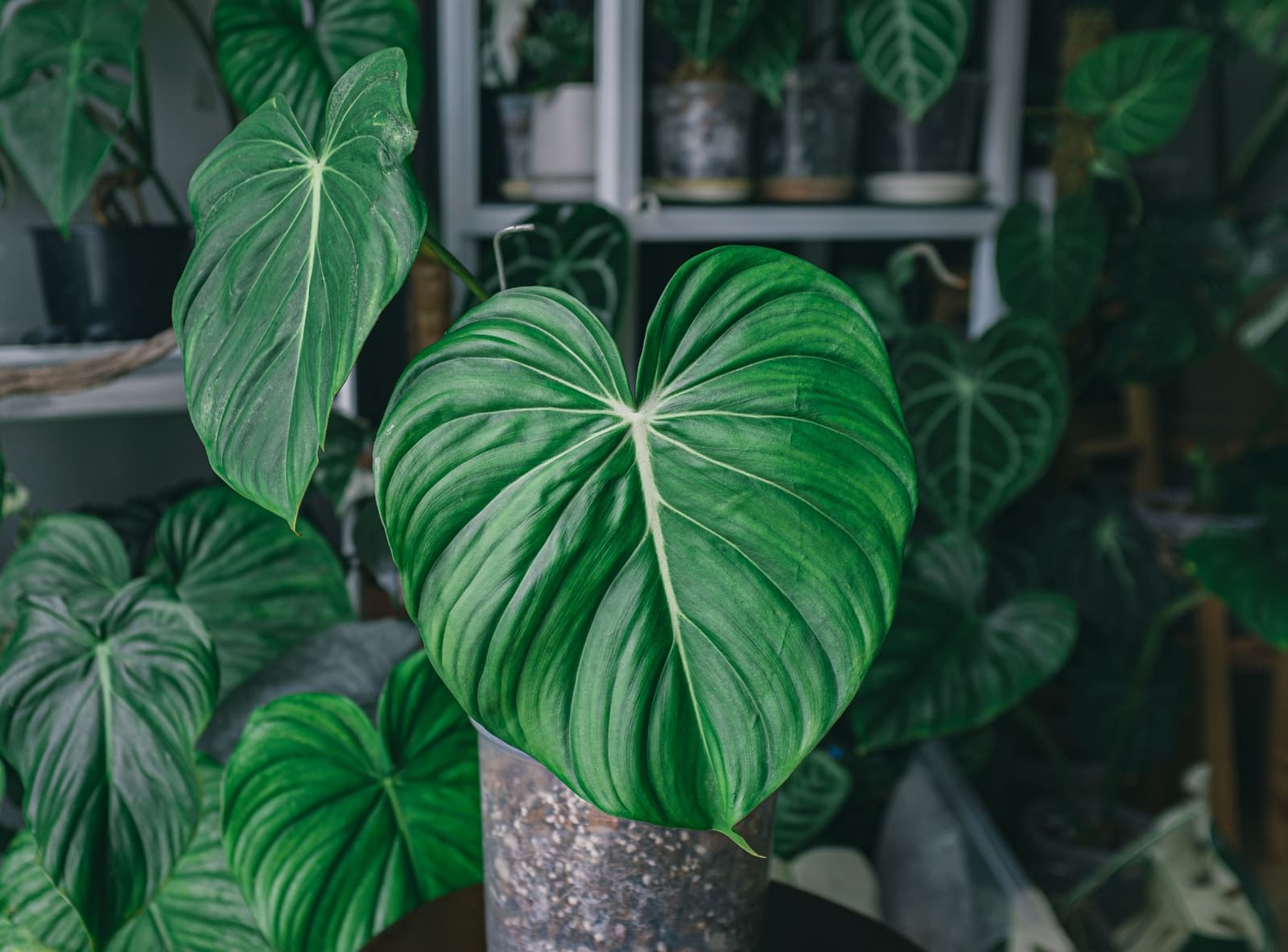
Photographs on this site are licensed stock and are illustrative of the fixture type. We do not own the units we write about.
How this page is funded: the buy links here are Amazon Associates links, and we earn a commission on qualifying purchases at no extra cost to you. We have not been paid to feature anything on this page, we accept no free product, and commission plays no part in the ranking. Full disclosure.
We have not tested these units. Everything below comes from the manufacturer’s own published specifications, or from arithmetic we have shown our working for. Where a figure is not published, we say so instead of estimating one. Read the method.
Quick picks
Efficacy is photons out per joule in. Where a manufacturer publishes it we quote theirs; where they publish photon output and wattage but not efficacy, we divide and label it as ours; where they publish neither, the cell says so rather than guessing. Tap a row for the full write-up.
| # | Product | Best for | Efficacy | Price |
|---|---|---|---|---|
| 1 | 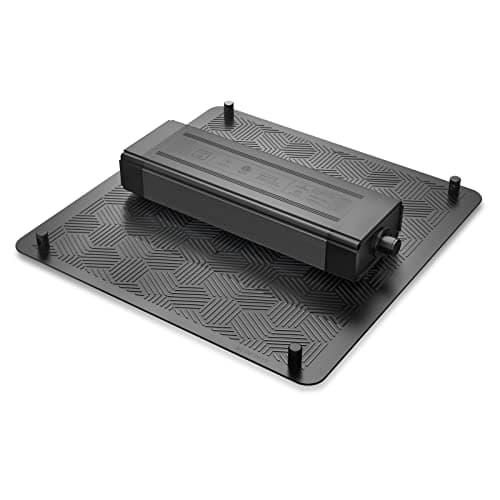 AC Infinity IONBOARD S22 The highest published efficacy of any fixture here at 2.7 umol/J, on Samsung LM301H diodes, with dimming in real 20% steps rather than a vague knob. | Variegated, dimmed exactly | 2.7 umol/J | |
| 2 | 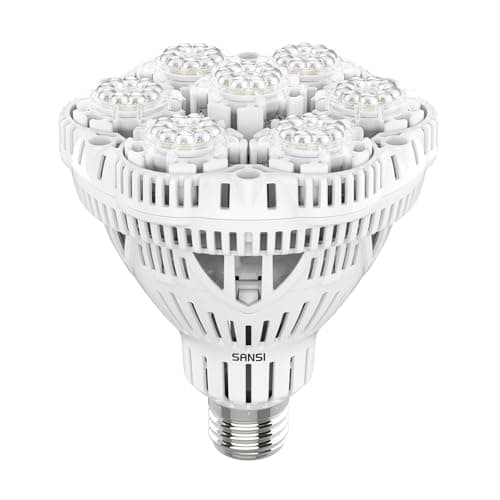 SANSI 36W BR30 Grow Light Bulb The rare grow bulb that publishes both PPF and a PPFD figure with the measurement distance attached, which is the only reason it can be sized honestly. | One plant, one lamp | 1.82 umol/J (ours) | |
| 3 | 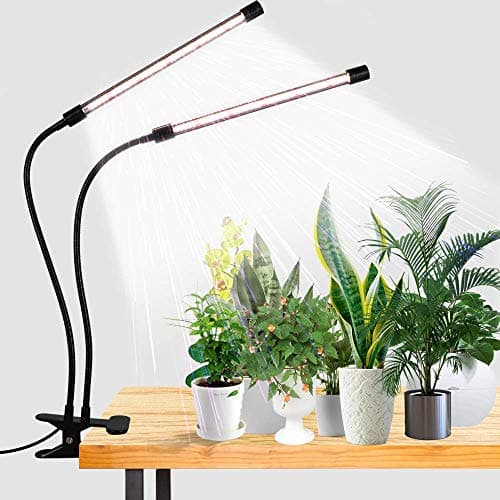 GooingTop Clip Grow Light The cheapest way to put real light on one plant on one desk, and honest about being exactly that — a 10 W clip lamp with a repeating timer. | A trailing heartleaf | Not published |
The reasoning
“Philodendron” covers plants with almost nothing in common as far as light goes. A trailing heartleaf in a hanging basket is one of the most forgiving plants you can own. A pink princess, a white knight, a Florida ghost — the variegated cultivars that cost real money — are among the most light-sensitive. Treating them the same is how people end up with an expensive plant that has gone plain green.
The two halves of the genus
| Type | Examples | Published band | Benefit from a fixture |
|---|---|---|---|
| Plain green vining | Heartleaf, Brasil (mildly variegated), micans | Low (50–150 µmol/m²/s) | Marginal — these tolerate low light well |
| Plain green upright / large-leaf | Selloum, xanadu, birkin | Low–medium (100–200) | Worthwhile — bigger leaves and tighter growth at the top of the range |
| Heavily variegated cultivars | Pink princess, white knight, Florida ghost, ring of fire | Medium (150–250) | Transformative — the variegation itself depends on it |
Pink, white and cream tissue cannot photosynthesize. A leaf that is half variegated is doing the work of half a leaf, so the plant needs proportionally more light to break even — and in too little, it reverts toward green.
The variegated problem, specifically
A pink princess philodendron is bought for the pink. The pink is tissue without chlorophyll. When the plant is short of light it does the sensible thing and grows greener leaves, because green tissue is what keeps it alive — so the pink fades, new leaves come in mostly green, and the plant slowly reverts to something that looks like its cheaper relative.
The reverse is also true, and it is the thing worth paying for a fixture over: steady light at the top of the medium band is what keeps new growth variegated. That is the entire argument, and it is a stronger one than for almost any other plant on this site — a $5 heartleaf is fine in a corner; a $100 cultivar going green is a loss you can prevent for a few dollars a month.
Sizing for each half
Area = 0.093 m².
Plain heartleaf, 100 µmol/m²/s: 100 × 0.093 ÷ 0.8 = 12 µmol/s. Almost nothing — a clip light covers it.
Variegated cultivar, 200 µmol/m²/s: 200 × 0.093 ÷ 0.8 = 23 µmol/s. A single bulb covers it with margin.
A shelf of six variegated plants, 2 × 3 ft: 200 × 0.557 ÷ 0.8 = 139 µmol/s. About half a 100 W panel.
Placement, computed
SANSI publishes light density with a stated distance — 265.58 µmol/m²/s at 1 ft — so a bulb can be placed on paper:
| Distance | PPFD (µmol/m²/s) | Suits |
|---|---|---|
| 12 in | 265.58 (published) | Too much for any philodendron — bleaching risk on variegated tissue |
| 14 in | ~195 | Variegated cultivars — top of the medium band |
| 18 in | ~118 | Upright and large-leaf types |
| 24 in | ~66 | Plain heartleaf, if it needs anything at all |
Two cautions for variegated plants. First, the pale tissue bleaches more easily than green, so the top of the medium band is the target — not the high band. Second, step a plant up gradually; leaves grown at 60 µmol/m²/s will scorch if moved straight to 250.
Why a dimmable fixture earns its place here
A variegated philodendron sits in a narrow window: enough light to keep the variegation, not so much that the pale tissue burns. That is exactly the case for dimming you can repeat. AC Infinity publishes 0 to 100% in 20% increments — five defined positions — so “60% in winter, 40% in summer” is a setting you can write down and return to. An unmarked knob is not.
The full case for repeatable dimming is in the best dimmable grow lights.
The picks, with their real limits
- AC Infinity IONBOARD S22 — for a shelf of variegated plants. 2.7 µmol/J on Samsung LM301H diodes, 20% dimming steps, passively cooled, mounts flat. Con: it publishes a 1098 PPFD figure with no measurement distance, which makes that number unusable, and it publishes no PPF directly — its ~311 µmol/s is our arithmetic.
- SANSI 36W BR30 — for one plant, in a lamp you own. The only bulb we cover you can place by arithmetic. Con: 1.82 µmol/J is a third less efficient than a panel, and it lights one pot.
- GooingTop clip light — for a trailing heartleaf in a hanging basket, where a gooseneck reaches and a lamp does not. Con: no manufacturer spec sheet at all; nothing about its output can be computed or compared.
Hours and cost
Twelve to fourteen hours. Iowa State University Extension suggests 12 to 14 generally with 16 as a ceiling.
One SANSI bulb: 36 W × 12 h ÷ 1000 = 0.432 kWh a day = 12.96 kWh a month = $2.38.
An AC Infinity board at roughly 60%: about 69 W × 12 h ÷ 1000 = 0.83 kWh a day = 24.8 kWh a month = $4.55.
Either is a fraction of what the plant it protects cost.
The honest summary
A plain heartleaf philodendron in a room with a window needs nothing from this page. A variegated cultivar needs steady light at the top of the medium band to stay variegated, and that is one of the clearest cases for a fixture on this entire site — the alternative is watching the thing you paid for fade. Size small, dim precisely, keep it at 14 inches, and step it up gently.
Every pick in full
AC Infinity IONBOARD S22
LED panelVariegated, dimmed exactly
The highest published efficacy of any fixture here at 2.7 umol/J, on Samsung LM301H diodes, with dimming in real 20% steps rather than a vague knob.
What AC Infinity publishes
- Power draw
- 115 W (source)
- Efficacy
- 2.7 umol/J (source)
- PPFD
- 1098 PPFD (no measurement distance published) (source)
- Stated coverage
- 2 x 2 ft (source)
- Spectrum
- Samsung LM301H, plus 660 nm, 730 nm, 3000 K, 6500 K (source)
- Diodes
- 272 diodes (source)
- Dimming
- Yes, 0-100% in 20% increments (source)
- Dimensions
- 30.0 x 30.0 cm board, 1.1 cm thick (source)
- Rated life
- 50,000 hours (source)
Our arithmetic
- Photon output implied by the published wattage and efficacy: about 311 umol/s
115 W x 2.7 umol/J = 310.5 umol/s. AC Infinity does not print PPF directly, so this is our arithmetic from two figures it does print.
What AC Infinity does not publish
- PPF in umol/s — only efficacy is given, so photon output has to be derived
- The measurement distance for the 1098 PPFD figure, without which the number cannot be compared to anything
Who should skip it
Skip it if you want to place it by the numbers. AC Infinity prints 1098 PPFD with no measurement distance attached, which makes that figure impossible to use or compare.
SANSI 36W BR30 Grow Light Bulb
Grow bulbOne plant, one lamp
The rare grow bulb that publishes both PPF and a PPFD figure with the measurement distance attached, which is the only reason it can be sized honestly.
What SANSI publishes
- Power draw
- 36 W (source)
- PPF (photon output)
- 65.6 umol/s (source)
- PPFD
- 265.58 umol/m2/s at 1 ft (source)
- Spectrum
- 4000 K, 400-780 nm, CRI close to 100 (source)
- Rated life
- 25,000 hours (source)
Our arithmetic
- Efficacy, computed from the published figures: 1.82 umol/J
65.6 umol/s / 36 W = 1.82 umol/J. That is roughly a third less efficient than the panels on this page — the price of a screw-in form factor. - Electricity used at 12 hours a day for 30 days: 12.96 kWh a month
36 W x 12 h x 30 d / 1000 = 12.96 kWh.
What SANSI does not publish
- Beam angle
- Fixture dimensions
Who should skip it
Skip it if you are lighting more than one plant. 65.6 umol/s is a small amount of light spread over a cone — it lights a single specimen, not a shelf.
GooingTop Clip Grow Light
Clip lightA trailing heartleaf
The cheapest way to put real light on one plant on one desk, and honest about being exactly that — a 10 W clip lamp with a repeating timer.
What GooingTop publishes
- Power draw
- About 10 W (source)
- Spectrum
- 6000 K, 74 white plus 10 red LEDs, CRI 95 (source)
- Dimming
- Five brightness levels; repeating 4 / 8 / 12 hour timer (source)
What GooingTop does not publish
- PPF in umol/s
- PPFD at any distance
- Photon efficacy in umol/J
- The manufacturer publishes no spec sheet at all; the figures above come from the retail listing
Who should skip it
Skip it if the plant is more than about a foot across, or if you want any number at all before you buy — nobody publishes photon data for this fixture.
Questions people actually ask
+Do philodendrons need grow lights?
+Why is my pink princess losing its pink?
+How close should a grow light be to a variegated philodendron?
+Is a dimmable light worth it for philodendrons?
+Have you grown philodendrons under these lights?
Sources
- University of Minnesota Extension — Lighting for indoor plants and starting seeds — consulted September 2, 2026
- Iowa State University Extension — Important Considerations for Providing Supplemental Light to Indoor Plants — consulted September 2, 2026
- SANSI — BR30 36W grow light bulb product page — consulted September 2, 2026
- AC Infinity — IONBOARD S22 published specifications — consulted September 2, 2026
- GooingTop clip grow light — retail listing specifications (no manufacturer spec sheet published) — consulted September 2, 2026
- US Energy Information Administration — Electric Power Monthly, Table 5.3 (US residential average, June 2026) — consulted September 2, 2026
Read next
Houseplants
Grow Lights for Pothos
When a pothos needs a fixture, the lamp distance that hits the low band, and the variegation exception.
Top pick
SANSI 36W BR30 Grow Light Bulb
Houseplants
Grow Lights for Monstera
The 6-10 mol/m2/day target for monstera, what it means for fixture size, and the truth about fenestration.
Top pick
SANSI 36W BR30 Grow Light Bulb
Houseplants
What Plants Benefit From Grow Lights?
Plants ranked by how much a fixture actually changes the outcome, not by their light band.
Top pick
Barrina T5 4ft Grow Light Strips
Reviews
The Best Dimmable Grow Lights
Which fixtures dim in repeatable steps versus an unmarked knob, and when dimming actually matters.
Top pick
AC Infinity IONBOARD S22
Houseplants
Grow Lights for Alocasia
The top of the 6-10 mol/m2/day band, without direct exposure. Target, distance and three fixtures.
Top pick
SANSI 36W BR30 Grow Light Bulb
Where this sits
This page belongs to Grow Lights for Houseplants and Winter. Every figure on it is either quoted from a named published source or derived in view — the full method is on our methodology page, and how the site is funded is on the affiliate disclosure.