Can You Grow Tomatoes Indoors Under a Grow Light?
Yes, and the limit is area rather than possibility. Fruiting takes two to three times what a seedling does, which is why the honest answer is one plant and not a row.
By Scooter M. — An enthusiast who's genuinely into this. I read the manuals, compile the published specs, and do the math. No lab coat.
Published · How we pick
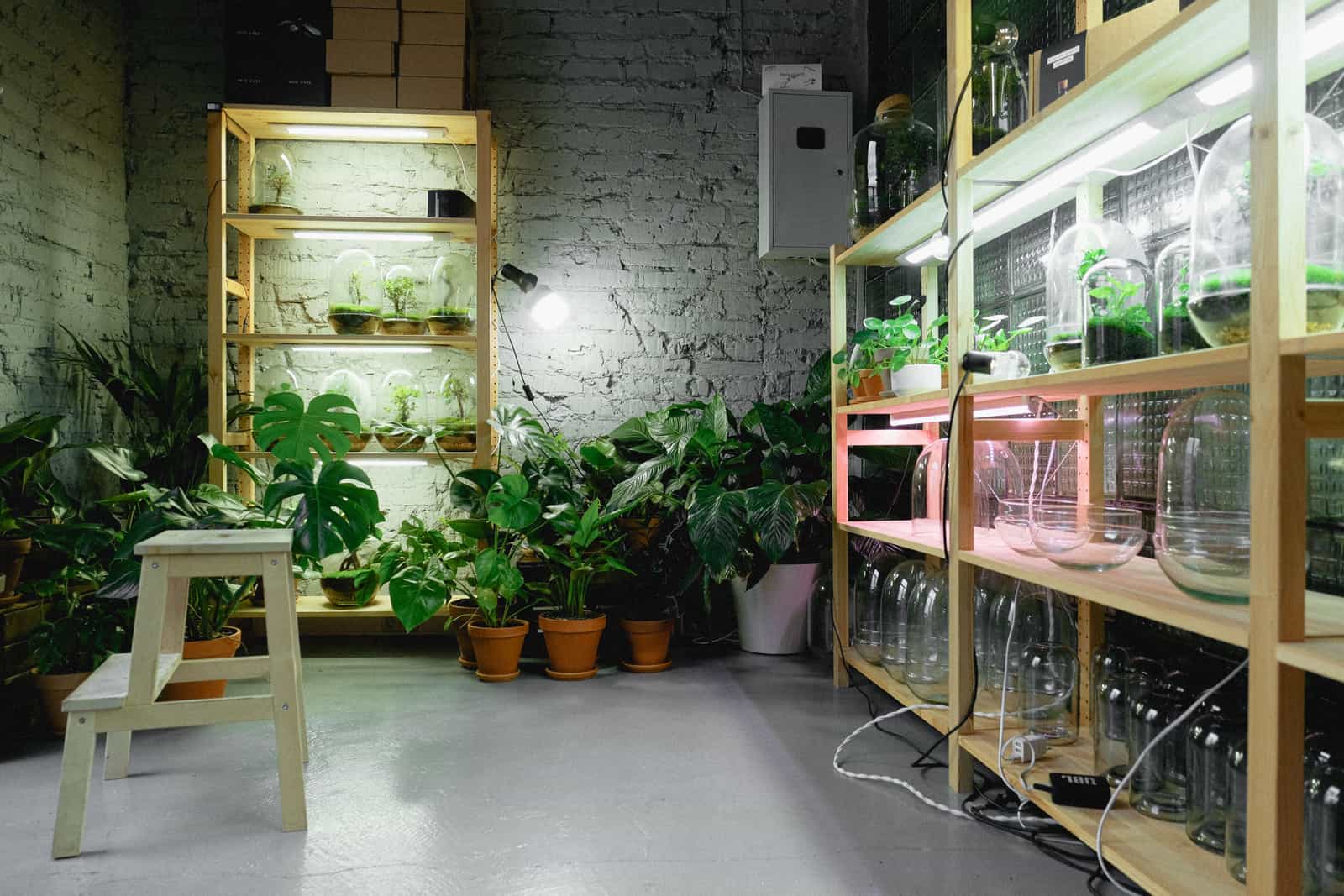
Photographs on this site are licensed stock and are illustrative of the fixture type. We do not own the units we write about.
How this page is funded: the buy links here are Amazon Associates links, and we earn a commission on qualifying purchases at no extra cost to you. We have not been paid to feature anything on this page, we accept no free product, and commission plays no part in the ranking. Full disclosure.
We have not tested these units. Everything below comes from the manufacturer’s own published specifications, or from arithmetic we have shown our working for. Where a figure is not published, we say so instead of estimating one. Read the method.
Quick picks
Efficacy is photons out per joule in. Where a manufacturer publishes it we quote theirs; where they publish photon output and wattage but not efficacy, we divide and label it as ours; where they publish neither, the cell says so rather than guessing. Tap a row for the full write-up.
| # | Product | Best for | Efficacy | Price |
|---|---|---|---|---|
| 1 | 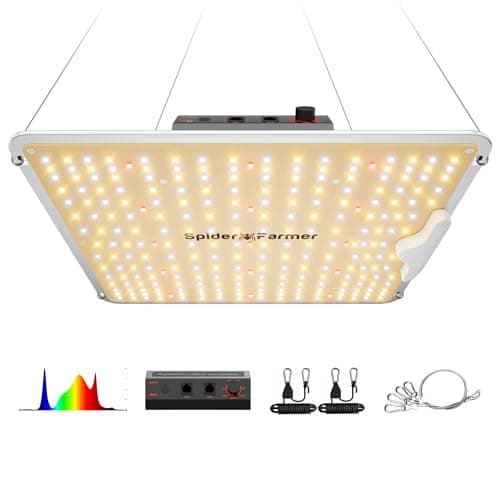 Spider Farmer SF1000 Publishes PPF to two decimal places and an efficacy figure that actually divides out of it. That internal consistency is rarer in this category than it should be. | One fruiting plant, two feet square | 2.5 umol/J | |
| 2 | 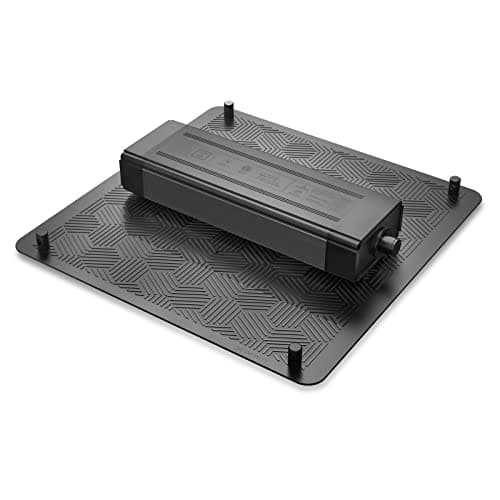 AC Infinity IONBOARD S22 The highest published efficacy of any fixture here at 2.7 umol/J, on Samsung LM301H diodes, with dimming in real 20% steps rather than a vague knob. | The same crop on less electricity | 2.7 umol/J | |
| 3 | 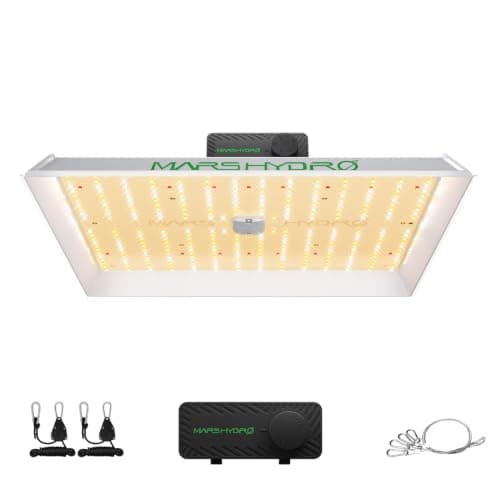 Mars Hydro TS 1000 The most photons of anything on this list, and one of only three fixtures here that publishes both PPF and efficacy so the claim can be checked against itself. | The widest fruiting footprint | 2.3 umol/J |
The reasoning
Yes — over an area of about two feet square, with a 100 W LED board run sixteen hours a day. Virginia Cooperative Extension puts fruiting tomatoes at 20 to 30 mol/m²/day, and a Spider Farmer SF1000 over a 2 × 2 ft footprint delivers about 31 on that schedule. One dwarf or determinate plant, properly lit, is realistic. A row of full-size tomatoes under a shop light is not, and the number above is why.
We have not tested these fixtures. Everything below is published specification and extension targets, divided out in view.
The number that decides the whole question
Virginia Cooperative Extension’s guide to calculating and using daily light integral gives suggested DLI by crop, and the spread across its own table is the useful part.
| Crop | Suggested DLI | Relative to a seedling |
|---|---|---|
| Tomato (fruiting) | 20-30 | Three to four times |
| Cucumber, zucchini | 20-30 | Three to four times |
| Basil | 15-25 | Two to three times |
| Spinach | 14-20 | Two to three times |
| Lettuce | 12-17 | Roughly double |
| Micro-greens | 9-12 | Slightly more |
| Seedlings, cuttings | 5-10 | — |
A tomato that is making fruit wants three to four times what the same plant wanted as a seedling. This site uses the University of New Hampshire’s roughly 12 mol/m²/day for seed trays, which is a higher seedling figure than Virginia’s — and even against that, fruiting is still a doubling. Either way the conclusion holds: a fixture that raised beautiful seedlings in March is not automatically a fixture that can fruit a tomato in December.
Our tomato seedling page calls the fruiting target a greenhouse problem rather than a windowsill one. This page is what happens when you decide to take the greenhouse problem indoors anyway.
What it takes, worked out
The method is the same one used across this site: take the published photon output, assume 80% of it lands inside the fixture’s footprint, divide by the area, and multiply by the hours.
249.21 µmol/s published. 2 × 2 ft = 4 sq ft = 0.3716 m².
249.21 × 0.8 ÷ 0.3716 = 536 µmol/m²/s at the canopy.
At 16 hours: 536 × 16 × 3600 ÷ 1,000,000 = 30.9 mol/m²/day. At 14 hours, 27.0. At 12 hours, 23.2.
So a single 100 W board holds the top of the fruiting band over four square feet, and the bottom of it at twelve hours. That is the entire answer to “can you”, and it is a yes.
AC Infinity IONBOARD S22: 2.7 µmol/J × 115 W = about 311 µmol/s (ours — AC Infinity publishes no PPF). Over the same 2 × 2 ft: 668 µmol/m²/s, or 38.5 mol/m²/day at 16 hours and 28.9 at 12.
Mars Hydro TS 1000: 343 µmol/s over its published 2.5 × 2.5 ft (0.5806 m²) = 473 µmol/m²/s, or 27.2 mol/m²/day at 16 hours — the fruiting band over 6.25 square feet rather than 4.
Why no grow bulb can do this, shown two ways
It is tempting to think a bright bulb over one small plant gets there, because the area is so much smaller. The arithmetic says yes and the measurement says no, and the disagreement is instructive enough to show in full.
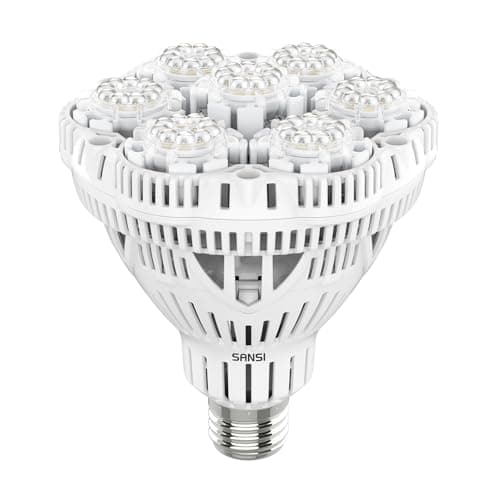
SANSI 36W BR30: 65.6 µmol/s published. One square foot = 0.0929 m².
65.6 × 0.8 ÷ 0.0929 = 565 µmol/m²/s, which at 16 hours is 32.5 mol/m²/day — apparently inside the fruiting band.
SANSI also publishes a PPFD with the distance attached: 265.58 µmol/m²/s at 1 ft.
265.58 × 16 × 3600 ÷ 1,000,000 = 15.3 mol/m²/day — half the first figure, and well under the 20 to 30 band.
Trust the measurement. The area method assumes the bulb’s cone fills exactly one square foot at twelve inches, and it does not — the beam spreads wider, so the light per square meter directly beneath is lower than the division implies. When a published measurement and a derived estimate disagree, the measurement wins and the estimate was carrying a hidden assumption.
You could close the gap by dropping the bulb to eight inches, where inverse square gives about 598 µmol/m²/s and 34 mol/m²/day. But eight inches above a plant that is also trying to grow upward is a few weeks of clearance at best, and the lit footprint shrinks with the height. For a fruiting crop, a board is the answer and a bulb is not.
The part light cannot solve: pollination
A tomato flower indoors has no wind and no bees. Writing for University of Illinois Extension, horticulture educator Rhonda Ferree puts the two requirements together: “the trick to growing tomatoes indoors is good light and pollinating flowers by hand”.
In practice that means flicking or gently shaking each flower cluster every day or two while the plant is in bloom, which releases pollen within the flower. It takes seconds and it is not optional: a perfectly lit indoor tomato that is never shaken produces flowers that drop without setting fruit, and the owner blames the light.
Two other things sit outside what this site can compute, and both decide whether you get tomatoes. Pot volume — a fruiting plant in a small pot runs out of water daily. And variety: the same Illinois Extension post notes that some of the extreme small types are determinate as well as dwarf, “producing some truly tiny fruiting plants”, and describes a cherry cultivar “growing only five to six inches tall”. A plant that size fits the lit footprint a board actually provides; a six-foot indeterminate beefsteak does not, at any wattage.
What it costs to run
The fixture is on for sixteen hours a day through a crop that takes three to four months from flower to harvest.
SF1000, 100 W: 100 × 16 × 30 ÷ 1000 = 48 kWh a month = $8.80 at the US residential average of 18.34 cents per kWh. Over four months, about $35.
IONBOARD S22, 115 W: 55.2 kWh = $10.12 a month, about $40 over the same crop — for 25% more light.
Mars Hydro TS 1000, 150 W: 72 kWh = $13.20 a month, $53 over four months, across a larger footprint.
Be honest with yourself about that figure. Thirty-five dollars of electricity, plus the fixture, plus pots and soil, against a plant that may give you a few dozen cherry tomatoes. This is a hobby with a satisfying output, not a way to reduce a grocery bill, and anyone selling it as the latter is not showing you this arithmetic.
If the goal is food rather than specifically tomatoes
Everything gets easier one row up the table. Lettuce at 12 to 17 mol/m²/day needs roughly half the light of a fruiting tomato, which means the same SF1000 covers twice the area — or the same area on half the hours.
249.21 µmol/s over a 4 × 2 ft bench (0.743 m²): 249.21 × 0.8 ÷ 0.743 = 268 µmol/m²/s.
At 16 hours: 15.4 mol/m²/day — inside the 12 to 17 lettuce band, over twice the floor area.
So the honest ranking for an indoor edible garden is leafy greens first, herbs second, fruiting crops last — and if you are building a system rather than lighting a pot, the fixture choices are in grow lights for hydroponics. Peppers, incidentally, do not appear in Virginia’s table at all, so we have no published target to give you for them; they are usually treated alongside tomatoes, and we are not going to invent a number to confirm it.
1. Spider Farmer SF1000 — one fruiting plant, two feet square
249.21 µmol/s at a published 2.5 µmol/J, which is the figure the division confirms, delivering about 31 mol/m²/day over 4 sq ft at sixteen hours. It is the cheapest fixture here that genuinely reaches the fruiting band, and it dims, which matters when the plant is small.
Best for: a single dwarf or determinate tomato in a pot, lit properly rather than hopefully.
The downside: no PPFD published at any distance, so the hanging height comes from your own arithmetic rather than a measured curve. 16 hours a day for four months is about $35 of electricity, and the 2 × 2 ft footprint is a hard edge — a plant that sprawls past it is unlit at the margins.
2. AC Infinity IONBOARD S22 — the same crop on less electricity
At a published 2.7 µmol/J it is the most efficient fixture we cover, and the implied 311 µmol/s puts the fruiting band comfortably within reach even on a twelve-hour day — 28.9 mol/m²/day, which is a meaningfully shorter photoperiod for the same result.
Best for: a fruiting crop you intend to run for months, where efficacy compounds into real money.
The downside: every figure above for this board is ours, because AC Infinity publishes no PPF in µmol/s and attaches no distance to its “1098 PPFD” claim. We are confident in 2.7 × 115, but it is a derivation rather than a published number, and on a crop this light-hungry that uncertainty is worth stating.
3. Mars Hydro TS 1000 — the widest fruiting footprint
343 µmol/s is the largest published photon figure on this site, and spread over its published 2.5 × 2.5 ft it still delivers 27.2 mol/m²/day at sixteen hours. That is the fruiting band over 6.25 square feet — two plants, or one with room to sprawl.
Best for: more than one fruiting plant, or a determinate variety that will not stay inside a two-foot square.
The downside: 150 W is $13.20 a month, the most expensive fixture here to run, and at 2.3 µmol/J it sits below the 2.5 µmol/J commercial efficacy minimum — you are buying output rather than efficiency. Mars Hydro also quotes a smaller footprint for flowering than for vegetative growth, so take the 2.3 ft square figure rather than the 2.5 for a fruiting crop.
The honest summary
Can you grow tomatoes indoors under a grow light? Yes, for one plant, over about four square feet, with a 100 W board at sixteen hours a day, a dwarf or determinate variety, a pot big enough to hold water, and a daily flick of each flower cluster. Everything in that sentence is required, and the light is only the part we can compute for you.
If any of it sounds like more commitment than you wanted, the same fixture will grow you a bench of lettuce over twice the area, which is the crop this arithmetic actually favours.
Every pick in full
Spider Farmer SF1000
LED panelOne fruiting plant, two feet square
Publishes PPF to two decimal places and an efficacy figure that actually divides out of it. That internal consistency is rarer in this category than it should be.
What Spider Farmer publishes
- Power draw
- 100 W +/-5% at 100-277 V AC (source)
- PPF (photon output)
- 249.21 umol/s (source)
- Efficacy
- 2.5 umol/J (source)
- Stated coverage
- 2 x 2 ft core, 3 x 3 ft maximum (source)
- Spectrum
- 650-665 nm, 730-740 nm, 2800-3000 K, 4800-5000 K (source)
- Diodes
- Bridgelux (source)
- Dimming
- Yes, dimming knob (source)
- Dimensions
- 32.5 x 29.0 x 5.9 cm (source)
- Rated life
- 55,000 hours (source)
Our arithmetic
- Does the published efficacy check out against the published PPF?: Yes — 2.49 umol/J computed against 2.5 umol/J published
249.21 umol/s / 100 W = 2.4921 umol/J. The published 2.5 umol/J is that number rounded. Not every brand's two figures agree like this, which is exactly why we divide them. - Average PPFD across its 2 x 2 ft core footprint: about 536 umol/m2/s
2 ft x 2 ft = 4 sq ft = 0.372 m2. 249.21 / 0.372 = 670 umol/m2/s at perfect uniformity; at a 0.8 uniformity factor, about 536 umol/m2/s.
Who should skip it
Skip it if raw output is what you are buying — the TS 1000 delivers 38% more photons per second, at the cost of 50 W more draw.
AC Infinity IONBOARD S22
LED panelThe same crop on less electricity
The highest published efficacy of any fixture here at 2.7 umol/J, on Samsung LM301H diodes, with dimming in real 20% steps rather than a vague knob.
What AC Infinity publishes
- Power draw
- 115 W (source)
- Efficacy
- 2.7 umol/J (source)
- PPFD
- 1098 PPFD (no measurement distance published) (source)
- Stated coverage
- 2 x 2 ft (source)
- Spectrum
- Samsung LM301H, plus 660 nm, 730 nm, 3000 K, 6500 K (source)
- Diodes
- 272 diodes (source)
- Dimming
- Yes, 0-100% in 20% increments (source)
- Dimensions
- 30.0 x 30.0 cm board, 1.1 cm thick (source)
- Rated life
- 50,000 hours (source)
Our arithmetic
- Photon output implied by the published wattage and efficacy: about 311 umol/s
115 W x 2.7 umol/J = 310.5 umol/s. AC Infinity does not print PPF directly, so this is our arithmetic from two figures it does print.
What AC Infinity does not publish
- PPF in umol/s — only efficacy is given, so photon output has to be derived
- The measurement distance for the 1098 PPFD figure, without which the number cannot be compared to anything
Who should skip it
Skip it if you want to place it by the numbers. AC Infinity prints 1098 PPFD with no measurement distance attached, which makes that figure impossible to use or compare.
Mars Hydro TS 1000
LED panelThe widest fruiting footprint
The most photons of anything on this list, and one of only three fixtures here that publishes both PPF and efficacy so the claim can be checked against itself.
What Mars Hydro publishes
- Power draw
- 150 W +/-5% at 100-277 V AC (source)
- PPF (photon output)
- 343 umol/s (source)
- Efficacy
- 2.3 umol/J (source)
- Stated coverage
- 2.5 x 2.5 ft vegetative, 2.3 x 2.3 ft flowering (source)
- Spectrum
- 660-665 nm, 730-740 nm, 3000 K, 5000 K (source)
- Diodes
- Bridgelux (source)
- Dimming
- Yes, 0-100% dimmer knob (source)
- Dimensions
- 406 x 326 x 50 mm (source)
Our arithmetic
- Average PPFD across its stated 2.5 x 2.5 ft vegetative footprint: about 470 umol/m2/s
2.5 ft x 2.5 ft = 6.25 sq ft = 0.581 m2. 343 umol/s divided by 0.581 m2 = 590 umol/m2/s at perfect uniformity; applying a 0.8 uniformity factor gives about 472 umol/m2/s average. - Electricity used at 14 hours a day for 30 days: 63.0 kWh a month
150 W x 14 h x 30 d / 1000 = 63.0 kWh.
Who should skip it
Skip it if you are lighting a bookshelf. 343 umol/s concentrated into a 2.5 ft square is far more light than a monstera wants, and you pay 150 W to deliver it.
Questions people actually ask
+Can you grow tomatoes indoors under a grow light?
+How much light does a tomato plant need indoors?
+Can a grow light bulb grow a tomato plant?
+Do indoor tomatoes need to be hand pollinated?
+What is easier to grow indoors than tomatoes?
Sources
- Virginia Cooperative Extension — Calculating and Using Daily Light Integral (DLI), SPES-720 — consulted September 2, 2026
- University of Illinois Extension — Rhonda Ferree, Dwarf Tomatoes Save Space (ILRiverHort, 12 May 2017) — consulted October 30, 2026
- University of New Hampshire Extension — Growing Seedlings Under Lights — consulted September 2, 2026
- Iowa State University Extension — Important Considerations for Providing Supplemental Light to Indoor Plants — consulted September 2, 2026
- Spider Farmer — SF1000 published specification table — consulted September 2, 2026
- AC Infinity — IONBOARD S22 published specifications — consulted September 2, 2026
- Mars Hydro — TS 1000 published specification table — consulted September 2, 2026
- SANSI — BR30 36W grow light bulb product page — consulted September 2, 2026
- DesignLights Consortium — Horticultural Technical Requirements V4.0, effective April 18 2025 — consulted October 30, 2026
- US Energy Information Administration — Electric Power Monthly, Table 5.3 (US residential average, June 2026) — consulted September 2, 2026
Read next
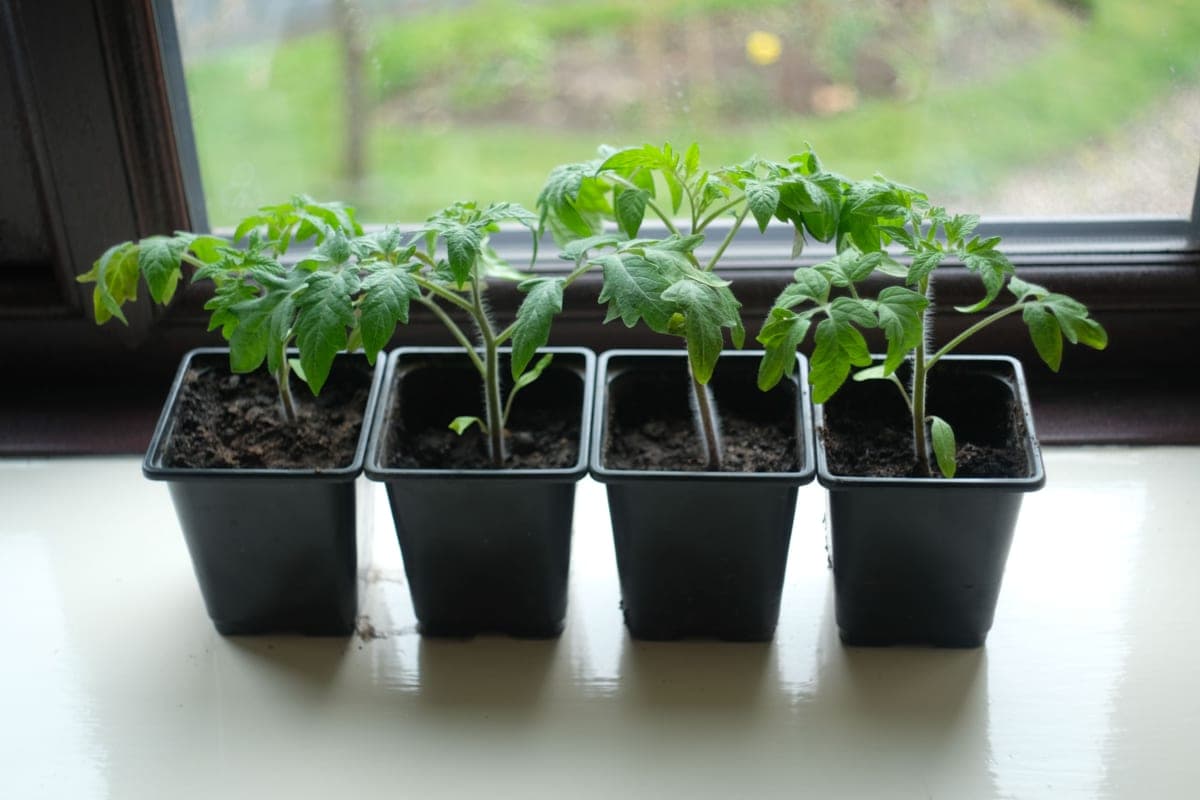
Seed Starting
Grow Lights for Tomato Seedlings
Tomato seedlings stretch faster than anything else on the shelf. The target, the hours, and what reaches them.
Top pick
Spider Farmer SF1000
Reviews
Best Grow Lights for Hydroponics
Leafy greens want 12-16 mol/m2/day. Four fixtures sized to that, and the damp ratings water changes.
Top pick
GE Grow Light 24in LED Fixture, Seeds and Greens
Coverage & Sizing
PPFD Targets by Plant Type
Published light bands mapped to common indoor plants, with the DLI each implies.
Top pick
GooingTop Clip Grow Light
Coverage & Sizing
What Size Grow Light Do I Need?
Size from area and target, not from watts. The sum, plus a lookup table by area.
Top pick
SANSI 36W BR30 Grow Light Bulb
Houseplants
Grow Lights for Herbs Indoors
Culinary herbs want 9-20 mol/m2/day. Why kitchen herbs fail, and what actually reaches the target.
Top pick
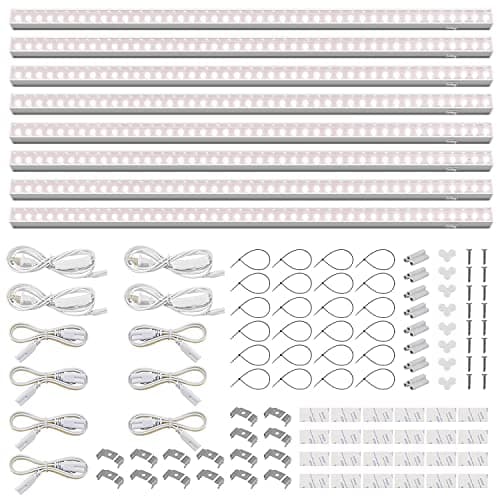
Barrina T5 4ft Grow Light Strips
Where this sits
This page belongs to Coverage and Sizing Math. Every figure on it is either quoted from a named published source or derived in view — the full method is on our methodology page, and how the site is funded is on the affiliate disclosure.