GooingTop Clip Grow Light
The cheapest way to put real light on one plant on one desk, and honest about being exactly that — with no published data whatsoever.
By Scooter M. — An enthusiast who's genuinely into this. I read the manuals, compile the published specs, and do the math. No lab coat.
Published · How we pick
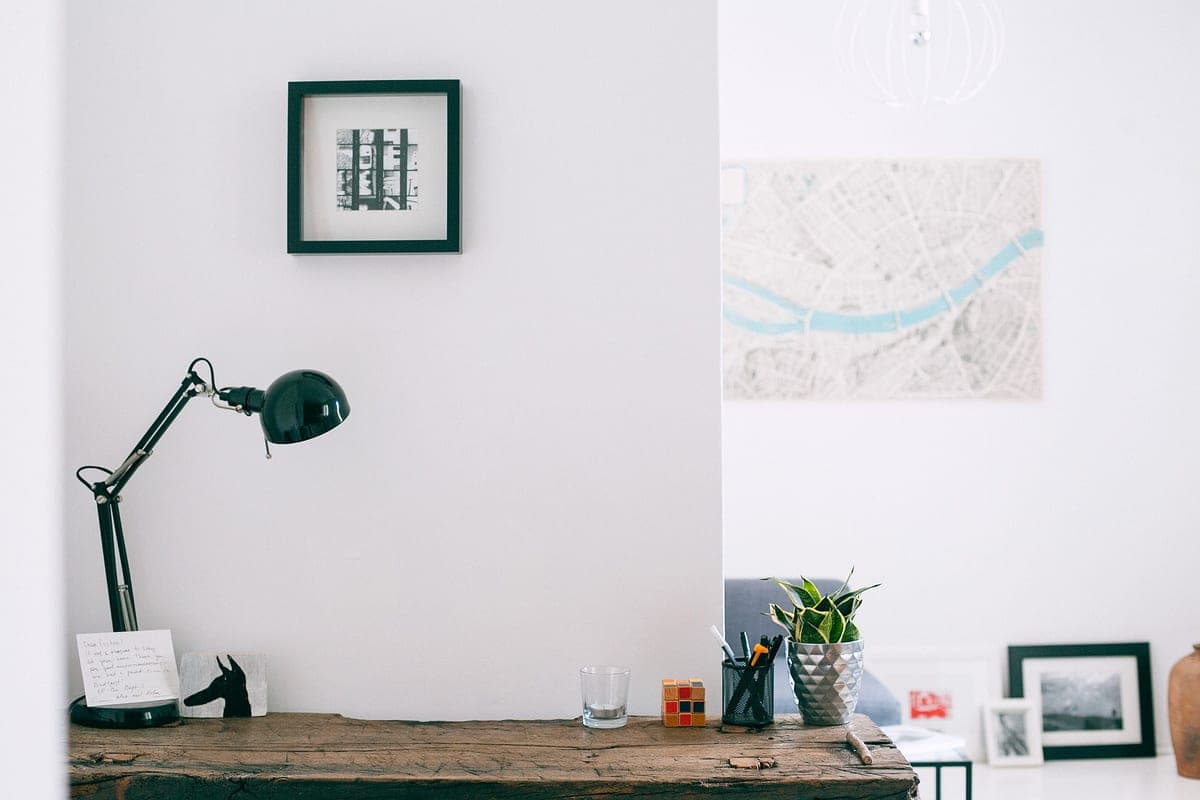
Photographs on this site are licensed stock and are illustrative of the fixture type. We do not own the units we write about.
How this page is funded: the buy links here are Amazon Associates links, and we earn a commission on qualifying purchases at no extra cost to you. We have not been paid to feature anything on this page, we accept no free product, and commission plays no part in the ranking. Full disclosure.
We have not tested these units. Everything below comes from the manufacturer’s own published specifications, or from arithmetic we have shown our working for. Where a figure is not published, we say so instead of estimating one. Read the method.
The reasoning
We have not tested this light, and in this case there is an additional layer to the disclosure: GooingTop publishes no manufacturer spec sheet at all. The figures below come from the retail listing, which is a weaker source than a manufacturer specification and we are labeling it as such.
Everything we can report comes from the retail listing. That is a materially weaker source than a manufacturer spec sheet, and it is the reason this page is shorter on numbers than the others.
What the listing states
About 10 W. 6000 K. 74 white plus 10 red LEDs, CRI 95. Five brightness levels and a repeating 4, 8 or 12-hour timer built in. A gooseneck and a clamp.
There is no PPF, no PPFD at any distance, and no efficacy figure. Nothing about its light output can be computed, compared or checked.
Why we still cover it
Because the alternative for its actual use case is not a better-documented grow light — it is nothing at all. This is a lamp for one plant on a desk where there is no socket, no shelf to mount under, and no intention of hanging a fixture. For that job the competition is a window that does not get enough sun.
It is also honest about its scale in a way the category often is not. A 10 W clip lamp is not pretending to be a 1000 W panel.
The built-in timer is the underrated feature
A repeating 4, 8 or 12-hour cycle means no separate timer to buy and no remembering. Photoperiod consistency matters more than most people realize — plants respond to the regularity of the cycle, and a human running a light by hand over a five-month winter is not regular. Having it in the fixture removes the failure mode entirely.
The trade-off: a built-in repeating timer restarts from when you switch it on rather than tracking a clock, so a power interruption shifts the whole schedule. That is a minor issue for one plant and a real one for a rack, which is another reason this is a single-plant product.
What we can compute: the cost
10 W × 12 h ÷ 1000 = 0.12 kWh a day.
0.12 × 30 = 3.6 kWh a month = $0.66.
Across an October-to-March season (182 days): 21.8 kWh = $4.00 for the entire winter.
That is the cheapest running cost on this site by a wide margin, and it is one of only two things about this fixture we can put a number to.
Where it fails
- Anything bigger than about a foot across. A gooseneck aims a small amount of light at a point. Two feet away it is doing very little.
- Seedlings. Trays are rectangles, seedlings are unforgiving, and 10 W is not enough. A strip is the correct tool and costs little more.
- Anyone who wants to know what they are buying. With no spec sheet at all, this is the least computable purchase on the site.
Who should buy it
Someone with one plant, one desk, no socket and no intention of mounting anything. Within that description it is genuinely the right answer, and outside it there is almost always a better one — see clip light versus panel versus bar.
The fixture in full
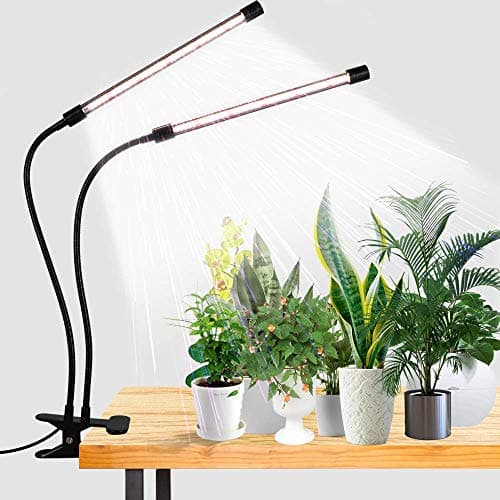
GooingTop Clip Grow Light
Clip lightThe cheapest way to put real light on one plant on one desk, and honest about being exactly that — a 10 W clip lamp with a repeating timer.
What GooingTop publishes
- Power draw
- About 10 W (source)
- Spectrum
- 6000 K, 74 white plus 10 red LEDs, CRI 95 (source)
- Dimming
- Five brightness levels; repeating 4 / 8 / 12 hour timer (source)
What GooingTop does not publish
- PPF in umol/s
- PPFD at any distance
- Photon efficacy in umol/J
- The manufacturer publishes no spec sheet at all; the figures above come from the retail listing
Who should skip it
Skip it if the plant is more than about a foot across, or if you want any number at all before you buy — nobody publishes photon data for this fixture.
Questions people actually ask
+How much light does the GooingTop clip light produce?
+Is a clip grow light enough for a houseplant?
+How much does a clip grow light cost to run?
+Does the built-in timer work well?
Sources
- GooingTop clip grow light — retail listing specifications (no manufacturer spec sheet published) — consulted September 2, 2026
- US Energy Information Administration — Electric Power Monthly, Table 5.3 (US residential average, June 2026) — consulted September 2, 2026
- Iowa State University Extension — Important Considerations for Providing Supplemental Light to Indoor Plants — consulted September 2, 2026
Read next
Reviews
The Best Desktop Grow Lights
Four fixtures for a single desk plant, and why a panel is the wrong tool for one square foot.
Top pick
GooingTop Clip Grow Light
Houseplants
Clip Light vs Panel vs Bar
Form factor decides more than brand. Which shape suits which setup, and where each stops working.
Top pick
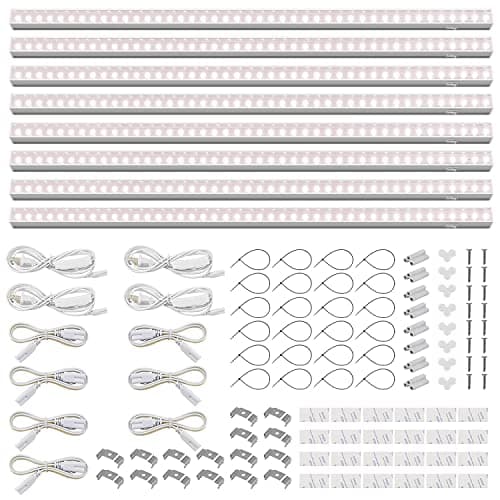
Barrina T5 4ft Grow Light Strips
Reviews
The Best Grow Lights
The main ranking: nine fixtures sorted on published data, with every gap named.
Top pick
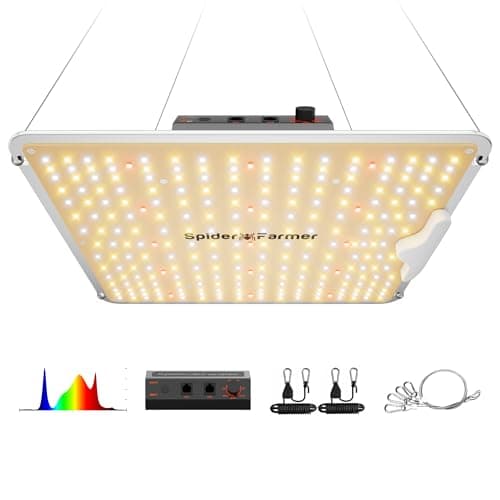
Spider Farmer SF1000
Spectrum & PPFD
Grow Light vs Regular LED Bulb
Household bulbs emit usable light but cannot be sized. Where the line actually falls.
Top pick
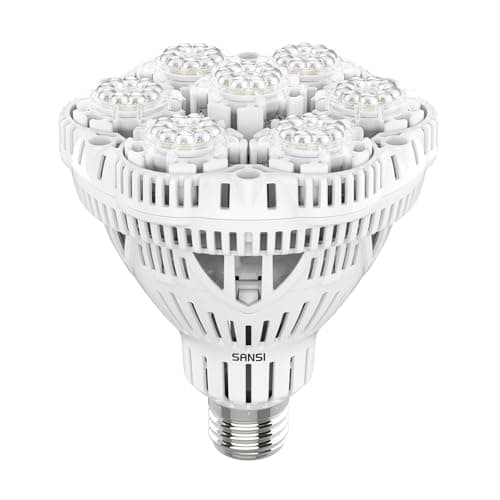
SANSI 36W BR30 Grow Light Bulb
Coverage & Sizing
Grow Light Hours Per Day, by Plant
Published photoperiod guidance by plant, plus the cost of each additional hour.
Top pick
GooingTop Clip Grow Light
Reviews
Grow Lights for Terrariums
Terrarium plants sit in the 3-6 mol/m2/day band. The target, the heat trap, and three fixtures sized for glass.
Top pick
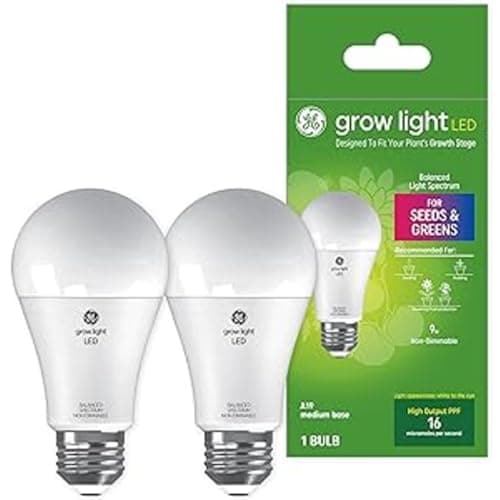
GE Grow A19 Bulb, Seeds and Greens (2-pack)
Where this sits
This page belongs to Fixture Reviews and Roundups. Every figure on it is either quoted from a named published source or derived in view — the full method is on our methodology page, and how the site is funded is on the affiliate disclosure.