Grow Lights for Microgreens
The one indoor crop where a cheap light is genuinely sufficient, because you harvest before the plant ever needs more.
By Scooter M. — An enthusiast who's genuinely into this. I read the manuals, compile the published specs, and do the math. No lab coat.
Published · How we pick
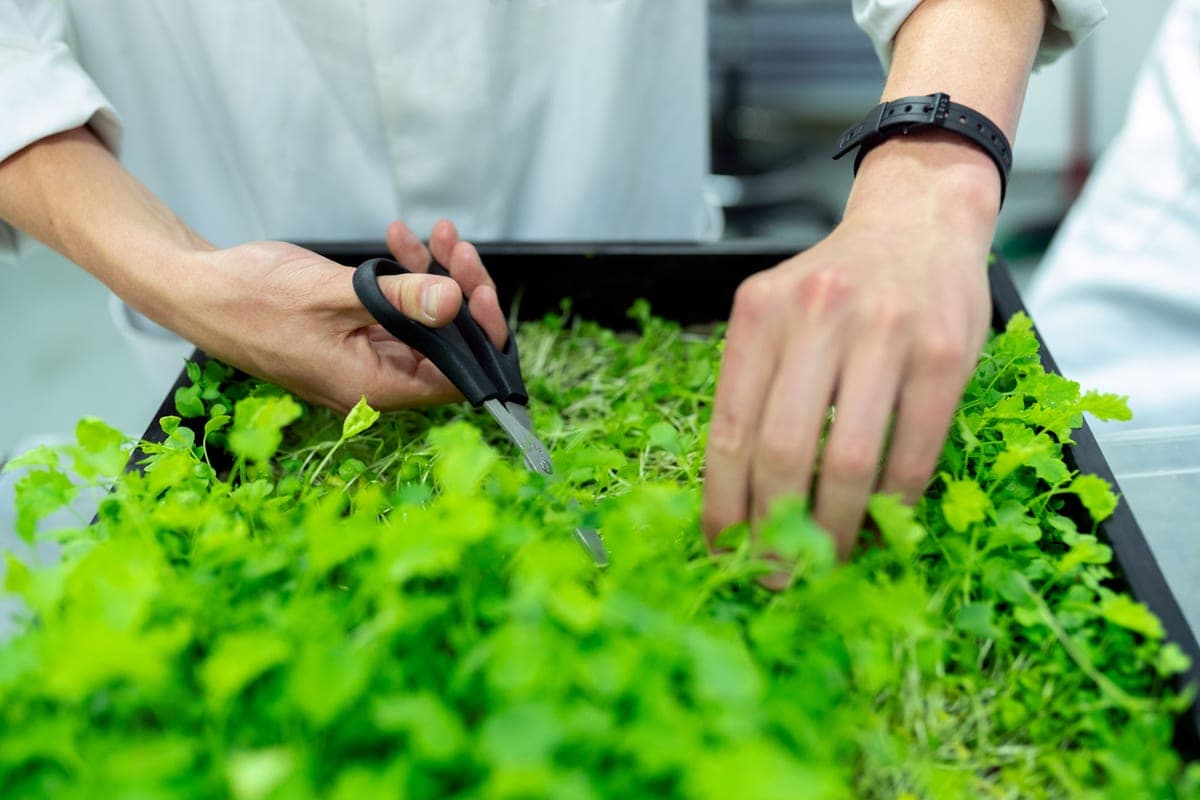
Photographs on this site are licensed stock and are illustrative of the fixture type. We do not own the units we write about.
How this page is funded: the buy links here are Amazon Associates links, and we earn a commission on qualifying purchases at no extra cost to you. We have not been paid to feature anything on this page, we accept no free product, and commission plays no part in the ranking. Full disclosure.
We have not tested these units. Everything below comes from the manufacturer’s own published specifications, or from arithmetic we have shown our working for. Where a figure is not published, we say so instead of estimating one. Read the method.
Quick picks
Efficacy is photons out per joule in. Where a manufacturer publishes it we quote theirs; where they publish photon output and wattage but not efficacy, we divide and label it as ours; where they publish neither, the cell says so rather than guessing. Tap a row for the full write-up.
| # | Product | Best for | Efficacy | Price |
|---|---|---|---|---|
| 1 | 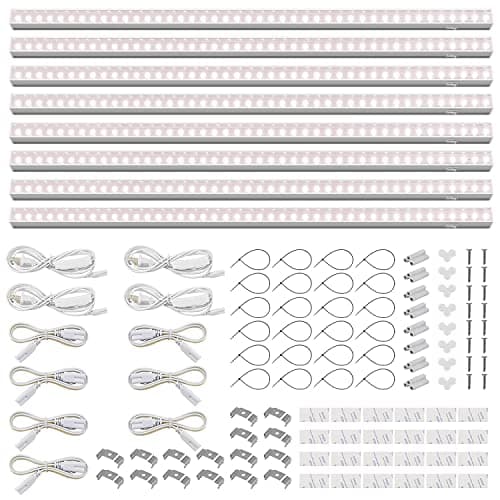 Barrina T5 4ft Grow Light Strips The default seed-starting bar for good reasons — 4 ft long, linkable in series, cheap per foot — and the reason we built a coverage calculator, because Barrina publishes no photon data whatsoever. | Stacked trays | Not published | |
| 2 | 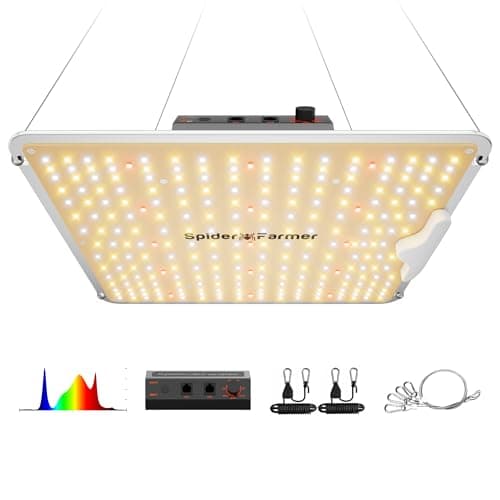 Spider Farmer SF1000 Publishes PPF to two decimal places and an efficacy figure that actually divides out of it. That internal consistency is rarer in this category than it should be. | One tray, verifiable | 2.5 umol/J | |
| 3 | 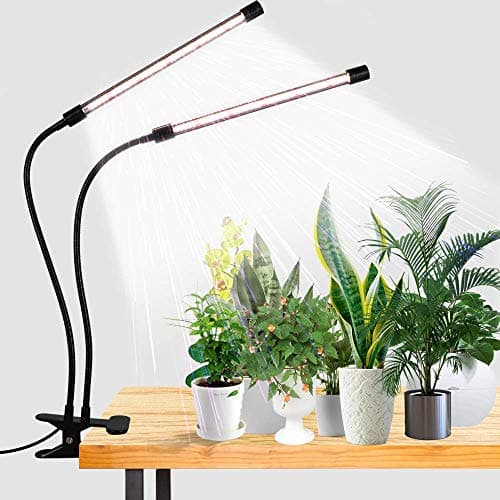 GooingTop Clip Grow Light The cheapest way to put real light on one plant on one desk, and honest about being exactly that — a 10 W clip lamp with a repeating timer. | A single small tray | Not published |
The reasoning
Microgreens are the easiest thing to grow indoors under a light, and the reason is structural: you harvest them at the seedling stage, usually seven to fourteen days after sowing, before the plant ever develops the light appetite of a mature crop. Virginia Cooperative Extension puts propagation — seedlings and cuttings — at 5 to 10 mol per square meter per day, and that is the whole requirement.
Virginia Cooperative Extension's propagation band. Compare with 12 for transplant-quality seedlings and 20 to 30 for fruiting crops. Microgreens genuinely are undemanding.
Why a cheap fixture is genuinely enough here
A standard 1020 tray is about 1.6 sq ft, or 0.149 m². Targeting 8 mol/m²/day at 14 hours.
PPFD needed = 8 × 1,000,000 ÷ (14 × 3600) = 159 µmol/m²/s.
159 × 0.149 = 24 µmol/s landing on the tray; at 0.8 uniformity the fixture needs to produce about 30 µmol/s.
That is a very small requirement — well inside a single 20 W bar, and inside a grow bulb. This is the one page on this site where the answer is honestly “almost anything will do”.
It also means the running cost is trivial. Two 20 W bars over a couple of trays, 14 hours a day: 40 × 14 × 30 ÷ 1000 = 16.8 kWh a month, about $3.08 at the US residential average of 18.34 cents per kWh.
The timeline
| Stage | Days | Light |
|---|---|---|
| Sown, covered, weighted | 0–3 | None. Most microgreens are germinated in darkness under a weighted cover. |
| Uncovered, yellow and leggy | 3–4 | Light on. The yellow greens up within hours. |
| Greening and standing up | 4–7 | Full target, 12–16 hours. |
| Harvest | 7–14 | Cut at soil level once the first true leaves appear. |
The blackout period at the start is deliberate and worth understanding rather than skipping: keeping the tray covered and weighted for the first few days makes the seedlings stretch uniformly and push against the weight, which produces the even, tall, easy-to-cut stand that makes microgreens practical to harvest. It is the one situation where stretching is the goal.
Practical points
- Uniformity matters more than intensity here. A tray that is bright in the middle and dim at the edges harvests unevenly. Two modest bars beat one bright one.
- Get the light close. Four to six inches, as for any seedling. There is no growing-up phase to plan for — you harvest before they get tall.
- Airflow prevents most failures. The commonest microgreens problem is damping off in a dense wet stand, and that is a humidity and airflow issue rather than a light one. A small fan does more than a fixture upgrade.
- Stack the trays. Because the light requirement is low and the plants are short, a shelf rack with bars under each shelf fits three or four crops in the footprint of one. See the shelf setup guide.
For the harder, longer-cycle version of the same crop, see grow lights for herbs indoors.
Every pick in full
Barrina T5 4ft Grow Light Strips
LED barStacked trays
The default seed-starting bar for good reasons — 4 ft long, linkable in series, cheap per foot — and the reason we built a coverage calculator, because Barrina publishes no photon data whatsoever.
What Barrina publishes
- Power draw
- 20 W per fixture; an 8-pack draws 160 W (source)
- Spectrum
- 5000 K (source)
- Dimming
- No; on/off switch per fixture, linkable up to 8 in series (source)
- Dimensions
- 4 ft strip, 120-degree beam angle, 120 V AC (source)
What Barrina does not publish
- PPF in umol/s — for any strip in the range
- PPFD at any stated distance
- Photon efficacy in umol/J
- LED count per strip, and rated lifespan
Who should skip it
Skip it if you need to know what you are getting before it arrives. There is no published PPF, no PPFD and no efficacy figure, so nothing about its output can be verified in advance.
Spider Farmer SF1000
LED panelOne tray, verifiable
Publishes PPF to two decimal places and an efficacy figure that actually divides out of it. That internal consistency is rarer in this category than it should be.
What Spider Farmer publishes
- Power draw
- 100 W +/-5% at 100-277 V AC (source)
- PPF (photon output)
- 249.21 umol/s (source)
- Efficacy
- 2.5 umol/J (source)
- Stated coverage
- 2 x 2 ft core, 3 x 3 ft maximum (source)
- Spectrum
- 650-665 nm, 730-740 nm, 2800-3000 K, 4800-5000 K (source)
- Diodes
- Bridgelux (source)
- Dimming
- Yes, dimming knob (source)
- Dimensions
- 32.5 x 29.0 x 5.9 cm (source)
- Rated life
- 55,000 hours (source)
Our arithmetic
- Does the published efficacy check out against the published PPF?: Yes — 2.49 umol/J computed against 2.5 umol/J published
249.21 umol/s / 100 W = 2.4921 umol/J. The published 2.5 umol/J is that number rounded. Not every brand's two figures agree like this, which is exactly why we divide them. - Average PPFD across its 2 x 2 ft core footprint: about 536 umol/m2/s
2 ft x 2 ft = 4 sq ft = 0.372 m2. 249.21 / 0.372 = 670 umol/m2/s at perfect uniformity; at a 0.8 uniformity factor, about 536 umol/m2/s.
Who should skip it
Skip it if raw output is what you are buying — the TS 1000 delivers 38% more photons per second, at the cost of 50 W more draw.
GooingTop Clip Grow Light
Clip lightA single small tray
The cheapest way to put real light on one plant on one desk, and honest about being exactly that — a 10 W clip lamp with a repeating timer.
What GooingTop publishes
- Power draw
- About 10 W (source)
- Spectrum
- 6000 K, 74 white plus 10 red LEDs, CRI 95 (source)
- Dimming
- Five brightness levels; repeating 4 / 8 / 12 hour timer (source)
What GooingTop does not publish
- PPF in umol/s
- PPFD at any distance
- Photon efficacy in umol/J
- The manufacturer publishes no spec sheet at all; the figures above come from the retail listing
Who should skip it
Skip it if the plant is more than about a foot across, or if you want any number at all before you buy — nobody publishes photon data for this fixture.
Questions people actually ask
+How much light do microgreens need?
+Do microgreens need a special grow light?
+Why do you keep microgreens in the dark at first?
+How many hours of light do microgreens need?
Sources
- Virginia Cooperative Extension — Calculating and Using Daily Light Integral (DLI), SPES-720 — consulted September 2, 2026
- University of New Hampshire Extension — Growing Seedlings Under Lights — consulted September 2, 2026
- US Energy Information Administration — Electric Power Monthly, Table 5.3 (US residential average, June 2026) — consulted September 2, 2026
- Barrina — T5 ML20 4ft 20W product page — consulted September 2, 2026
Read next
Houseplants
Grow Lights for Herbs Indoors
Culinary herbs want 9-20 mol/m2/day. Why kitchen herbs fail, and what actually reaches the target.
Top pick
Barrina T5 4ft Grow Light Strips
Seed Starting
How Much Light Do Seedlings Actually Need?
The 12 mol/m2/day seedling target, converted into the PPFD and hours you can actually set.
Top pick
Spider Farmer SF1000
Seed Starting
Grow Light Shelf Setup for Seed Trays
The build: rack, fixtures, chains, timer — with the measurements that make it work and the mistakes that waste a season.
Top pick
Barrina T5 4ft Grow Light Strips
Coverage & Sizing
PPFD Targets by Plant Type
Published light bands mapped to common indoor plants, with the DLI each implies.
Top pick
GooingTop Clip Grow Light
Reviews
Best Grow Lights for Hydroponics
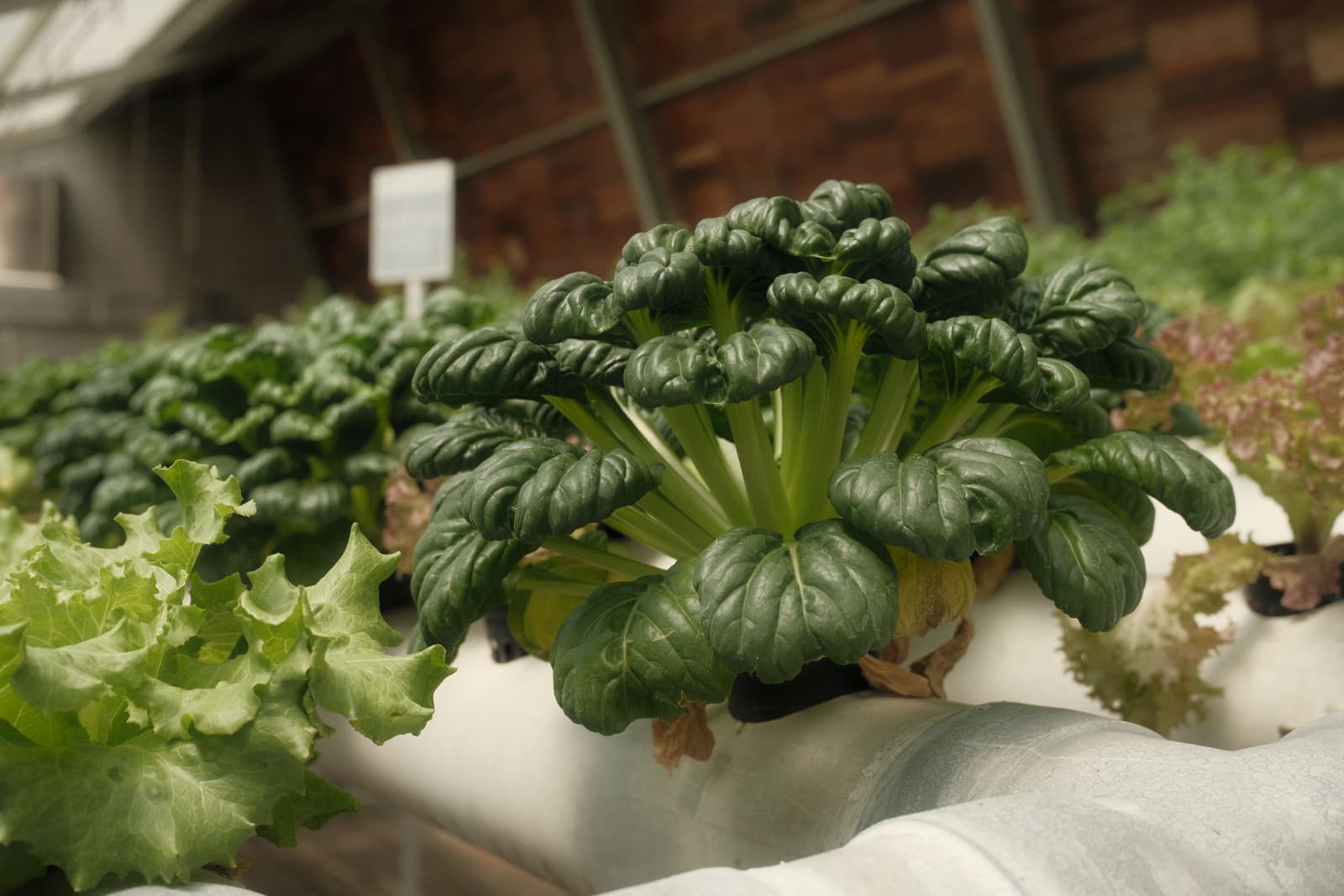
Leafy greens want 12-16 mol/m2/day. Four fixtures sized to that, and the damp ratings water changes.
Top pick
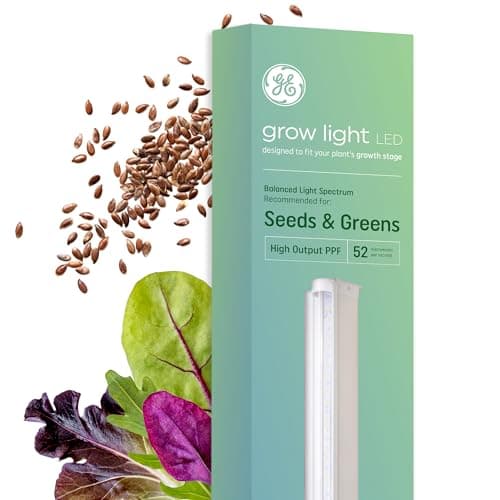
GE Grow Light 48in LED Fixture, Seeds and Greens
Where this sits
This page belongs to Grow Lights for Houseplants and Winter. Every figure on it is either quoted from a named published source or derived in view — the full method is on our methodology page, and how the site is funded is on the affiliate disclosure.