Grow Lights for Lemon Trees
An indoor citrus tree asks for more light than any other plant on this site. Here is the arithmetic, including the part where a single home fixture does not get there.
By Scooter M. — An enthusiast who's genuinely into this. I read the manuals, compile the published specs, and do the math. No lab coat.
Published · How we pick
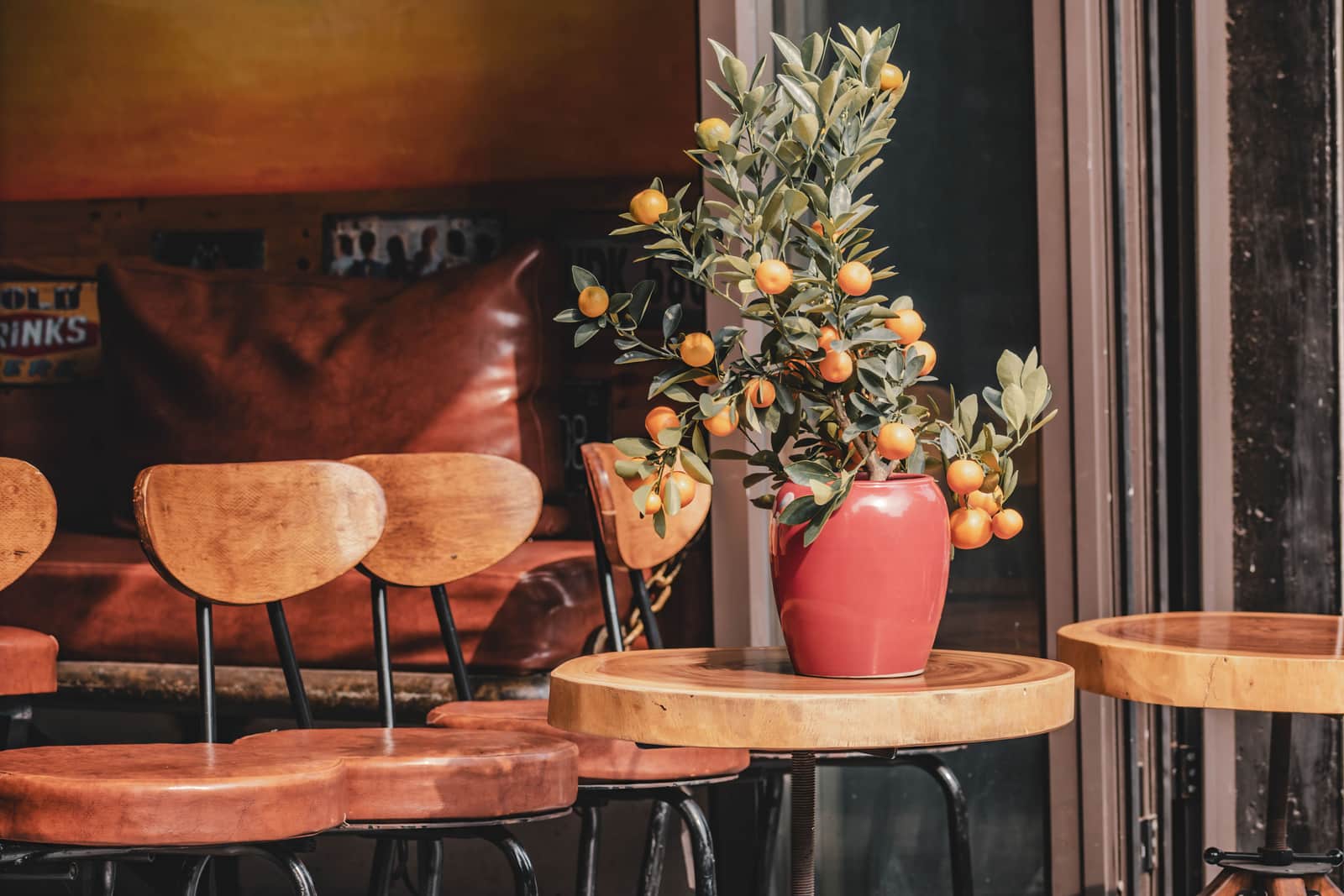
Photographs on this site are licensed stock and are illustrative of the fixture type. We do not own the units we write about.
How this page is funded: the buy links here are Amazon Associates links, and we earn a commission on qualifying purchases at no extra cost to you. We have not been paid to feature anything on this page, we accept no free product, and commission plays no part in the ranking. Full disclosure.
We have not tested these units. Everything below comes from the manufacturer’s own published specifications, or from arithmetic we have shown our working for. Where a figure is not published, we say so instead of estimating one. Read the method.
Quick picks
Efficacy is photons out per joule in. Where a manufacturer publishes it we quote theirs; where they publish photon output and wattage but not efficacy, we divide and label it as ours; where they publish neither, the cell says so rather than guessing. Tap a row for the full write-up.
| # | Product | Best for | Efficacy | Price |
|---|---|---|---|---|
| 1 | 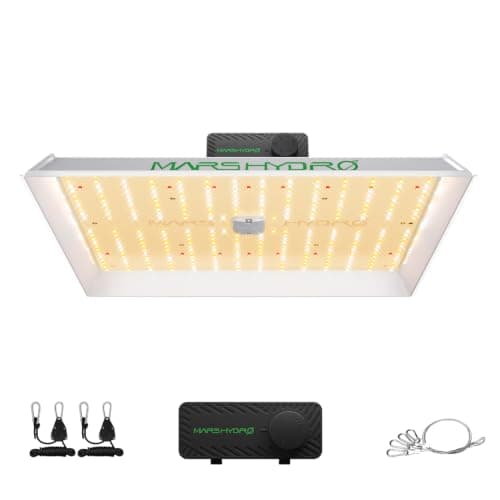 Mars Hydro TS 1000 The most photons of anything on this list, and one of only three fixtures here that publishes both PPF and efficacy so the claim can be checked against itself. | Most photons available | 2.3 umol/J | |
| 2 | 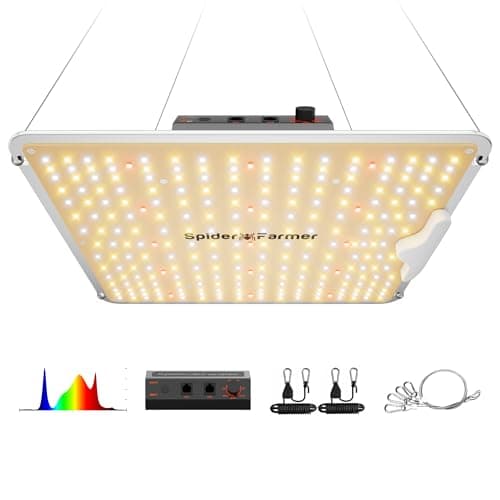 Spider Farmer SF1000 Publishes PPF to two decimal places and an efficacy figure that actually divides out of it. That internal consistency is rarer in this category than it should be. | A second fixture | 2.5 umol/J | |
| 3 | 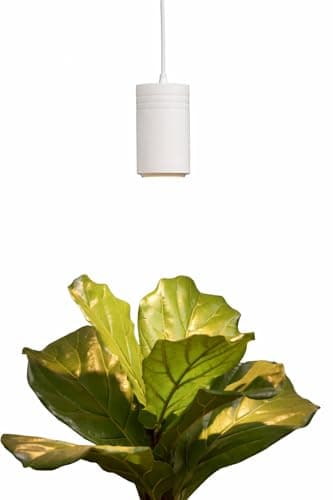 Soltech Aspect Gen 2 The only fixture here you would willingly hang in a living room, and the only one publishing PPFD at three separate distances so it can actually be placed by the numbers. | Keeping it alive in a room | 1.39 umol/J (ours) |
The reasoning
We should be straightforward at the top of this page, because most pages on this subject are not: lighting an indoor lemon tree to the point of reliable fruiting is beyond what a single consumer grow light does. That is not a reason to skip the fixture. It is a reason to know which of two goals you are buying for.
- Goal A — keep a healthy tree through winter. Very achievable with one good fixture. This is what most people actually want.
- Goal B — fruit indoors, reliably, on light alone. Demands a level that a home setup over a 3 ft canopy struggles to reach, and the arithmetic below shows why.
µmol/m²/s — above the top of University of Minnesota Extension's high band. Every other plant on this site is asking for less than this.
The area problem
What makes citrus hard is not the intensity alone; it is intensity multiplied by canopy area. A jade occupies a square foot. A three-foot lemon tree occupies nine, and the photon requirement scales directly with it.
Area: 3 × 3 ft = 9 sq ft ÷ 10.7639 = 0.836 m².
At a fruiting-appropriate 450 µmol/m²/s: 450 × 0.836 ÷ 0.8 = 470 µmol/s required.
The largest published output we cover is the Mars Hydro TS 1000 at 343 µmol/s.
One fixture does not reach it. 343 ÷ 0.836 × 0.8 = 328 µmol/m²/s — genuinely good light, and about 73% of the fruiting target.
That 328 figure is the honest headline for this page. It sits inside the high band, comfortably above what the tree needs to hold its leaves and grow — and short of what the published guidance associates with fruiting crops.
What one fixture genuinely buys you
A great deal, for the winter problem most citrus owners actually have. Indoor lemon trees drop leaves in winter, and the usual cause is the collapse in daily light rather than temperature or watering. One fixture delivering 328 µmol/m²/s over the canopy for 12 hours gives:
DLI = 328 × 12 × 3600 ÷ 1,000,000 = 14.2 mol/m²/day.
For scale, University of New Hampshire Extension puts seedlings at about 12 mol/m²/day. So a single panel is delivering more daily light to a lemon tree than a seed tray gets — which is why it holds leaves through a winter that would otherwise strip it.
Two fixtures, if you are chasing fruit
The arithmetic is straightforward: two TS 1000s over the same canopy give 686 µmol/s, or 656 µmol/m²/s at 0.8 uniformity — comfortably past the fruiting threshold, with margin for the fact that a tree is a three-dimensional canopy rather than a flat plane, so the lower branches receive far less than the top.
That three-dimensionality is the thing area math does not capture, and we would rather say so than pretend a single number describes a tree. Two fixtures placed to the sides beat one directly overhead for the same reason.
| Setup | PPFD at canopy | Realistic outcome |
|---|---|---|
| Soltech Aspect Gen 2 pendant | About 50 µmol/m²/s at 1 m | A supplement, not a solution. Keeps a tree in a living room from declining in a dark corner |
| One Spider Farmer SF1000 | About 238 µmol/m²/s | Healthy foliage through winter; leaf drop largely prevented |
| One Mars Hydro TS 1000 | About 328 µmol/m²/s | Strong winter maintenance and active growth; short of the fruiting band |
| Two TS 1000, placed to the sides | About 656 µmol/m²/s at the top | Reaches the fruiting range; lower canopy still receives much less |
What it costs to run
One TS 1000: 150 W × 12 h ÷ 1000 = 1.8 kWh a day. Over 182 days = 327.6 kWh = $60.08 at 18.34 cents per kWh.
Two: 300 W, 3.6 kWh a day, 655.2 kWh = $120.16 for the season.
This is the most expensive plant to light on this entire site, and it is still roughly the price of two or three supermarket lemon trees.
Run it against your own tariff in the running-cost calculator, or see how the seasonal figures compare across setups in the cost to run a grow light all winter.
Practical placement
- Height: 24 to 36 inches above the canopy. You are lighting a volume, not a point, and height buys coverage down the sides.
- Rotate the pot a quarter turn weekly. With a single overhead fixture the far side of the tree is always the poor relation.
- Hours: 12 to 14. Long photoperiods do not substitute for intensity in a fruiting crop, but they do raise the daily total meaningfully.
- Do not ignore the window. Supplement it rather than replacing it — a bright south window plus one fixture beats one fixture in a dark room.
The honest summary
If your lemon tree drops leaves every winter and sulks until April, one good panel fixes that, costs about $60 for the season, and is the right purchase. If you want fruit indoors on light alone, you are looking at two fixtures, a real electricity bill, and a plant whose lower canopy will still be under-lit — and we would rather tell you that up front than sell you one panel and let you find out in March.
Every pick in full
Mars Hydro TS 1000
LED panelMost photons available
The most photons of anything on this list, and one of only three fixtures here that publishes both PPF and efficacy so the claim can be checked against itself.
What Mars Hydro publishes
- Power draw
- 150 W +/-5% at 100-277 V AC (source)
- PPF (photon output)
- 343 umol/s (source)
- Efficacy
- 2.3 umol/J (source)
- Stated coverage
- 2.5 x 2.5 ft vegetative, 2.3 x 2.3 ft flowering (source)
- Spectrum
- 660-665 nm, 730-740 nm, 3000 K, 5000 K (source)
- Diodes
- Bridgelux (source)
- Dimming
- Yes, 0-100% dimmer knob (source)
- Dimensions
- 406 x 326 x 50 mm (source)
Our arithmetic
- Average PPFD across its stated 2.5 x 2.5 ft vegetative footprint: about 470 umol/m2/s
2.5 ft x 2.5 ft = 6.25 sq ft = 0.581 m2. 343 umol/s divided by 0.581 m2 = 590 umol/m2/s at perfect uniformity; applying a 0.8 uniformity factor gives about 472 umol/m2/s average. - Electricity used at 14 hours a day for 30 days: 63.0 kWh a month
150 W x 14 h x 30 d / 1000 = 63.0 kWh.
Who should skip it
Skip it if you are lighting a bookshelf. 343 umol/s concentrated into a 2.5 ft square is far more light than a monstera wants, and you pay 150 W to deliver it.
Spider Farmer SF1000
LED panelA second fixture
Publishes PPF to two decimal places and an efficacy figure that actually divides out of it. That internal consistency is rarer in this category than it should be.
What Spider Farmer publishes
- Power draw
- 100 W +/-5% at 100-277 V AC (source)
- PPF (photon output)
- 249.21 umol/s (source)
- Efficacy
- 2.5 umol/J (source)
- Stated coverage
- 2 x 2 ft core, 3 x 3 ft maximum (source)
- Spectrum
- 650-665 nm, 730-740 nm, 2800-3000 K, 4800-5000 K (source)
- Diodes
- Bridgelux (source)
- Dimming
- Yes, dimming knob (source)
- Dimensions
- 32.5 x 29.0 x 5.9 cm (source)
- Rated life
- 55,000 hours (source)
Our arithmetic
- Does the published efficacy check out against the published PPF?: Yes — 2.49 umol/J computed against 2.5 umol/J published
249.21 umol/s / 100 W = 2.4921 umol/J. The published 2.5 umol/J is that number rounded. Not every brand's two figures agree like this, which is exactly why we divide them. - Average PPFD across its 2 x 2 ft core footprint: about 536 umol/m2/s
2 ft x 2 ft = 4 sq ft = 0.372 m2. 249.21 / 0.372 = 670 umol/m2/s at perfect uniformity; at a 0.8 uniformity factor, about 536 umol/m2/s.
Who should skip it
Skip it if raw output is what you are buying — the TS 1000 delivers 38% more photons per second, at the cost of 50 W more draw.
Soltech Aspect Gen 2
PendantKeeping it alive in a room
The only fixture here you would willingly hang in a living room, and the only one publishing PPFD at three separate distances so it can actually be placed by the numbers.
What Soltech publishes
- Power draw
- 36 W (source)
- PPF (photon output)
- 50 umol/s (source)
- PPFD
- about 50 umol/m2/s at 1 m, 34.9 at 4 ft, 15.5 at 6 ft (source)
- Spectrum
- 3000 K warm white, CRI 98 (source)
- Dimming
- Yes, in-line dimmer 10-100% (source)
- Dimensions
- 3.5 x 3.5 x 6.2 inches (source)
- Rated life
- 50,000 hours (source)
Our arithmetic
- Efficacy, computed from the published figures: 1.39 umol/J
50 umol/s / 36 W = 1.39 umol/J. Roughly half the efficacy of a 2.7 umol/J board — the design premium is paid twice, once at purchase and again every month on the meter.
Who should skip it
Skip it if photons per watt is the metric that matters. At 50 umol/s from 36 W it is the least efficient fixture on this page, and much of the price is industrial design.
Questions people actually ask
+Can a grow light make an indoor lemon tree fruit?
+How much light does an indoor citrus tree need?
+Why does my lemon tree drop leaves in winter?
+How far above a lemon tree should the light be?
+Have you grown citrus under these lights?
Sources
- University of Minnesota Extension — Lighting for indoor plants and starting seeds — consulted September 2, 2026
- University of New Hampshire Extension — Growing Seedlings Under Lights — consulted September 2, 2026
- Mars Hydro — TS 1000 published specification table — consulted September 2, 2026
- Spider Farmer — SF1000 published specification table — consulted September 2, 2026
- Soltech — Aspect Gen 2 published specifications — consulted September 2, 2026
- US Energy Information Administration — Electric Power Monthly, Table 5.3 (US residential average, June 2026) — consulted September 2, 2026
- Virginia Cooperative Extension — Calculating and Using Daily Light Integral (DLI), SPES-720 — consulted September 2, 2026
Read next
Houseplants
The Best Grow Lights for Overwintering Plants
Active versus dormant overwintering, which plants want light and which do not, and the fixtures for the ones that do.
Top pick
Barrina T5 4ft Grow Light Strips
Houseplants
Grow Lights for Fiddle Leaf Figs
Sizing a fixture for a tall canopy, why winter leaf drop is a light problem, and honest placement.
Top pick
Mars Hydro TS 1000
Houseplants
The Best Grow Lights for Large Indoor Plants
Height, not brightness, is the constraint on a big plant. Published PPFD-at-distance figures are what decide it.
Top pick
Soltech Aspect Gen 2
Coverage & Sizing
PPFD Targets by Plant Type
Published light bands mapped to common indoor plants, with the DLI each implies.
Top pick
GooingTop Clip Grow Light
Coverage & Sizing
How Many Grow Lights for a 4 × 4 Area?
The photon requirement for a 4 × 4 ft area, and how many of each fixture covers it.
Top pick
Mars Hydro TS 1000
Running Cost
The Cost to Run a Grow Light All Winter
Five setups priced for a full winter season, from a clip light to a three-shelf rack.
Top pick
Barrina T5 4ft Grow Light Strips
Houseplants
Grow Lights for Bird of Paradise
Nearly full sun is the requirement. What a fixture can actually deliver over a 3 ft canopy, and what it cannot.
Top pick
Mars Hydro TS 1000
Where this sits
This page belongs to Grow Lights for Houseplants and Winter. Every figure on it is either quoted from a named published source or derived in view — the full method is on our methodology page, and how the site is funded is on the affiliate disclosure.