Grow Lights for Bird of Paradise
Strelitzia is easy to keep alive indoors and genuinely hard to bloom indoors, and the gap between those two facts is almost entirely light.
By Scooter M. — An enthusiast who's genuinely into this. I read the manuals, compile the published specs, and do the math. No lab coat.
Published · How we pick
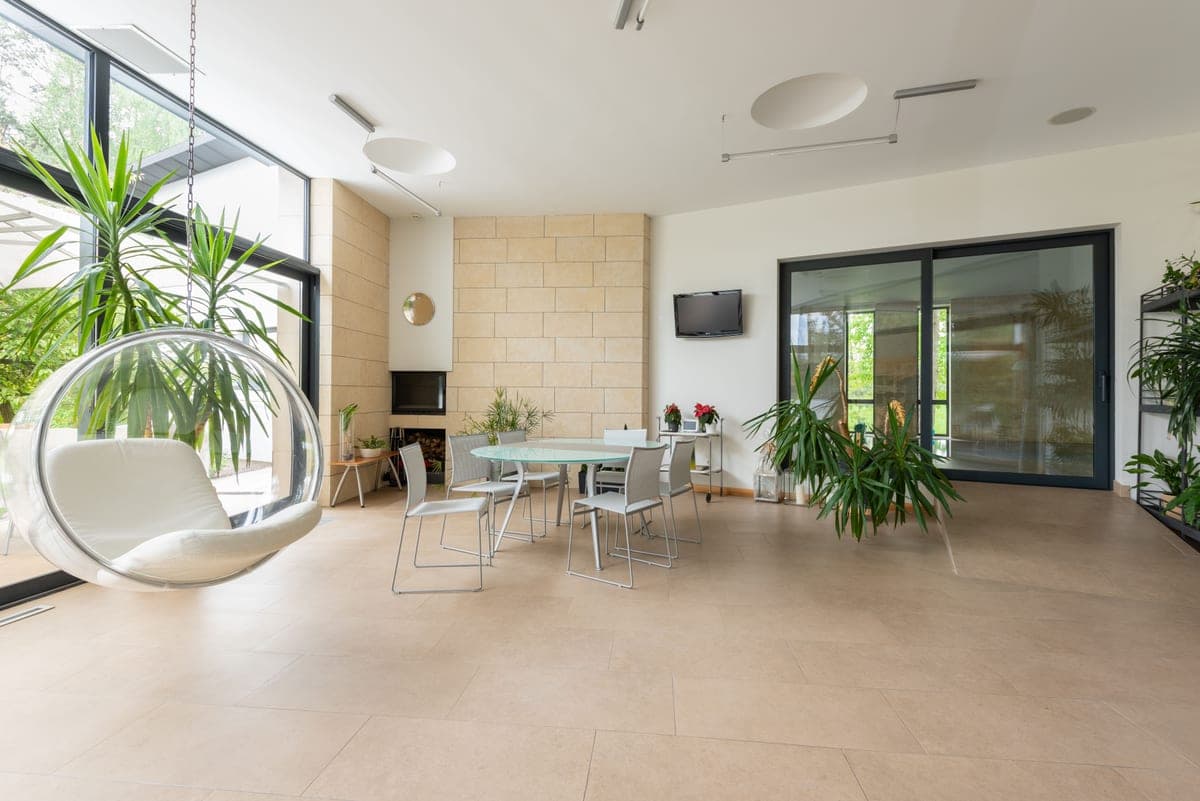
Photographs on this site are licensed stock and are illustrative of the fixture type. We do not own the units we write about.
How this page is funded: the buy links here are Amazon Associates links, and we earn a commission on qualifying purchases at no extra cost to you. We have not been paid to feature anything on this page, we accept no free product, and commission plays no part in the ranking. Full disclosure.
We have not tested these units. Everything below comes from the manufacturer’s own published specifications, or from arithmetic we have shown our working for. Where a figure is not published, we say so instead of estimating one. Read the method.
Quick picks
Efficacy is photons out per joule in. Where a manufacturer publishes it we quote theirs; where they publish photon output and wattage but not efficacy, we divide and label it as ours; where they publish neither, the cell says so rather than guessing. Tap a row for the full write-up.
| # | Product | Best for | Efficacy | Price |
|---|---|---|---|---|
| 1 | 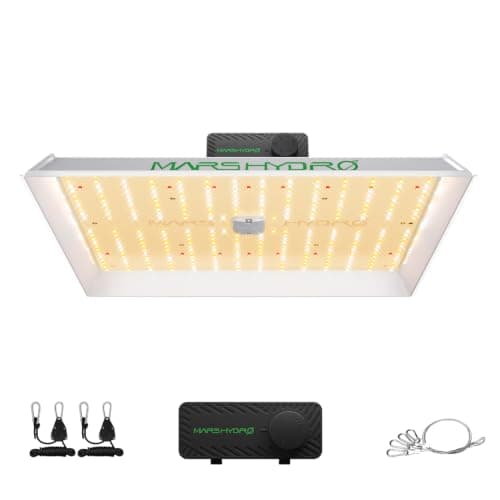 Mars Hydro TS 1000 The most photons of anything on this list, and one of only three fixtures here that publishes both PPF and efficacy so the claim can be checked against itself. | The only pick that reaches the band | 2.3 umol/J | |
| 2 | 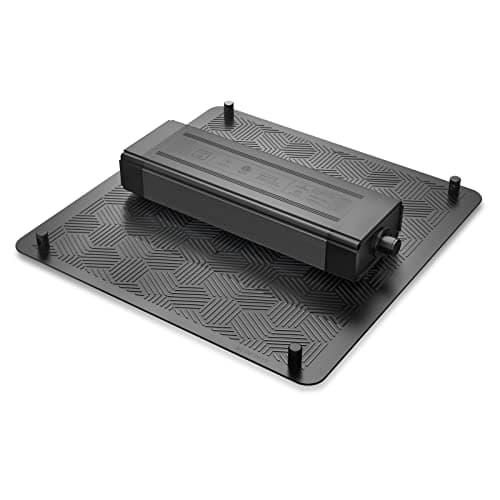 AC Infinity IONBOARD S22 The highest published efficacy of any fixture here at 2.7 umol/J, on Samsung LM301H diodes, with dimming in real 20% steps rather than a vague knob. | A quieter fixture, dimmed to suit | 2.7 umol/J | |
| 3 | 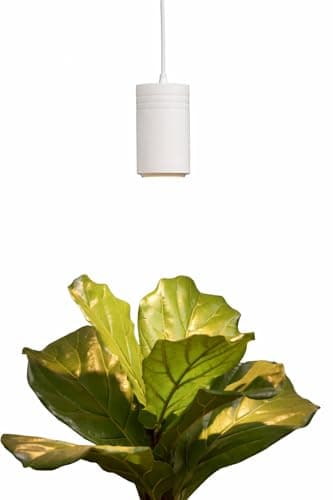 Soltech Aspect Gen 2 The only fixture here you would willingly hang in a living room, and the only one publishing PPFD at three separate distances so it can actually be placed by the numbers. | A living room, maintenance only | 1.39 umol/J (ours) |
The reasoning
We have not tested these fixtures. What follows is published specification, Extension guidance on the plant, and our own arithmetic joining the two, with the working shown.
The bird of paradise is one of the few plants where the honest answer involves telling you what a grow light will probably not achieve. It is easy to keep alive in a living room and it is difficult to flower in one, and the reason is not fertilizer, pot size or patience. It is that the plant wants an amount of light a room does not contain.
What the plant actually asks for
The University of Wisconsin–Madison Division of Extension is direct about it. Strelitzia reginae “requires nearly full sun in the summer and as much light as possible in winter to bloom”, and “one of the most common reasons mature Strelitzia do not bloom well is insufficient light”.
Two further points from the same source set expectations properly. It takes “4 to 7 years for seed propagated plants to begin blooming”, and plants “tend to bloom more profusely when pot-bound”. So a young plant is not going to flower whatever you buy, and a plant you keep repotting into roomier containers is working against itself.
University of Wisconsin-Madison Division of Extension, on Strelitzia reginae. It also states that insufficient light is one of the most common reasons mature plants do not bloom well, and that seed-propagated plants take 4 to 7 years to begin blooming at all.
Two goals, two very different numbers
As with the peace lily, it helps to separate what you want. Keeping a bird of paradise healthy and growing is one target. Pushing it toward flowering is a much harder one.
This site uses Iowa State University Extension’s bands: 6 to 10 mol/m²/day for foliage and flowering houseplants, and 12 to 16 for high-light plants. A bird of paradise trying to bloom belongs at the top of that second band or above it — “nearly full sun” is a description of conditions outside the range any of these bands were written for.
A floor-standing Strelitzia spreads roughly 3 × 3 ft = 9 sq ft = 0.836 m².
To grow well at 8 mol/m²/day on a 12-hour schedule: 185 µmol/m²/s, so 185 × 0.836 ÷ 0.8 = about 193 µmol/s of fixture output.
To approach flowering at 12 mol/m²/day: 278 µmol/m²/s, so 278 × 0.836 ÷ 0.8 = about 290 µmol/s.
Those are large numbers by this site’s standards. For scale, a grow bulb publishes 14 to 65.6 µmol/s and a 4 ft bar publishes about 52. Only the LED panels are in the right conversation at all, and only one of them clears 290 µmol/s on its own.
The geometry makes it harder than the number suggests
Big plants are a height problem before they are a brightness problem. A fixture has to sit above the tallest leaf, which on a mature Strelitzia is five or six feet off the floor, and the light then spreads over the whole canopy and keeps spreading past it.
Two consequences follow. The first is that a panel rated for a 2 ft square footprint does not magically cover a 3 ft canopy; raising it far enough to cover the width costs intensity across the middle. The second is that the leaves nearest the fixture receive far more than the lower ones, so a tall plant is never uniformly lit by a single overhead source. The general case is worked through in best grow lights for large indoor plants.
1. Mars Hydro TS 1000 — the only pick that reaches the band
343 µmol/s published, the most of any fixture we cover, with a dimmer knob and a stated 2.5 × 2.5 ft vegetative footprint.
Across a 3 × 3 ft canopy: 343 ÷ 0.836 m² × 0.8 = about 328 µmol/m²/s, which is 14.2 mol/m²/day at 12 hours — inside the 12-16 high-light band.
Across its own stated 2.5 ft square footprint the same fixture averages about 470 µmol/m²/s, so pulled in tighter over a smaller plant it delivers considerably more.
This is the only fixture on this site that puts a 3 ft canopy into the band Extension’s bloom advice implies, and it is dimmable, which matters for a plant moving from a dim shop to a bright corner.
The downside: 150 W is the highest draw here, about $9.90 a month at 12 hours. It is a large, industrial-looking panel that wants hanging from a ceiling hook, which in a living room is a real objection rather than a pedantic one. And even at 14.2 mol/m²/day it is delivering a fraction of what “nearly full sun” means outdoors — it makes flowering plausible rather than likely.
2. AC Infinity IONBOARD S22 — a quieter fixture, dimmed to suit
115 W at a published 2.7 µmol/J, which implies about 311 µmol/s, over a stated 2 × 2 ft coverage. It dims in 20% increments and it is a flat board rather than a hooded panel, which reads better in a room.
311 ÷ 0.836 m² × 0.8 = about 298 µmol/m²/s, or 12.9 mol/m²/day at 12 hours — just inside the high-light band.
At 2.7 µmol/J it is the most efficient fixture we cover, so it delivers nearly as much as the TS 1000 for 35 W less. Over a 12-hour daily schedule run year-round, that gap is worth about $2.70 a month.
The downside: AC Infinity publishes a “1098 PPFD” figure with no measurement distance attached, which makes that particular number unusable — the output above is derived from the published wattage and efficacy instead. Its stated coverage is also the smallest of the two panels, so on a wide plant more of the canopy sits outside the rated footprint.
3. Soltech Aspect Gen 2 — a living room, maintenance only
The honest inclusion. A bird of paradise is furniture as much as it is a plant, and most people will not hang a 150 W panel above one. The Aspect is a pendant that looks like a light fixture, and it publishes PPFD at three distances so its limits are checkable rather than guessed.
Soltech publishes about 50 µmol/m²/s at 1 m. At 12 hours that is 2.2 mol/m²/day.
Even hung at about 20 in, where the inverse-square relationship gives roughly 200 µmol/m²/s, the whole fixture emits 50 µmol/s — a sixth of the roughly 290 µmol/s a 3 ft canopy needs for the flowering target.
So it is a maintenance light for a specimen in a room you actually use: enough to stop a plant declining through a dark winter, not enough to push it into the high-light band. Said plainly because the alternative is letting you assume otherwise.
The downside: 1.39 µmol/J is among the least efficient figures here, and much of the price is industrial design. Detail in the Aspect review.
The three, against the two targets
| Fixture | Output | PPFD | DLI | Reaches |
|---|---|---|---|---|
| Mars Hydro TS 1000 | 343 µmol/s | about 328 µmol/m²/s | 14.2 mol | High-light band |
| AC Infinity IONBOARD S22 | about 311 µmol/s derived | about 298 µmol/m²/s | 12.9 mol | High-light band |
| Spider Farmer SF1000 | 249.21 µmol/s | about 238 µmol/m²/s | 10.3 mol | Growth, not flowering |
| Soltech Aspect Gen 2 | 50 µmol/s | about 48 µmol/m²/s | 2.1 mol | Maintenance only |
The Spider Farmer SF1000 is listed for completeness rather than as a pick: it is an excellent panel and one of the few whose published efficacy divides correctly out of its published PPF, but over a canopy this wide it lands below the high-light band, and on this page that is the line that matters.
The cheaper answer Extension actually gives
This site sells nothing by telling you not to buy, so here is the part worth reading twice. The same Wisconsin Extension page says the plant “can easily be grown as a houseplant” but “does best when moved outside for the summer”.
That is the single most effective thing you can do for a bird of paradise, and it costs nothing. A summer outdoors delivers light no indoor fixture on this site approaches, banks the energy the plant needs for flower production, and lets the grow light do the job it is actually good at — holding the plant steady through the dark half of the year indoors.
One caution comes with it, in Extension’s words: “be careful to acclimate it to the stronger light outdoors or it could get sunburned”. A plant that has spent winter under a panel has leaves built for that level. Move it out in stages over a couple of weeks — shade first, then dappled, then sun — rather than straight onto a south patio in June.
Hours, and what to do in winter
Iowa State University Extension gives 12 to 14 hours as the general range for indoor plants, with 10 as a floor and 16 as a ceiling. Twelve hours is what every calculation on this page assumes.
For this plant the winter case is the strongest one. Wisconsin Extension’s instruction is “as much light as possible in winter” and a “sunny spot indoors during the winter”, which in most US homes between October and March is not achievable from a window alone. Running a panel 12 to 14 hours through those months closes a real gap, and it is the period where a fixture earns its purchase price.
Extending to 16 hours adds about a third to the daily total without raising peak intensity, which is the safer lever for a plant that has just moved indoors from a summer outside.
Reading the plant
- Too little light: new leaves arriving smaller than the ones before them, long petioles leaning hard toward the window, wide gaps between leaf bases, and no flowers on a plant well past the age where they would be expected.
- Too much, too suddenly: bleached or scorched patches on the leaf surfaces nearest the fixture, usually within days of moving a plant from a dim spot to full output, or of putting it outdoors without acclimating it.
- Not a light problem: leaves splitting along their length, which is characteristic of this plant rather than a fault; browning at the leaf margins, which is more often water quality or dry air; and no flowers on a young plant, which is age.
Running cost
Mars Hydro TS 1000, 150 W: 54.0 kWh a month = $9.90.
IONBOARD S22, 115 W: 41.4 kWh = $7.59.
Soltech Aspect, 36 W: 12.96 kWh = $2.38.
Run only from October to March, the TS 1000 comes to about $59 for the winter.
These are the highest running costs on this site, which is what high-light plants cost. It is also the argument for the seasonal approach above: six months of fixture plus a summer outdoors costs half what running a panel year-round does, and delivers more light to the plant.
Who should buy which
- The TS 1000 if the plant lives somewhere you can hang a panel and you want the best chance at a bloom on a mature, pot-bound plant.
- The IONBOARD S22 if you want nearly the same result at 35 W less, and a flat board suits the space better than a hooded panel.
- The Aspect if the fixture has to look like a lamp, accepting that it maintains the plant rather than flowering it.
- Nothing, yet if the plant is young. Extension gives 4 to 7 years from seed before blooming begins, and no fixture shortens that.
White bird of paradise is a different plant
Much of what is sold as “bird of paradise” in large pots is not Strelitzia reginae at all but Strelitzia nicolai, the white species, and the distinction matters for what you should expect.
The Extension guidance quoted throughout this page is written for reginae, the orange-flowered plant. Nicolai is the much larger, tree-forming species, and it is grown indoors almost entirely as a foliage plant — it reaches a size in the wild that a room cannot accommodate before it flowers freely. If that is your plant, the flowering arithmetic on this page is academic.
That is not a reason to skip the light. The growth targets still apply, and a nicolai short of light shows it in exactly the same way: smaller new leaves, long leaning petioles and wide gaps between leaf bases. Aim for the 6 to 10 mol/m²/day band, treat the high-light figures as a ceiling rather than a goal, and buy the fixture for the foliage you actually keep the plant for.
Every pick in full
Mars Hydro TS 1000
LED panelThe only pick that reaches the band
The most photons of anything on this list, and one of only three fixtures here that publishes both PPF and efficacy so the claim can be checked against itself.
What Mars Hydro publishes
- Power draw
- 150 W +/-5% at 100-277 V AC (source)
- PPF (photon output)
- 343 umol/s (source)
- Efficacy
- 2.3 umol/J (source)
- Stated coverage
- 2.5 x 2.5 ft vegetative, 2.3 x 2.3 ft flowering (source)
- Spectrum
- 660-665 nm, 730-740 nm, 3000 K, 5000 K (source)
- Diodes
- Bridgelux (source)
- Dimming
- Yes, 0-100% dimmer knob (source)
- Dimensions
- 406 x 326 x 50 mm (source)
Our arithmetic
- Average PPFD across its stated 2.5 x 2.5 ft vegetative footprint: about 470 umol/m2/s
2.5 ft x 2.5 ft = 6.25 sq ft = 0.581 m2. 343 umol/s divided by 0.581 m2 = 590 umol/m2/s at perfect uniformity; applying a 0.8 uniformity factor gives about 472 umol/m2/s average. - Electricity used at 14 hours a day for 30 days: 63.0 kWh a month
150 W x 14 h x 30 d / 1000 = 63.0 kWh.
Who should skip it
Skip it if you are lighting a bookshelf. 343 umol/s concentrated into a 2.5 ft square is far more light than a monstera wants, and you pay 150 W to deliver it.
AC Infinity IONBOARD S22
LED panelA quieter fixture, dimmed to suit
The highest published efficacy of any fixture here at 2.7 umol/J, on Samsung LM301H diodes, with dimming in real 20% steps rather than a vague knob.
What AC Infinity publishes
- Power draw
- 115 W (source)
- Efficacy
- 2.7 umol/J (source)
- PPFD
- 1098 PPFD (no measurement distance published) (source)
- Stated coverage
- 2 x 2 ft (source)
- Spectrum
- Samsung LM301H, plus 660 nm, 730 nm, 3000 K, 6500 K (source)
- Diodes
- 272 diodes (source)
- Dimming
- Yes, 0-100% in 20% increments (source)
- Dimensions
- 30.0 x 30.0 cm board, 1.1 cm thick (source)
- Rated life
- 50,000 hours (source)
Our arithmetic
- Photon output implied by the published wattage and efficacy: about 311 umol/s
115 W x 2.7 umol/J = 310.5 umol/s. AC Infinity does not print PPF directly, so this is our arithmetic from two figures it does print.
What AC Infinity does not publish
- PPF in umol/s — only efficacy is given, so photon output has to be derived
- The measurement distance for the 1098 PPFD figure, without which the number cannot be compared to anything
Who should skip it
Skip it if you want to place it by the numbers. AC Infinity prints 1098 PPFD with no measurement distance attached, which makes that figure impossible to use or compare.
Soltech Aspect Gen 2
PendantA living room, maintenance only
The only fixture here you would willingly hang in a living room, and the only one publishing PPFD at three separate distances so it can actually be placed by the numbers.
What Soltech publishes
- Power draw
- 36 W (source)
- PPF (photon output)
- 50 umol/s (source)
- PPFD
- about 50 umol/m2/s at 1 m, 34.9 at 4 ft, 15.5 at 6 ft (source)
- Spectrum
- 3000 K warm white, CRI 98 (source)
- Dimming
- Yes, in-line dimmer 10-100% (source)
- Dimensions
- 3.5 x 3.5 x 6.2 inches (source)
- Rated life
- 50,000 hours (source)
Our arithmetic
- Efficacy, computed from the published figures: 1.39 umol/J
50 umol/s / 36 W = 1.39 umol/J. Roughly half the efficacy of a 2.7 umol/J board — the design premium is paid twice, once at purchase and again every month on the meter.
Who should skip it
Skip it if photons per watt is the metric that matters. At 50 umol/s from 36 W it is the least efficient fixture on this page, and much of the price is industrial design.
Questions people actually ask
+How much light does a bird of paradise need indoors?
+Will a grow light make a bird of paradise flower?
+What size grow light does a bird of paradise need?
+Should I put my bird of paradise outside in summer?
+How much does it cost to run a grow light for a bird of paradise?
Sources
- University of Wisconsin–Madison Division of Extension — Susan Mahr, Bird of Paradise, Strelitzia reginae — consulted September 26, 2026
- Iowa State University Extension — Important Considerations for Providing Supplemental Light to Indoor Plants — consulted September 2, 2026
- University of Minnesota Extension — Lighting for indoor plants and starting seeds — consulted September 2, 2026
- Mars Hydro — TS 1000 published specification table — consulted September 2, 2026
- AC Infinity — IONBOARD S22 published specifications — consulted September 2, 2026
- Soltech — Aspect Gen 2 published specifications — consulted September 2, 2026
- Spider Farmer — SF1000 published specification table — consulted September 2, 2026
- US Energy Information Administration — Electric Power Monthly, Table 5.3 (US residential average, June 2026) — consulted September 2, 2026
Read next
Houseplants
The Best Grow Lights for Large Indoor Plants
Height, not brightness, is the constraint on a big plant. Published PPFD-at-distance figures are what decide it.
Top pick
Soltech Aspect Gen 2
Houseplants
Grow Lights for Lemon Trees
What indoor citrus actually demands, what one fixture delivers, and the honest shortfall.
Top pick
Mars Hydro TS 1000
Coverage & Sizing
PPFD Targets by Plant Type
Published light bands mapped to common indoor plants, with the DLI each implies.
Top pick
GooingTop Clip Grow Light
Houseplants
Grow Lights for Monstera
The 6-10 mol/m2/day target for monstera, what it means for fixture size, and the truth about fenestration.
Top pick
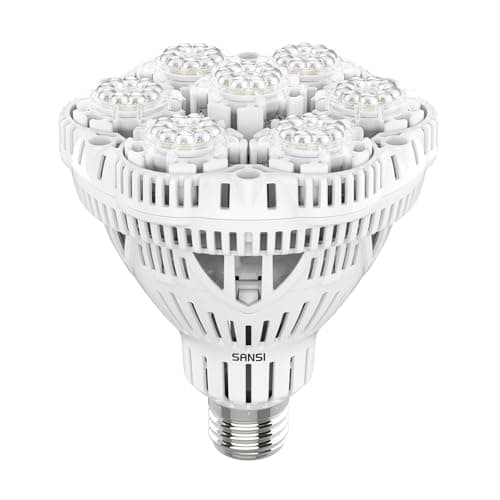
SANSI 36W BR30 Grow Light Bulb
Where this sits
This page belongs to Grow Lights for Houseplants and Winter. Every figure on it is either quoted from a named published source or derived in view — the full method is on our methodology page, and how the site is funded is on the affiliate disclosure.