Grow Lights for Carnivorous Plants
These are the brightest-light plants this site covers, and the usual houseplant bulb is not close. Here is what closing that gap actually takes.
By Scooter M. — An enthusiast who's genuinely into this. I read the manuals, compile the published specs, and do the math. No lab coat.
Published · How we pick
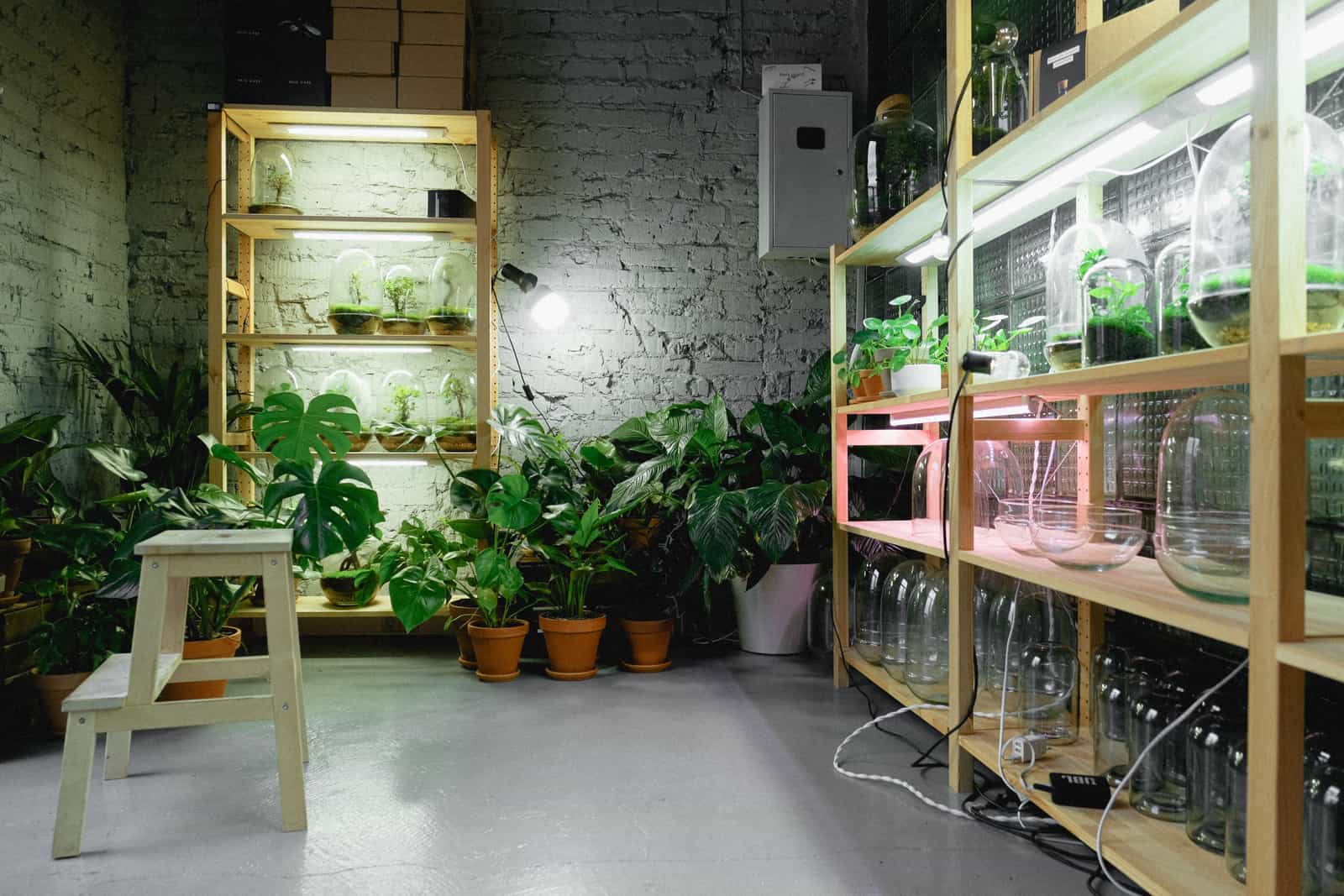
Photographs on this site are licensed stock and are illustrative of the fixture type. We do not own the units we write about.
How this page is funded: the buy links here are Amazon Associates links, and we earn a commission on qualifying purchases at no extra cost to you. We have not been paid to feature anything on this page, we accept no free product, and commission plays no part in the ranking. Full disclosure.
We have not tested these units. Everything below comes from the manufacturer’s own published specifications, or from arithmetic we have shown our working for. Where a figure is not published, we say so instead of estimating one. Read the method.
Quick picks
Efficacy is photons out per joule in. Where a manufacturer publishes it we quote theirs; where they publish photon output and wattage but not efficacy, we divide and label it as ours; where they publish neither, the cell says so rather than guessing. Tap a row for the full write-up.
| # | Product | Best for | Efficacy | Price |
|---|---|---|---|---|
| 1 | 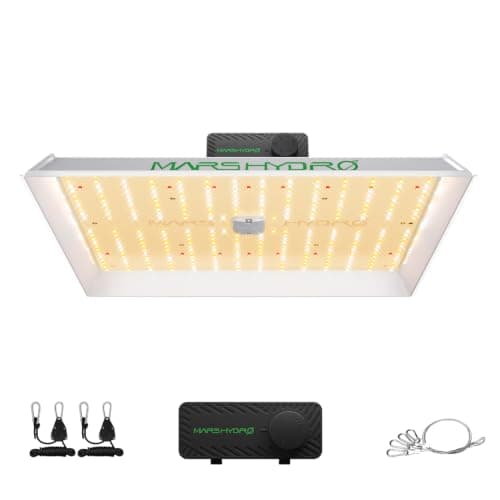 Mars Hydro TS 1000 The most photons of anything on this list, and one of only three fixtures here that publishes both PPF and efficacy so the claim can be checked against itself. | A tray of pots, with headroom to spare | 2.3 umol/J | |
| 2 | 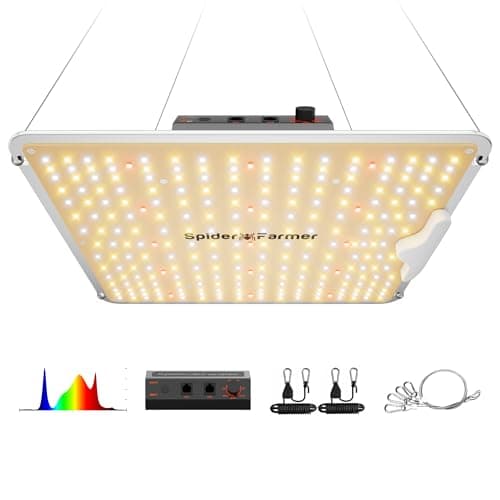 Spider Farmer SF1000 Publishes PPF to two decimal places and an efficacy figure that actually divides out of it. That internal consistency is rarer in this category than it should be. | A smaller collection, dimmable | 2.5 umol/J | |
| 3 | 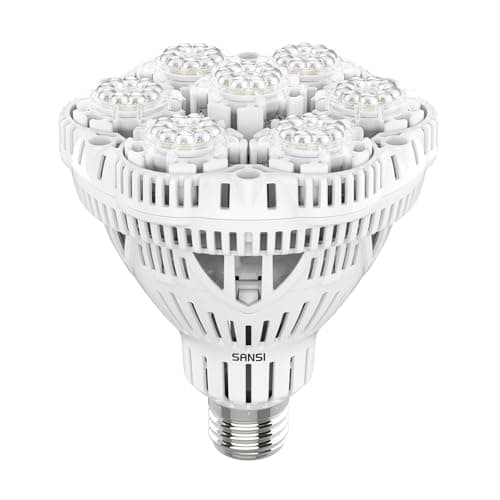 SANSI 36W BR30 Grow Light Bulb The rare grow bulb that publishes both PPF and a PPFD figure with the measurement distance attached, which is the only reason it can be sized honestly. | A single flytrap on a sill | 1.82 umol/J (ours) |
The reasoning
We have not tested these fixtures and we do not grow carnivorous plants. What follows is published specification, a named horticultural source for the plants themselves, and our arithmetic joining them.
Almost every page on this site is about modest amounts of light, because almost every plant people grow indoors is a forest species that wants modest amounts of light. This page is the exception. Venus flytraps, sundews and most pitcher plants are bog plants from open, treeless, permanently sunny ground, and they are the only group here where the honest recommendation starts at a full LED panel.
What the plants actually need
The New York Botanical Garden’s carnivorous plant care guide puts it plainly for Venus flytraps: “Full, direct sunlight (at least 6 hours per day), from a southern exposure is best.” Where that is not available, it recommends supplementing, and for a small plant says “a single horticultural LED light may be all you need, kept on the plant for 12 to 16 hours per day.”
Note what that guidance is measured in: hours of direct sun, not a daily light integral. None of the Extension sources this site relies on publishes a DLI band for carnivorous plants, so we are not going to invent one. What we can say with confidence is directional and useful: the highest band this site uses — Iowa State University Extension’s 12 to 16 mol/m²/day for high-light plants — is afloor for these species rather than a target, and the low and medium bands that suit a pothos are irrelevant here.
The New York Botanical Garden specifies at least 6 hours of direct sun for Venus flytraps, or a horticultural LED run 12 to 16 hours a day. No Extension DLI band for these species appears in the sources this site uses, so the 12-16 mol/m²/day high-light band is treated as a minimum rather than a goal.
Why the usual grow bulb does not do it
The bulbs this site recommends for houseplants publish 14 to 65.6 µmol/s. Spread that over a tray of pots and the intensity that reaches the leaves is in the low or medium band — fine for a philodendron and nowhere near a bog in July.
2 × 2 ft = 4 sq ft = 0.3716 m².
Mars Hydro TS 1000, 343 µmol/s: 343 ÷ 0.3716 × 0.8 = about 738 µmol/m²/s, or 37.2 mol/m²/day at 14 hours.
Spider Farmer SF1000, 249.21 µmol/s: about 536 µmol/m²/s, or 27.0 mol/m²/day at 14 hours.
A 36 W grow bulb, 65.6 µmol/s: about 141 µmol/m²/s spread over the same tray — the low band, and 7.1 mol/m²/day. Over one pot instead of a tray it is a different story, which is pick 3.
That is the gap in one table of arithmetic. A panel over a tray delivers four to five times what a bulb spread over the same tray does, and for this plant group that difference is the whole outcome: color in the traps, tight rosettes, and dew on sundews rather than dry stubs.
1. Mars Hydro TS 1000 — a tray of pots, with headroom
343 µmol/s published, the most of anything we cover, with a dimmer knob. Over a 2 ft square tray it delivers far more than the high band, which sounds like overkill and is actually the point: you can dim it or raise it for young plants and divisions, then give it everything in summer.
The downside: 150 W is a lot of fixture for a windowsill collection, and the published 738 µmol/m²/s at full output over a small tray is more than most plants on this site could tolerate — this is a fixture you must be willing to dim. It is also physically large and wants hanging, which suits a shelf and not a bookcase.
2. Spider Farmer SF1000 — a smaller collection, dimmable
249.21 µmol/s and 2.5 µmol/J, with a dimming knob, and it is the one fixture on this site whose two headline claims divide into each other correctly: 249.21 ÷ 100 W = 2.49 µmol/J against a published 2.5. That internal consistency is rarer than it should be.
Over a 2 ft square it delivers about 536 µmol/m²/s — the top of the high band and beyond — at 100 W rather than 150.
The downside: 27% fewer photons than the TS 1000, so if you intend to grow a deep tray of sarracenia under artificial light alone, the bigger panel has headroom this does not. No published location rating either, which matters more than usual here because these plants sit in standing water.
3. SANSI 36W BR30 — a single flytrap on a sill
Most people with a carnivorous plant have exactly one, in a small pot, on a windowsill. For that, a panel is absurd and this bulb is the honest answer: 65.6 µmol/s with a published PPFD of 265.58 µmol/m²/s at a stated one foot.
265.58 µmol/m²/s at 1 ft, run 14 hours: 265.58 × 14 × 3600 ÷ 1,000,000 = 13.4 mol/m²/day over the pot.
That clears the high band, on a plant-sized footprint, from a bulb in a desk lamp. It is the cheapest genuine solution on this page.
The downside: it covers one pot. The intensity falls off with the square of the distance, so a second pot set beside the first is already receiving materially less, and three pots need a different fixture entirely.
Photoperiod and the dormancy question
The New York Botanical Garden recommends 12 to 16 hours a day for a small plant under a horticultural LED during the growing season, and notes that “if you elect to grow your plant with a dormancy period in winter, light requirements will differ.”
That caveat matters, because the temperate species — Venus flytraps and most North American pitcher plants — are not tropical houseplants. They come from places with a real winter, and growers generally give them a cool, short-day rest. A flytrap kept under 16 hours of light at room temperature all year is being denied that, and the decline is slow enough to be blamed on something else.
This site is about fixtures, not about horticultural technique, so the practical point is narrow: whatever light you buy, put it on a timer you can change seasonally rather than leave it at one setting forever. Options are in grow lights with timers.
Running cost
Mars Hydro TS 1000, 150 W: 63.0 kWh a month = $11.55.
Spider Farmer SF1000, 100 W: 42.0 kWh = $7.70.
SANSI 36 W bulb: 15.1 kWh = $2.77.
These are the highest running costs on this site, and they are still modest against what people spend on the plants. What they are not is negligible in the way a 9 W bulb is — high-light plants cost real money to light, every month, and that is worth knowing before rather than after.
What tells you the light is wrong
- Too little: flytrap traps staying green instead of developing red interiors, leaves elongating and flopping, sundews producing little or no dew, pitcher plants making flat leaves instead of pitchers. The last one is the clearest single signal in the group.
- Too much, too suddenly: bleaching or browning on the surfaces nearest the fixture, usually after moving a plant straight from a dim shelf to full output. Raise the light or dim it and step down over a week or two.
- Not a light problem: traps blackening one at a time after catching an insect, which is normal, and a general winter die-back in a temperate species, which is dormancy rather than failure.
Flytraps are not the only genus, and the others differ
The New York Botanical Garden guidance above is written for Venus flytraps, which are the commonest and among the most demanding. The other genera people actually own sit at different points, and the differences are worth knowing before buying a fixture sized for the hardest case.
- Sundews (Drosera). Broadly as demanding as flytraps, and the easiest group to read: dew production falls off quickly when light is short, and returns within days when it is restored. A sundew is effectively a light meter you can grow.
- North American pitcher plants (Sarracenia). Full-sun bog plants, and the group most often ruined indoors — they are genuinely better off outside for the summer in most of the US, and they need a real winter dormancy.
- Tropical pitchers (Nepenthes). The exception on this page. Many are highland or lowland forest climbers rather than open bog plants, and they generally take less light than the rest — closer to the top of an ordinary high-light houseplant band than to full sun. They also do not want a cold dormancy.
- Butterworts (Pinguicula). The most forgiving here. Mexican species in particular do well on a windowsill with a single bulb, and are a reasonable first carnivorous plant for someone who does not want to buy a panel.
The buying consequence: if your collection is nepenthes and butterworts, the single-bulb answer in pick 3 is probably enough. If it is flytraps, sundews and sarracenia, it is not, and the panels are the honest recommendation.
Acclimating a plant to a new light
The commonest way to damage a carnivorous plant with a grow light is not running it too dim. It is moving a plant that has spent months in a dim shop or a dark shelf directly under full output.
Leaves grown in low light are structurally different from leaves grown in bright light, and they cannot adjust in a day. Bleaching and scorching after an upgrade is a transition injury rather than evidence that the fixture is wrong.
Week 1: hang the fixture at roughly double its intended height. By the inverse-square relationship that is about a quarter of the final intensity.
Week 2: drop to about 1.4 times the final height, which is roughly half the final intensity.
Week 3: final height. With a dimmable panel the same schedule is simply 25%, 50%, 100%, which is easier to get right.
New growth that emerges during and after the transition is adapted to the new level, and it is that growth — not the old leaves — that tells you whether the light is correct.
Running cost against the alternative
It is worth being blunt about where this leaves a beginner. A panel plus the electricity to run it is a real annual cost for a single plant that would grow better, for nothing, on a sunny outdoor windowsill or patio for half the year.
Artificial light earns its place for growers with no suitable outdoor space, for tropical species that cannot go outside, and for anyone keeping a collection through a northern winter. For one flytrap owned by someone with a south-facing balcony, the honest recommendation is the balcony from spring to autumn and a bulb for the winter.
Photoperiod across the year
The New York Botanical Garden gives 12 to 16 hours a day under a horticultural LED during the growing season, and notes that light requirements differ if the plant is given a winter dormancy.
For the temperate species that means two schedules rather than one: a long summer day in the 12 to 16 hour range, and a short winter one alongside cooler temperatures for the dormant months. Tropical species such as most nepenthes stay on the summer schedule year-round, because they have no dormancy to serve.
The practical consequence for a buyer is small but worth acting on: choose a timer you will genuinely re-set twice a year, and note the two settings somewhere. A fixture left on one schedule forever is the commonest way a flytrap that survived its first summer fails to survive its second.
Every pick in full
Mars Hydro TS 1000
LED panelA tray of pots, with headroom to spare
The most photons of anything on this list, and one of only three fixtures here that publishes both PPF and efficacy so the claim can be checked against itself.
What Mars Hydro publishes
- Power draw
- 150 W +/-5% at 100-277 V AC (source)
- PPF (photon output)
- 343 umol/s (source)
- Efficacy
- 2.3 umol/J (source)
- Stated coverage
- 2.5 x 2.5 ft vegetative, 2.3 x 2.3 ft flowering (source)
- Spectrum
- 660-665 nm, 730-740 nm, 3000 K, 5000 K (source)
- Diodes
- Bridgelux (source)
- Dimming
- Yes, 0-100% dimmer knob (source)
- Dimensions
- 406 x 326 x 50 mm (source)
Our arithmetic
- Average PPFD across its stated 2.5 x 2.5 ft vegetative footprint: about 470 umol/m2/s
2.5 ft x 2.5 ft = 6.25 sq ft = 0.581 m2. 343 umol/s divided by 0.581 m2 = 590 umol/m2/s at perfect uniformity; applying a 0.8 uniformity factor gives about 472 umol/m2/s average. - Electricity used at 14 hours a day for 30 days: 63.0 kWh a month
150 W x 14 h x 30 d / 1000 = 63.0 kWh.
Who should skip it
Skip it if you are lighting a bookshelf. 343 umol/s concentrated into a 2.5 ft square is far more light than a monstera wants, and you pay 150 W to deliver it.
Spider Farmer SF1000
LED panelA smaller collection, dimmable
Publishes PPF to two decimal places and an efficacy figure that actually divides out of it. That internal consistency is rarer in this category than it should be.
What Spider Farmer publishes
- Power draw
- 100 W +/-5% at 100-277 V AC (source)
- PPF (photon output)
- 249.21 umol/s (source)
- Efficacy
- 2.5 umol/J (source)
- Stated coverage
- 2 x 2 ft core, 3 x 3 ft maximum (source)
- Spectrum
- 650-665 nm, 730-740 nm, 2800-3000 K, 4800-5000 K (source)
- Diodes
- Bridgelux (source)
- Dimming
- Yes, dimming knob (source)
- Dimensions
- 32.5 x 29.0 x 5.9 cm (source)
- Rated life
- 55,000 hours (source)
Our arithmetic
- Does the published efficacy check out against the published PPF?: Yes — 2.49 umol/J computed against 2.5 umol/J published
249.21 umol/s / 100 W = 2.4921 umol/J. The published 2.5 umol/J is that number rounded. Not every brand's two figures agree like this, which is exactly why we divide them. - Average PPFD across its 2 x 2 ft core footprint: about 536 umol/m2/s
2 ft x 2 ft = 4 sq ft = 0.372 m2. 249.21 / 0.372 = 670 umol/m2/s at perfect uniformity; at a 0.8 uniformity factor, about 536 umol/m2/s.
Who should skip it
Skip it if raw output is what you are buying — the TS 1000 delivers 38% more photons per second, at the cost of 50 W more draw.
SANSI 36W BR30 Grow Light Bulb
Grow bulbA single flytrap on a sill
The rare grow bulb that publishes both PPF and a PPFD figure with the measurement distance attached, which is the only reason it can be sized honestly.
What SANSI publishes
- Power draw
- 36 W (source)
- PPF (photon output)
- 65.6 umol/s (source)
- PPFD
- 265.58 umol/m2/s at 1 ft (source)
- Spectrum
- 4000 K, 400-780 nm, CRI close to 100 (source)
- Rated life
- 25,000 hours (source)
Our arithmetic
- Efficacy, computed from the published figures: 1.82 umol/J
65.6 umol/s / 36 W = 1.82 umol/J. That is roughly a third less efficient than the panels on this page — the price of a screw-in form factor. - Electricity used at 12 hours a day for 30 days: 12.96 kWh a month
36 W x 12 h x 30 d / 1000 = 12.96 kWh.
What SANSI does not publish
- Beam angle
- Fixture dimensions
Who should skip it
Skip it if you are lighting more than one plant. 65.6 umol/s is a small amount of light spread over a cone — it lights a single specimen, not a shelf.
Questions people actually ask
+How much light does a Venus flytrap need indoors?
+Is a grow light bulb strong enough for carnivorous plants?
+What size grow light do you need for a tray of carnivorous plants?
+Should carnivorous plants have a grow light on all winter?
Sources
- New York Botanical Garden, LuEsther T. Mertz Library — Carnivorous Plant Care: Venus Flytrap Houseplants (Dionaea muscipula) — consulted September 20, 2026
- Iowa State University Extension — Important Considerations for Providing Supplemental Light to Indoor Plants — consulted September 2, 2026
- University of Minnesota Extension — Lighting for indoor plants and starting seeds — consulted September 2, 2026
- Mars Hydro — TS 1000 published specification table — consulted September 2, 2026
- Spider Farmer — SF1000 published specification table — consulted September 2, 2026
- SANSI — BR30 36W grow light bulb product page — consulted September 2, 2026
- US Energy Information Administration — Electric Power Monthly, Table 5.3 (US residential average, June 2026) — consulted September 2, 2026
Read next
Houseplants
Grow Lights for Succulents
Succulents are high-light plants at 12-16 mol/m2/day. The target, the stretch, and what reaches it.
Top pick
AC Infinity IONBOARD S22
Coverage & Sizing
PPFD Targets by Plant Type
Published light bands mapped to common indoor plants, with the DLI each implies.
Top pick
GooingTop Clip Grow Light
Reviews
The Best LED Grow Light Panels
The 100 W panel class compared on published output, efficacy and internal consistency.
Top pick
Spider Farmer SF1000
Coverage & Sizing
How Far Should a Grow Light Be From Plants?
The inverse-square rule, published PPFD-at-distance figures, and a by-plant table.
Top pick
Soltech Aspect Gen 2
Where this sits
This page belongs to Grow Lights for Houseplants and Winter. Every figure on it is either quoted from a named published source or derived in view — the full method is on our methodology page, and how the site is funded is on the affiliate disclosure.