Leggy Seedlings: Which Grow Light Fixes It
The stretch is permanent, the cause is arithmetic, and the fix is almost never a different color of light. Here is what to change, in the order that works.
By Scooter M. — An enthusiast who's genuinely into this. I read the manuals, compile the published specs, and do the math. No lab coat.
Published · How we pick
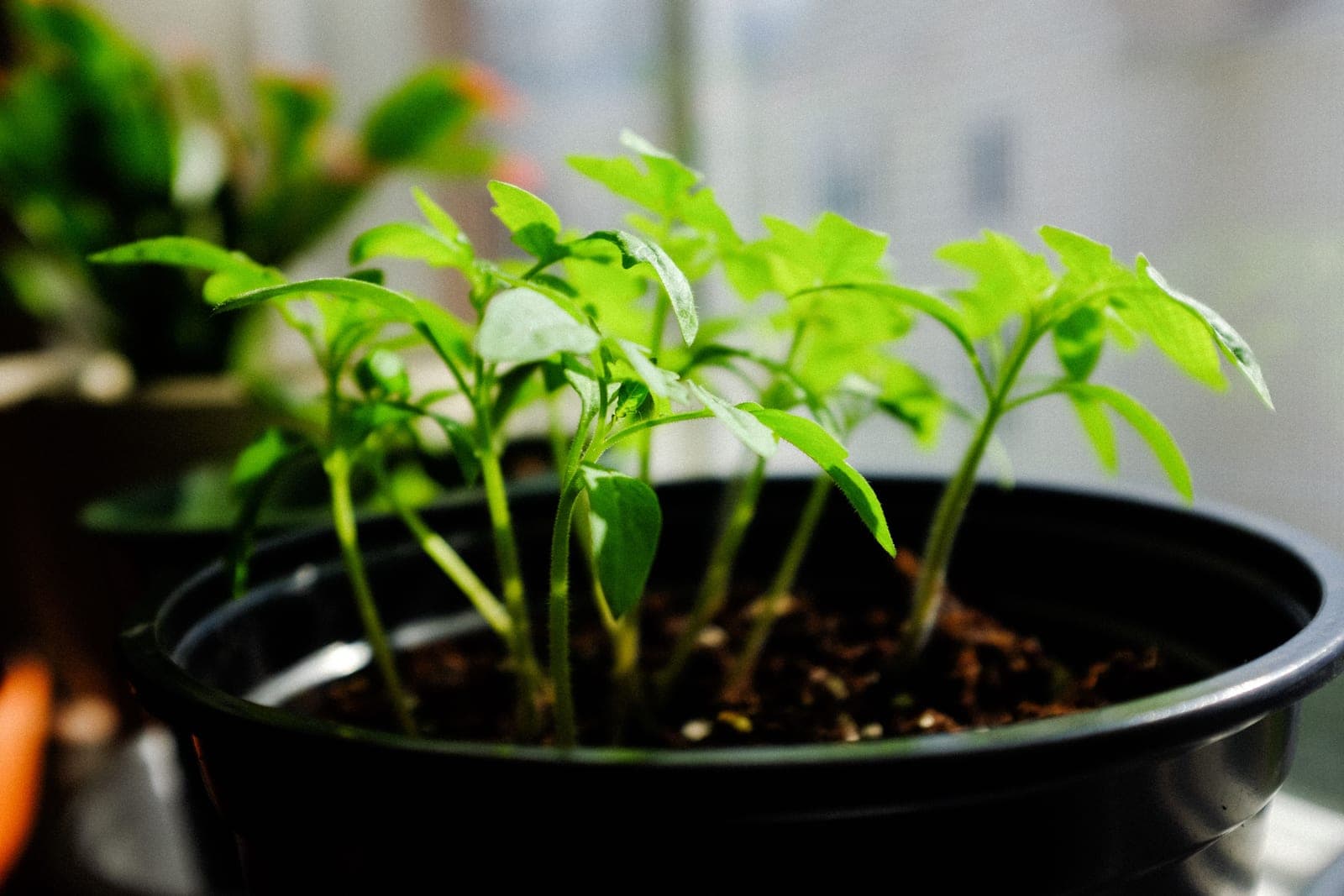
Photographs on this site are licensed stock and are illustrative of the fixture type. We do not own the units we write about.
How this page is funded: the buy links here are Amazon Associates links, and we earn a commission on qualifying purchases at no extra cost to you. We have not been paid to feature anything on this page, we accept no free product, and commission plays no part in the ranking. Full disclosure.
We have not tested these units. Everything below comes from the manufacturer’s own published specifications, or from arithmetic we have shown our working for. Where a figure is not published, we say so instead of estimating one. Read the method.
Quick picks
Efficacy is photons out per joule in. Where a manufacturer publishes it we quote theirs; where they publish photon output and wattage but not efficacy, we divide and label it as ours; where they publish neither, the cell says so rather than guessing. Tap a row for the full write-up.
| # | Product | Best for | Efficacy | Price |
|---|---|---|---|---|
| 1 | 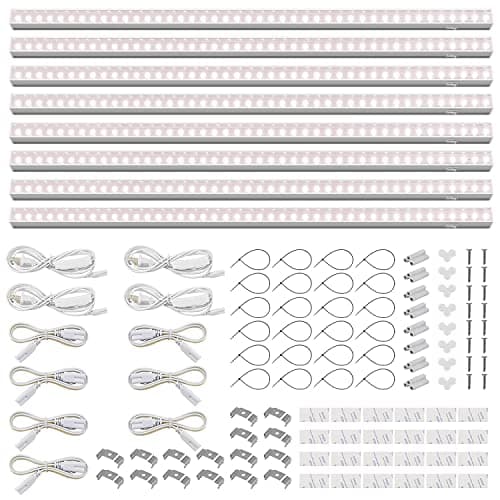 Barrina T5 4ft Grow Light Strips The default seed-starting bar for good reasons — 4 ft long, linkable in series, cheap per foot — and the reason we built a coverage calculator, because Barrina publishes no photon data whatsoever. | Sits 2 in from the tray | Not published | |
| 2 | 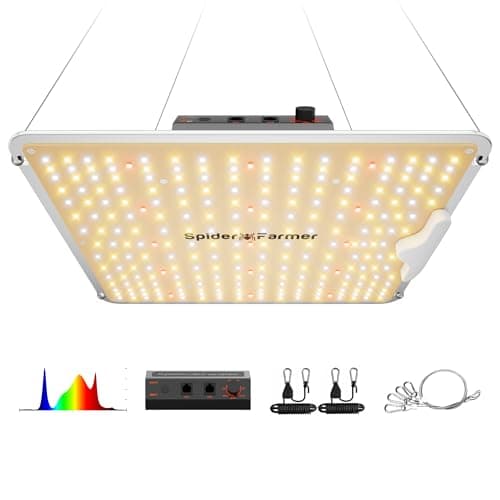 Spider Farmer SF1000 Publishes PPF to two decimal places and an efficacy figure that actually divides out of it. That internal consistency is rarer in this category than it should be. | Computable from day one | 2.5 umol/J | |
| 3 | 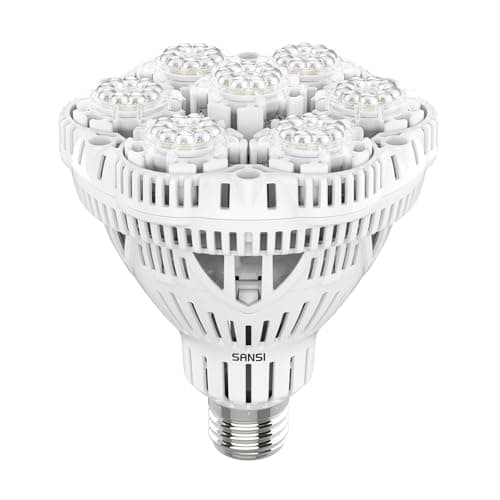 SANSI 36W BR30 Grow Light Bulb The rare grow bulb that publishes both PPF and a PPFD figure with the measurement distance attached, which is the only reason it can be sized honestly. | One tray on a sill | 1.82 umol/J (ours) |
The reasoning
A leggy seedling — a long pale stem, a couple of leaves at the top, the whole thing flopping toward the window — is the most common seed-starting failure there is, and it has one cause. Not enough light reaching the plant. Not the wrong color. Not the wrong brand. Not too much water, though that gets blamed. The seedling is stretching toward a light source it cannot get enough of, and it is spending its reserves on stem instead of leaf.
This page is organized the way the problem is: what causes it in numbers, what you can still do about the seedlings you have, and what stops it happening to the next tray.
The elongated section is permanent. Growth above it will be compact once light is adequate, but the stem that already stretched does not shorten. Act fast on the trays you have; prevent it on the next.
The cause, in numbers
Seedlings want about 12 moles of light per square meter per day, per University of New Hampshire Extension. That is the daily light integral, and legginess is what happens well below it. The two ways a home setup ends up below it are both about intensity, and neither is about spectrum.
Cause 1: the fixture is too far away
Light density from a fixture falls with roughly the square of distance. This is the whole story for most leggy trays.
Ratio of distances: 12 ÷ 4 = 3. Intensity at 12 in ≈ intensity at 4 in ÷ 3² = one ninth.
A strip delivering a comfortable level at 4 inches delivers roughly 11% of it at 12. A tray that was fine when the light was low goes leggy the week you forget to lower it.
Cause 2: a windowsill in late winter
Seedlings started on a sill in February are the other classic case. The day is short, the sun is low, and the plants get a few hours of direct light and lean hard toward it for the rest. The daily total falls far below 12 mol/m²/day no matter how bright the sill looks at noon. This is a fixture problem in disguise: there is no fixture.
What is NOT the cause
- Spectrum. A cooler white contains proportionally more blue, which is associated with compact growth, and that is a weak effect. A seedling under a 6500 K light that is too far away stretches anyway. Intensity is worth an order of magnitude more than Kelvin — see Kelvin versus spectrum for seedlings.
- Warmth alone. A heat mat left on after emergence speeds stem growth, which makes an under-lit tray leggier faster — but the underlying deficit is still light.
- Overwatering. Causes damping off and yellowing, not the stretch. It gets blamed because it happens at the same time.
Can they be saved?
Partly, and it depends on the crop. The honest picture:
| Situation | Salvageable? | What to do |
|---|---|---|
| Mildly stretched, still upright, first true leaves in | Yes | Fix the light today. New growth will be compact; the plant will be fine, just with a longer lower stem |
| Tomatoes, stretched but alive | Yes, and easily | Tomatoes are commonly transplanted deep, with part of the stem buried — the buried section roots. Fix the light and pot up deeper at the next transplant |
| Peppers, brassicas, lettuce — stretched | Partly | These do not root along the stem like tomatoes. Fix the light, pot up to the first leaves for support, and accept a weaker plant |
| Flopped over, stem bent, pale and thin | Usually not worth it | Resow. Two weeks lost now beats a weak plant all season, and seed is cheap |
| Cucurbits — squash, cucumber, melon | Rarely | They grow so fast that a stretched one is already compromised. Resow; they catch up |
The rule of thumb: if you can fix the light within a day or two of noticing, most trays recover. If the stems are already thin and bent, resow — the calendar cost is small and the alternative is nursing weak plants until June.
What fixes it, in order of cost
- Lower the fixture. Free, and it is the fix nine times out of ten. Linear strips can sit 2 to 4 inches above seedling tops; panels 12 to 18 inches. Raise as the plants grow, every few days.
- Add hours. University of Minnesota Extension recommends 16 to 18 hours a day for seedlings. Going from 12 to 16 is a third more daily light with no hardware, on a timer.
- Add a fixture. If the strip is already at 2 inches and the tray is still stretching, there is not enough light in the strip. A second run doubles it.
- Get the seedlings off the windowsill. A February sill cannot supply 12 mol/m²/day at most latitudes. Any fixture on a timer beats it.
The setup that prevents it
Target 12 mol/m²/day at 16 hours: PPFD = 12 × 1,000,000 ÷ (16 × 3600) = 208 µmol/m²/s.
A 4 × 1.5 ft shelf = 0.557 m². PPF = 208 × 0.557 ÷ 0.8 = 145 µmol/s.
A single Spider Farmer SF1000 publishes 249.21 µmol/s — about 1.7 times that, so a tray under one at the right height is well inside the target with margin.
Check your own shelf in the coverage calculator. If the result is under 208 µmol/m²/s at 16 hours, the tray will stretch, and no change of bulb color will stop it.
The three fixtures, and why each
- Barrina T5 4ft strips — because they run cool enough to sit 2 inches from the tray, which is the single most effective anti-stretch setting there is, and they match a tray’s shape. Con: no photon data published for any strip, so you cannot confirm in advance that two strips reach 208 — you judge by the seedlings, which for this problem report within days.
- Spider Farmer SF1000 — because it publishes 249.21 µmol/s and 2.5 µmol/J that confirm each other, so a tray under it can be sized on paper before the seed goes in. Con: a panel concentrates output, so it wants 12 to 18 inches of height over a tray, and it publishes no PPFD at any stated distance.
- SANSI 36W BR30 — because it publishes 265.58 µmol/m²/s at a stated 1 ft, which places a single tray on a sill by arithmetic. Con: 65.6 µmol/s lights one tray, not a shelf, and 1.82 µmol/J is a third less efficient than a panel.
The honest summary
Leggy seedlings are under-lit seedlings, full stop. Lower the fixture today, run it 16 hours, and if the strip is already at 2 inches, add another. Save the trays that are only mildly stretched; resow the ones that have flopped. And size the next shelf against 208 µmol/m²/s before the seed goes in, so this page is one you only needed once. The distance table is in how far grow lights should be from seedlings.
Every pick in full
Barrina T5 4ft Grow Light Strips
LED barSits 2 in from the tray
The default seed-starting bar for good reasons — 4 ft long, linkable in series, cheap per foot — and the reason we built a coverage calculator, because Barrina publishes no photon data whatsoever.
What Barrina publishes
- Power draw
- 20 W per fixture; an 8-pack draws 160 W (source)
- Spectrum
- 5000 K (source)
- Dimming
- No; on/off switch per fixture, linkable up to 8 in series (source)
- Dimensions
- 4 ft strip, 120-degree beam angle, 120 V AC (source)
What Barrina does not publish
- PPF in umol/s — for any strip in the range
- PPFD at any stated distance
- Photon efficacy in umol/J
- LED count per strip, and rated lifespan
Who should skip it
Skip it if you need to know what you are getting before it arrives. There is no published PPF, no PPFD and no efficacy figure, so nothing about its output can be verified in advance.
Spider Farmer SF1000
LED panelComputable from day one
Publishes PPF to two decimal places and an efficacy figure that actually divides out of it. That internal consistency is rarer in this category than it should be.
What Spider Farmer publishes
- Power draw
- 100 W +/-5% at 100-277 V AC (source)
- PPF (photon output)
- 249.21 umol/s (source)
- Efficacy
- 2.5 umol/J (source)
- Stated coverage
- 2 x 2 ft core, 3 x 3 ft maximum (source)
- Spectrum
- 650-665 nm, 730-740 nm, 2800-3000 K, 4800-5000 K (source)
- Diodes
- Bridgelux (source)
- Dimming
- Yes, dimming knob (source)
- Dimensions
- 32.5 x 29.0 x 5.9 cm (source)
- Rated life
- 55,000 hours (source)
Our arithmetic
- Does the published efficacy check out against the published PPF?: Yes — 2.49 umol/J computed against 2.5 umol/J published
249.21 umol/s / 100 W = 2.4921 umol/J. The published 2.5 umol/J is that number rounded. Not every brand's two figures agree like this, which is exactly why we divide them. - Average PPFD across its 2 x 2 ft core footprint: about 536 umol/m2/s
2 ft x 2 ft = 4 sq ft = 0.372 m2. 249.21 / 0.372 = 670 umol/m2/s at perfect uniformity; at a 0.8 uniformity factor, about 536 umol/m2/s.
Who should skip it
Skip it if raw output is what you are buying — the TS 1000 delivers 38% more photons per second, at the cost of 50 W more draw.
SANSI 36W BR30 Grow Light Bulb
Grow bulbOne tray on a sill
The rare grow bulb that publishes both PPF and a PPFD figure with the measurement distance attached, which is the only reason it can be sized honestly.
What SANSI publishes
- Power draw
- 36 W (source)
- PPF (photon output)
- 65.6 umol/s (source)
- PPFD
- 265.58 umol/m2/s at 1 ft (source)
- Spectrum
- 4000 K, 400-780 nm, CRI close to 100 (source)
- Rated life
- 25,000 hours (source)
Our arithmetic
- Efficacy, computed from the published figures: 1.82 umol/J
65.6 umol/s / 36 W = 1.82 umol/J. That is roughly a third less efficient than the panels on this page — the price of a screw-in form factor. - Electricity used at 12 hours a day for 30 days: 12.96 kWh a month
36 W x 12 h x 30 d / 1000 = 12.96 kWh.
What SANSI does not publish
- Beam angle
- Fixture dimensions
Who should skip it
Skip it if you are lighting more than one plant. 65.6 umol/s is a small amount of light spread over a cone — it lights a single specimen, not a shelf.
Questions people actually ask
+Why are my seedlings leggy?
+Can leggy seedlings be saved?
+Will a different grow light spectrum stop legginess?
+How close should the light be to stop seedlings stretching?
+Have you tested these lights on seedlings?
Sources
- University of New Hampshire Extension — Growing Seedlings Under Lights — consulted September 2, 2026
- University of Minnesota Extension — Lighting for indoor plants and starting seeds — consulted September 2, 2026
- Iowa State University Extension — Important Considerations for Providing Supplemental Light to Indoor Plants — consulted September 2, 2026
- Virginia Cooperative Extension — Calculating and Using Daily Light Integral (DLI), SPES-720 — consulted September 2, 2026
- Barrina — T5 ML20 4ft 20W product page — consulted September 2, 2026
- Spider Farmer — SF1000 published specification table — consulted September 2, 2026
- SANSI — BR30 36W grow light bulb product page — consulted September 2, 2026
Read next
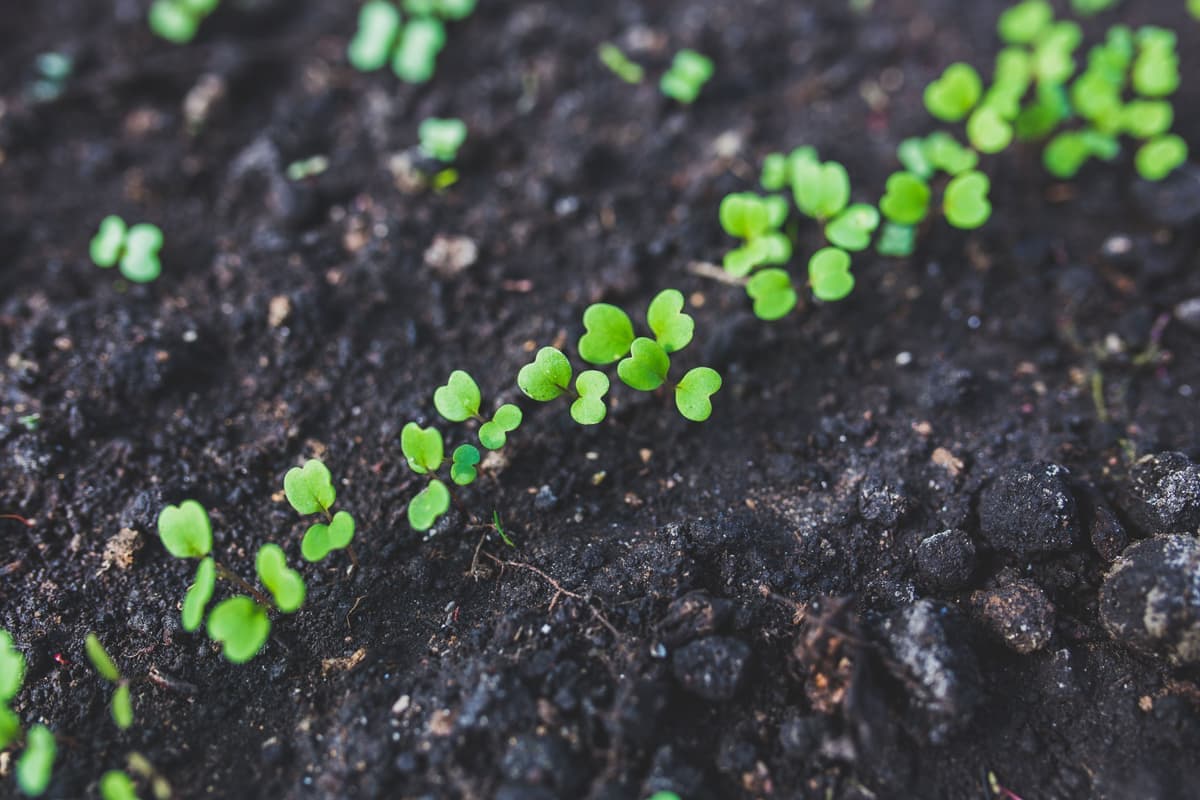
Seed Starting
How Far Should Grow Lights Be From Seedlings?
Distance by fixture type, in a table, with the inverse-square arithmetic that explains why an inch matters so much.
Top pick
Barrina T5 4ft Grow Light Strips
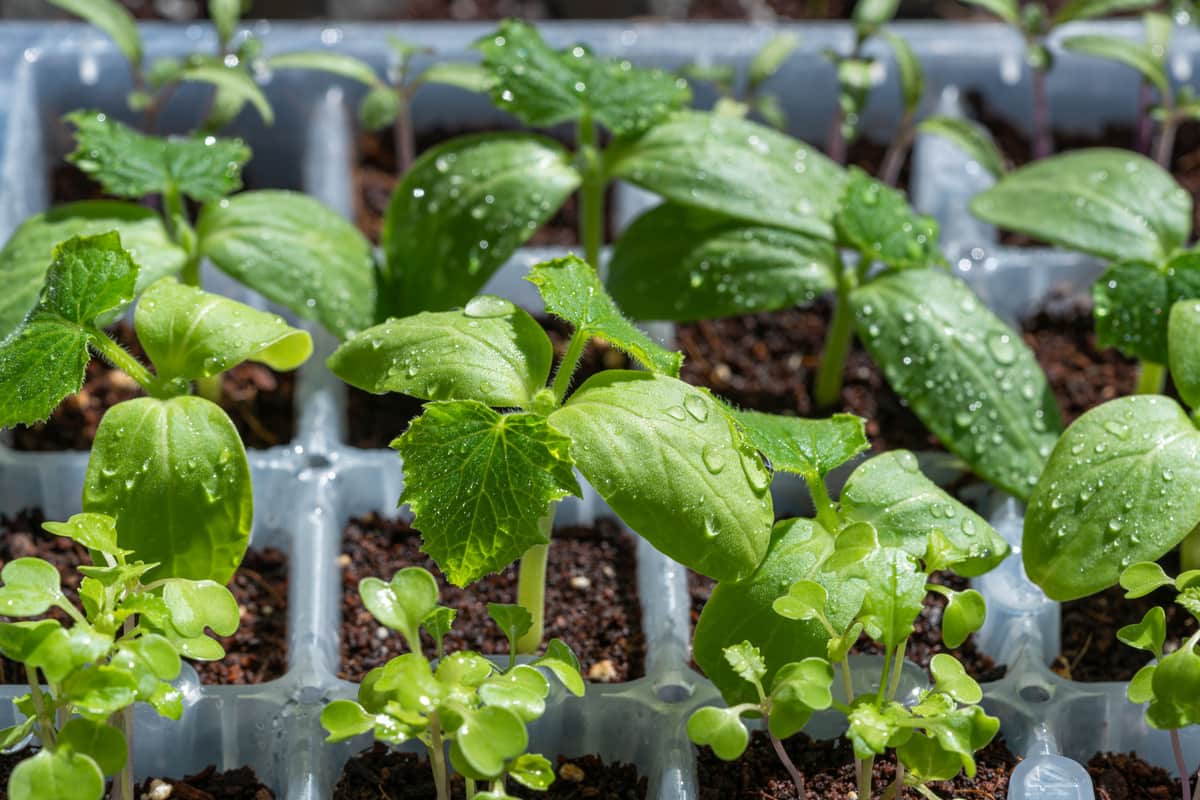
Seed Starting
How Much Light Do Seedlings Actually Need?
The 12 mol/m2/day seedling target, converted into the PPFD and hours you can actually set.
Top pick
Spider Farmer SF1000
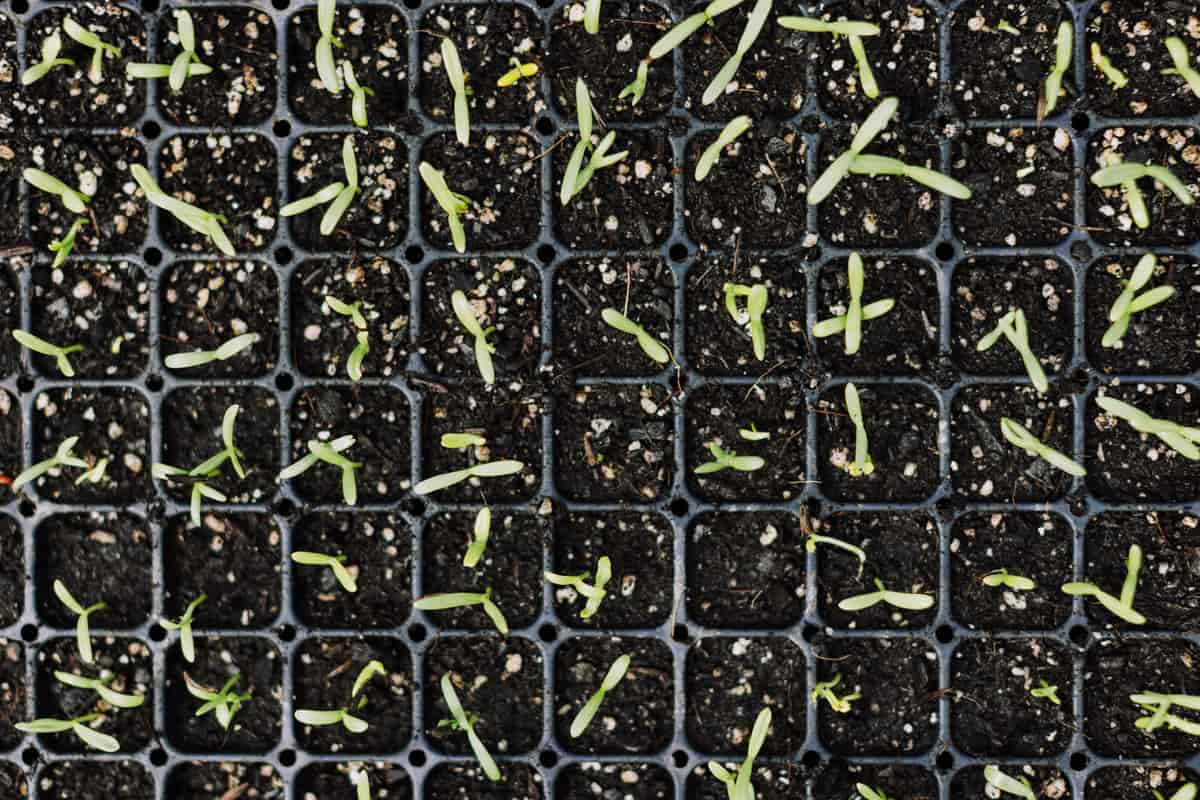
Seed Starting
The Best Grow Lights for Seed Starting
Sized against a 12 mol/m2/day seedling target using published photon output, not marketing claims.
Top pick
Barrina T5 4ft Grow Light Strips

Coverage & Sizing
Grow Light Coverage Calculator
Put in PPF, area and hours; get PPFD and DLI scored against published extension bands.
Top pick
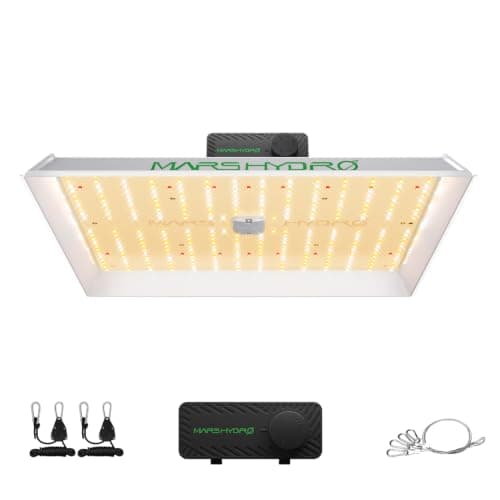
Mars Hydro TS 1000
Where this sits
This page belongs to Grow Lights for Seed Starting. Every figure on it is either quoted from a named published source or derived in view — the full method is on our methodology page, and how the site is funded is on the affiliate disclosure.