Do You Need a Grow Light to Germinate Seeds?
For most seeds, no — germination runs on stored energy and warmth. The light matters intensely about twelve hours later.
By Scooter M. — An enthusiast who's genuinely into this. I read the manuals, compile the published specs, and do the math. No lab coat.
Published · How we pick
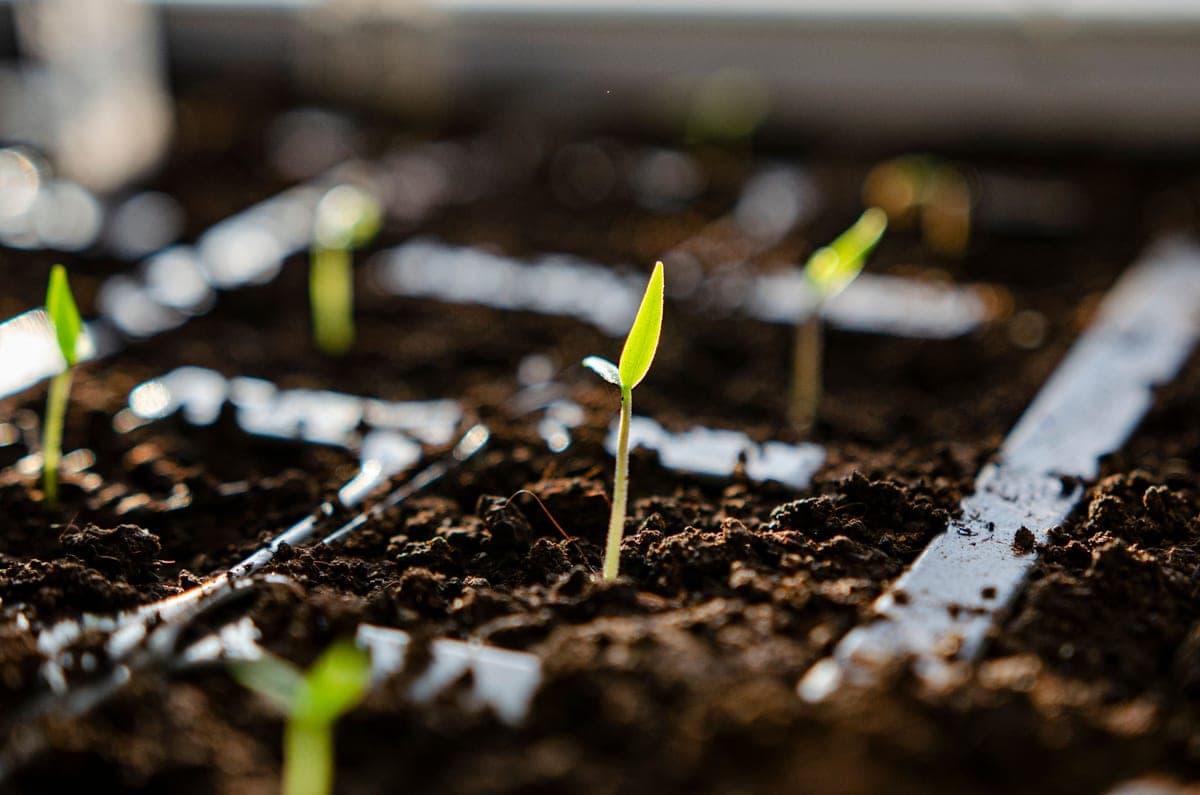
Photographs on this site are licensed stock and are illustrative of the fixture type. We do not own the units we write about.
How this page is funded: the buy links here are Amazon Associates links, and we earn a commission on qualifying purchases at no extra cost to you. We have not been paid to feature anything on this page, we accept no free product, and commission plays no part in the ranking. Full disclosure.
We have not tested these units. Everything below comes from the manufacturer’s own published specifications, or from arithmetic we have shown our working for. Where a figure is not published, we say so instead of estimating one. Read the method.
Quick picks
Efficacy is photons out per joule in. Where a manufacturer publishes it we quote theirs; where they publish photon output and wattage but not efficacy, we divide and label it as ours; where they publish neither, the cell says so rather than guessing. Tap a row for the full write-up.
| # | Product | Best for | Efficacy | Price |
|---|---|---|---|---|
| 1 | 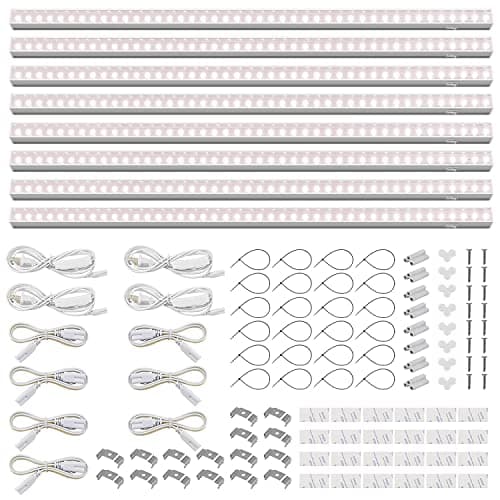 Barrina T5 4ft Grow Light Strips The default seed-starting bar for good reasons — 4 ft long, linkable in series, cheap per foot — and the reason we built a coverage calculator, because Barrina publishes no photon data whatsoever. | For the day they emerge | Not published | |
| 2 | 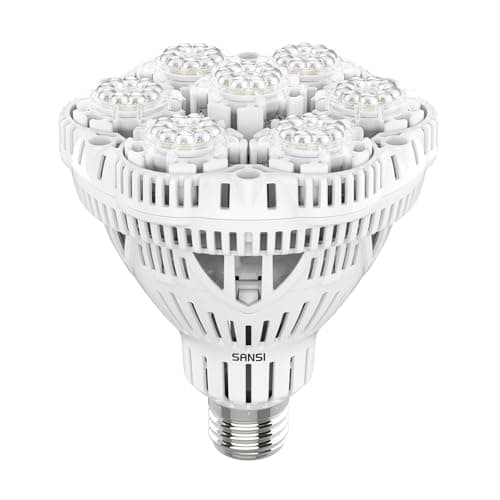 SANSI 36W BR30 Grow Light Bulb The rare grow bulb that publishes both PPF and a PPFD figure with the measurement distance attached, which is the only reason it can be sized honestly. | One tray on a sill | 1.82 umol/J (ours) | |
| 3 | 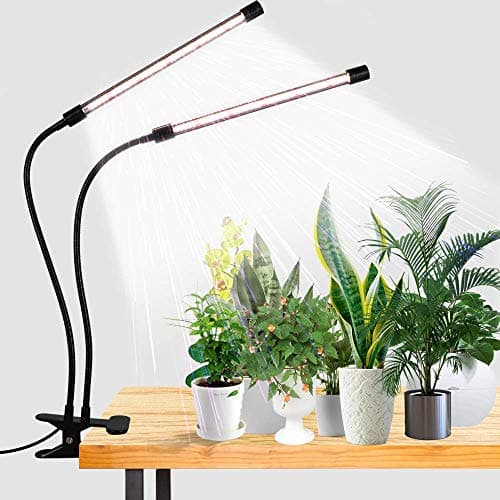 GooingTop Clip Grow Light The cheapest way to put real light on one plant on one desk, and honest about being exactly that — a 10 W clip lamp with a repeating timer. | Cheapest way to start | Not published |
The reasoning
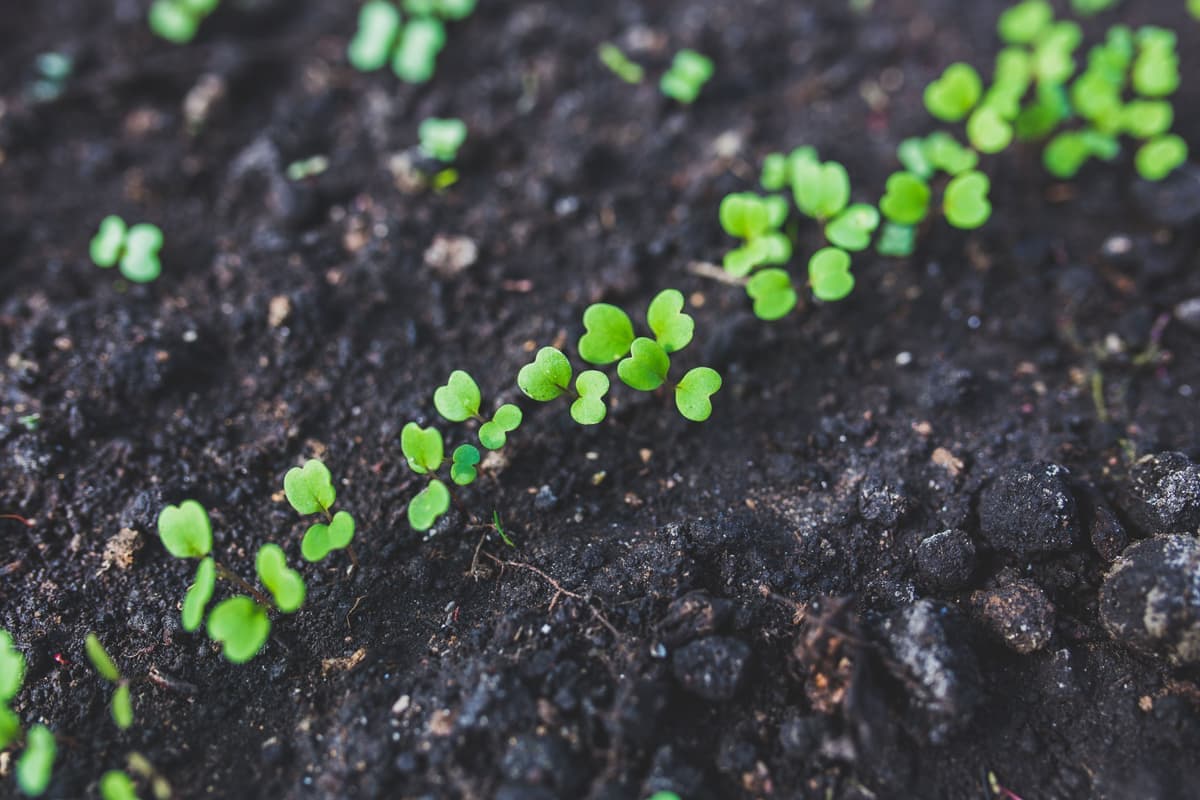
For most vegetable and flower seeds, no. Germination is powered by the energy stored inside the seed, not by photosynthesis, and it happens perfectly well in the dark. What germination needs is moisture and a suitable temperature. The light becomes urgent the moment the first shoot breaks the surface — and that transition is the part people get wrong.
Why the timing matters more than the equipment
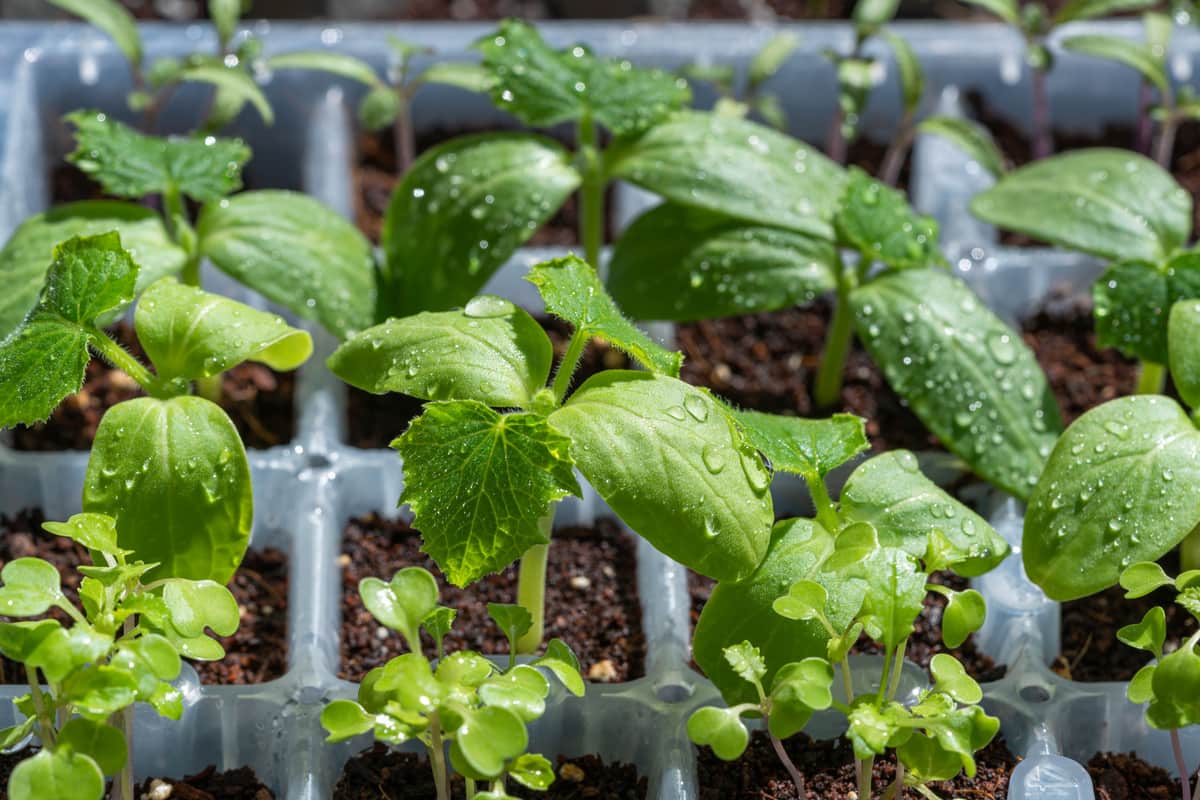
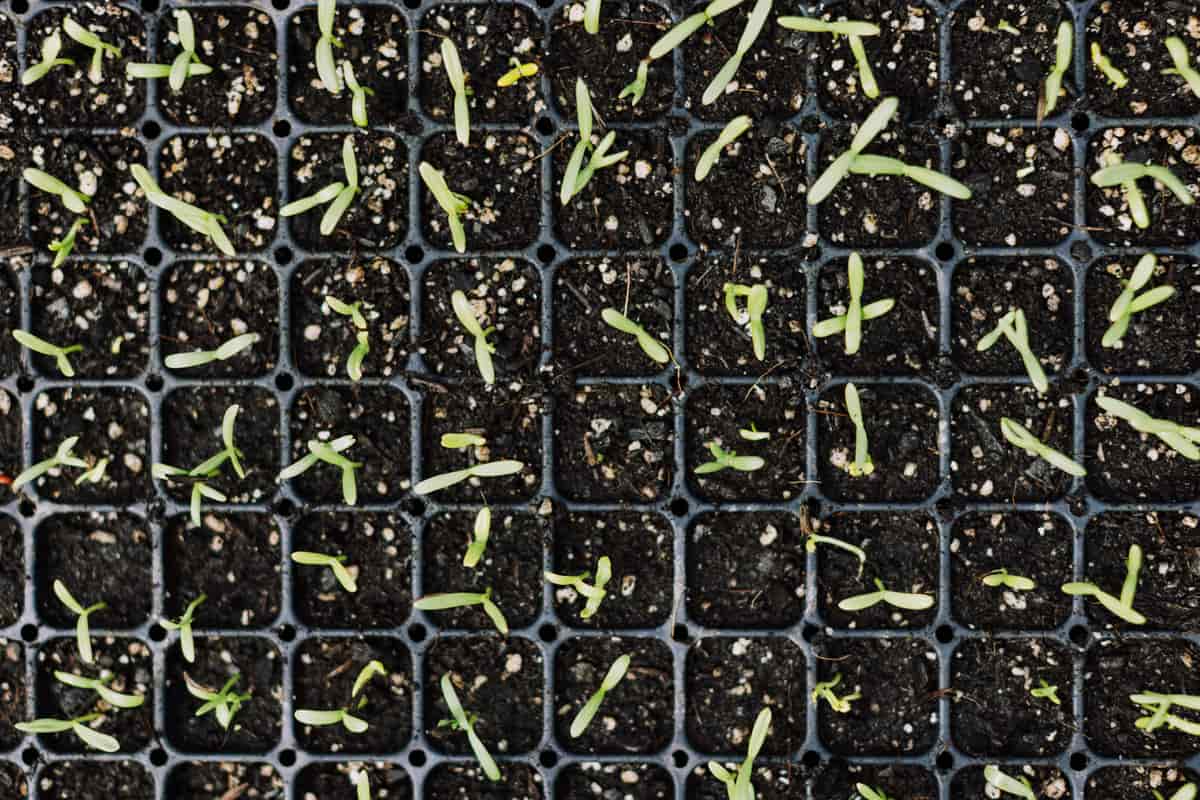
A seed that has just emerged has spent its reserves. From that hour it has to make its own energy, and if the light is dim or absent it does the one thing it can do: it stretches, throwing everything into stem length to reach light that is not there. That stretch is permanent. You cannot shorten a stem after the fact, and a stretched seedling is weaker at transplant for the rest of its life.
So the practical answer is not “do seeds need light”. It is: have the light installed, positioned and timed before you sow, because you will not reliably be standing there at the moment of emergence.
The exceptions that do need light to germinate
A minority of species are light-dependent germinators — they are sown on the surface and pressed in rather than covered, because they need light exposure to trigger germination at all. Lettuce is the common kitchen-garden example; several small-seeded ornamentals behave the same way. The seed packet will say “do not cover” or “needs light to germinate”, and that instruction is doing real work. Follow the packet; it is more specific than any general guide, including this one.
| Stage | Light needed? | What matters most |
|---|---|---|
| Sown, not yet emerged | Usually no | Consistent moisture and warmth. A humidity dome and a heat mat do more than any fixture. |
| Surface-sown light germinators (e.g. lettuce) | Yes | Do not cover the seed. Ambient light through the dome is enough; intensity is not the point yet. |
| First shoot visible | Yes, immediately | This is the critical hour. Light on, dome off or vented, fixture at 4–6 inches. |
| Cotyledons open, before true leaves | Yes, at full target | About 12 mol/m²/day. Under-lighting here produces the stretch you cannot undo. |
| True leaves onward | Yes | Maintain the target and raise the fixture weekly as they grow. |
What to do instead of buying a light for germination
If your seeds are germinating slowly or unevenly, light is almost never the fix. Temperature usually is. Most warm-season vegetables germinate substantially faster in a warm medium than a cool one, which is why a heat mat under the tray is the single highest-value seed-starting purchase — and it is cheaper than any fixture on this site.
Spend on the light for the eight weeks after germination, when the plant is making its own energy and the light is the entire input. That is where our seed-starting picks are aimed, and the shelf setup guide covers getting it installed before you sow.
A workable sequence
- Install and hang the fixture, and set the timer, before you sow anything. Fourteen to sixteen hours on.
- Sow at the depth on the packet. If it says do not cover, do not cover.
- Cover with a dome for humidity and put the tray somewhere warm. The light can be on or off at this stage — it makes little difference, and leaving it on is simpler than remembering to switch it.
- Check daily. The moment anything is up, vent or remove the dome and get the fixture to 4 to 6 inches above the tallest shoot.
- Raise the fixture weekly thereafter, keeping the gap constant.
Every pick in full
Barrina T5 4ft Grow Light Strips
LED barFor the day they emerge
The default seed-starting bar for good reasons — 4 ft long, linkable in series, cheap per foot — and the reason we built a coverage calculator, because Barrina publishes no photon data whatsoever.
What Barrina publishes
- Power draw
- 20 W per fixture; an 8-pack draws 160 W (source)
- Spectrum
- 5000 K (source)
- Dimming
- No; on/off switch per fixture, linkable up to 8 in series (source)
- Dimensions
- 4 ft strip, 120-degree beam angle, 120 V AC (source)
What Barrina does not publish
- PPF in umol/s — for any strip in the range
- PPFD at any stated distance
- Photon efficacy in umol/J
- LED count per strip, and rated lifespan
Who should skip it
Skip it if you need to know what you are getting before it arrives. There is no published PPF, no PPFD and no efficacy figure, so nothing about its output can be verified in advance.
SANSI 36W BR30 Grow Light Bulb
Grow bulbOne tray on a sill
The rare grow bulb that publishes both PPF and a PPFD figure with the measurement distance attached, which is the only reason it can be sized honestly.
What SANSI publishes
- Power draw
- 36 W (source)
- PPF (photon output)
- 65.6 umol/s (source)
- PPFD
- 265.58 umol/m2/s at 1 ft (source)
- Spectrum
- 4000 K, 400-780 nm, CRI close to 100 (source)
- Rated life
- 25,000 hours (source)
Our arithmetic
- Efficacy, computed from the published figures: 1.82 umol/J
65.6 umol/s / 36 W = 1.82 umol/J. That is roughly a third less efficient than the panels on this page — the price of a screw-in form factor. - Electricity used at 12 hours a day for 30 days: 12.96 kWh a month
36 W x 12 h x 30 d / 1000 = 12.96 kWh.
What SANSI does not publish
- Beam angle
- Fixture dimensions
Who should skip it
Skip it if you are lighting more than one plant. 65.6 umol/s is a small amount of light spread over a cone — it lights a single specimen, not a shelf.
GooingTop Clip Grow Light
Clip lightCheapest way to start
The cheapest way to put real light on one plant on one desk, and honest about being exactly that — a 10 W clip lamp with a repeating timer.
What GooingTop publishes
- Power draw
- About 10 W (source)
- Spectrum
- 6000 K, 74 white plus 10 red LEDs, CRI 95 (source)
- Dimming
- Five brightness levels; repeating 4 / 8 / 12 hour timer (source)
What GooingTop does not publish
- PPF in umol/s
- PPFD at any distance
- Photon efficacy in umol/J
- The manufacturer publishes no spec sheet at all; the figures above come from the retail listing
Who should skip it
Skip it if the plant is more than about a foot across, or if you want any number at all before you buy — nobody publishes photon data for this fixture.
Questions people actually ask
+Do seeds need light to germinate?
+When should I turn the grow light on for seedlings?
+Can I germinate seeds on a windowsill instead?
+Is a heat mat more useful than a grow light for starting seeds?
Sources
- University of Minnesota Extension — Lighting for indoor plants and starting seeds — consulted September 2, 2026
- University of New Hampshire Extension — Growing Seedlings Under Lights — consulted September 2, 2026
- Iowa State University Extension — Important Considerations for Providing Supplemental Light to Indoor Plants — consulted September 2, 2026
Read next
Seed Starting
How Far Should Grow Lights Be From Seedlings?
Distance by fixture type, in a table, with the inverse-square arithmetic that explains why an inch matters so much.
Top pick
Barrina T5 4ft Grow Light Strips
Seed Starting
How Much Light Do Seedlings Actually Need?
The 12 mol/m2/day seedling target, converted into the PPFD and hours you can actually set.
Top pick
Spider Farmer SF1000
Seed Starting
Grow Light Shelf Setup for Seed Trays
The build: rack, fixtures, chains, timer — with the measurements that make it work and the mistakes that waste a season.
Top pick
Barrina T5 4ft Grow Light Strips
Seed Starting
The Best Grow Lights for Seed Starting
Sized against a 12 mol/m2/day seedling target using published photon output, not marketing claims.
Top pick
Barrina T5 4ft Grow Light Strips
Where this sits
This page belongs to Grow Lights for Seed Starting. Every figure on it is either quoted from a named published source or derived in view — the full method is on our methodology page, and how the site is funded is on the affiliate disclosure.