Do Grow Lights Raise Your Electric Bill?
Yes, by an amount you can calculate exactly. If your winter bill jumped and you are blaming the plant shelf, check the arithmetic first.
By Scooter M. — An enthusiast who's genuinely into this. I read the manuals, compile the published specs, and do the math. No lab coat.
Published · How we pick
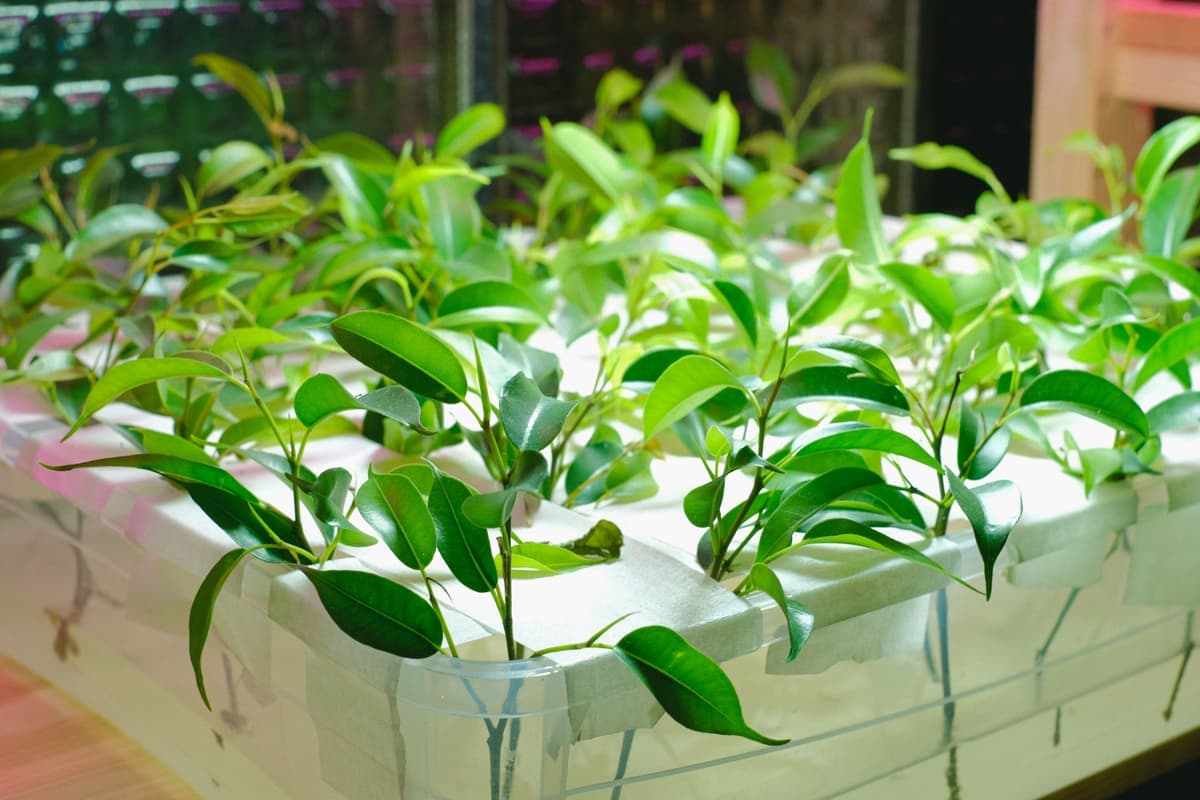
Photographs on this site are licensed stock and are illustrative of the fixture type. We do not own the units we write about.
How this page is funded: the buy links here are Amazon Associates links, and we earn a commission on qualifying purchases at no extra cost to you. We have not been paid to feature anything on this page, we accept no free product, and commission plays no part in the ranking. Full disclosure.
We have not tested these units. Everything below comes from the manufacturer’s own published specifications, or from arithmetic we have shown our working for. Where a figure is not published, we say so instead of estimating one. Read the method.
Quick picks
Efficacy is photons out per joule in. Where a manufacturer publishes it we quote theirs; where they publish photon output and wattage but not efficacy, we divide and label it as ours; where they publish neither, the cell says so rather than guessing. Tap a row for the full write-up.
| # | Product | Best for | Efficacy | Price |
|---|---|---|---|---|
| 1 | 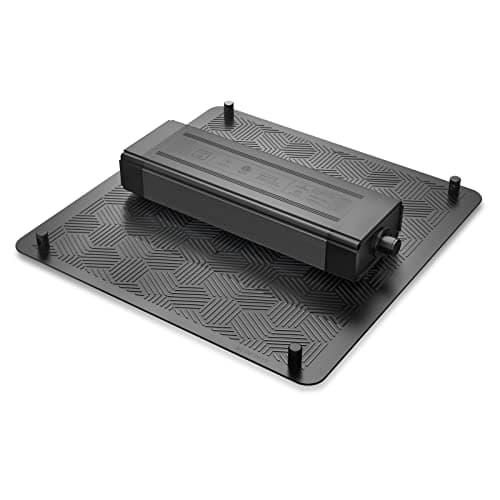 AC Infinity IONBOARD S22 The highest published efficacy of any fixture here at 2.7 umol/J, on Samsung LM301H diodes, with dimming in real 20% steps rather than a vague knob. | Dimming in real steps | 2.7 umol/J | |
| 2 | 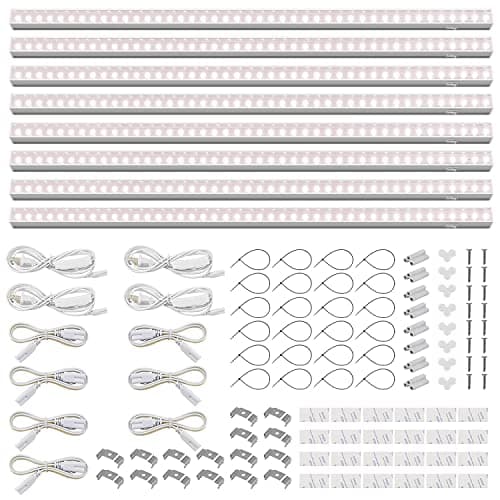 Barrina T5 4ft Grow Light Strips The default seed-starting bar for good reasons — 4 ft long, linkable in series, cheap per foot — and the reason we built a coverage calculator, because Barrina publishes no photon data whatsoever. | Add strips one at a time | Not published | |
| 3 | 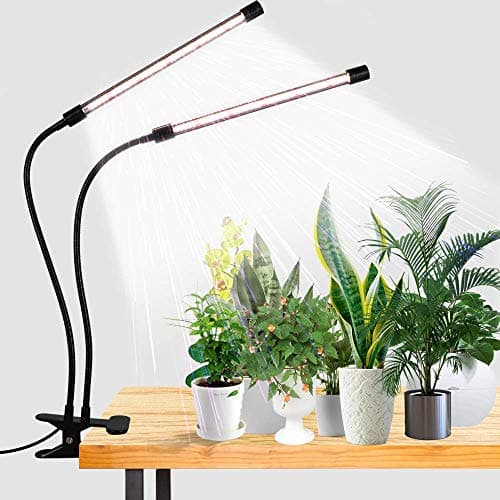 GooingTop Clip Grow Light The cheapest way to put real light on one plant on one desk, and honest about being exactly that — a 10 W clip lamp with a repeating timer. | 10 W and a built-in timer | Not published |
The reasoning
Yes — every load raises a bill. The question worth answering is by how much, and whether it is the thing that caused the change you noticed. Both are arithmetic, and the second one is where most people go wrong.
Your figure, in one line
Every term is knowable. Watts is on the fixture; hours is your timer; your rate is your bill total divided by the kWh it lists. There is no estimation step and no room for a range.
Computed across the fixtures we cover at 14 hours a day and the US residential average of 18.34 cents per kWh. A multi-shelf rack running long hours can reach the $25 to $40 range.
The comparison that settles most worries
Winter is when people add grow lights, and winter is also when heating load appears. Those two facts arrive on the same bill and get conflated constantly.
A 100 W grow light, 14 hours a day, 30 days: 42 kWh = $7.70.
A single 1500 W space heater, 6 hours a day, 30 days: 1500 × 6 × 30 ÷ 1000 = 270 kWh = $49.52.
The heater is 6.4 times the grow light. If your bill rose by $60 in December, the shelf of seedlings accounts for a small fraction of it, and something else accounts for the rest.
How to isolate it properly
If you want to know rather than reason about it, there are two clean approaches:
- Compute it. The formula above is exact for a fixture with a known draw on a timer. There is genuinely no uncertainty to resolve — a light that draws 100 W for 14 hours uses 1.4 kWh, every day, without variation.
- Measure it with a plug-in energy meter. An inexpensive meter between the outlet and the fixture accumulates kWh directly. This is the honest way to catch a fixture whose real draw differs from its rating, and it is the one measurement in this whole category we would actually recommend a home grower buy.
Compare against last year’s bill for the same month rather than against last month — the seasonal shape of a household bill is large and will swamp a grow light in either direction.
Reducing it, in order of effectiveness
| Change | Typical effect | Trade-off |
|---|---|---|
| Run fewer fixtures over a smaller area | Proportional; halving the fixtures halves the cost | You light fewer plants |
| Cut two hours a day | About 14% at a 14-hour baseline | Proportional loss of daily light integral |
| Dim an over-target fixture | Roughly proportional to the dimming | None, if you were above target already |
| Buy on efficacy next time | Up to about half, at the extremes of the range | Only applies at the point of purchase |
| Shift to overnight running | Only with time-of-use pricing | None; plants do not mind which hours |
The first two are the ones that matter and both are free. Note that dimming only saves you anything if you were over your target to begin with — check that in the coverage calculator before you turn anything down.
The honest framing
A grow light is a small, entirely predictable load. It is one of the few things on a household bill you can calculate to the cent before you buy it, which is unusual and worth using. Do the sum, decide whether the number is acceptable, and then stop worrying about it — the uncertainty is generally worth more than the money.
Every pick in full
AC Infinity IONBOARD S22
LED panelDimming in real steps
The highest published efficacy of any fixture here at 2.7 umol/J, on Samsung LM301H diodes, with dimming in real 20% steps rather than a vague knob.
What AC Infinity publishes
- Power draw
- 115 W (source)
- Efficacy
- 2.7 umol/J (source)
- PPFD
- 1098 PPFD (no measurement distance published) (source)
- Stated coverage
- 2 x 2 ft (source)
- Spectrum
- Samsung LM301H, plus 660 nm, 730 nm, 3000 K, 6500 K (source)
- Diodes
- 272 diodes (source)
- Dimming
- Yes, 0-100% in 20% increments (source)
- Dimensions
- 30.0 x 30.0 cm board, 1.1 cm thick (source)
- Rated life
- 50,000 hours (source)
Our arithmetic
- Photon output implied by the published wattage and efficacy: about 311 umol/s
115 W x 2.7 umol/J = 310.5 umol/s. AC Infinity does not print PPF directly, so this is our arithmetic from two figures it does print.
What AC Infinity does not publish
- PPF in umol/s — only efficacy is given, so photon output has to be derived
- The measurement distance for the 1098 PPFD figure, without which the number cannot be compared to anything
Who should skip it
Skip it if you want to place it by the numbers. AC Infinity prints 1098 PPFD with no measurement distance attached, which makes that figure impossible to use or compare.
Barrina T5 4ft Grow Light Strips
LED barAdd strips one at a time
The default seed-starting bar for good reasons — 4 ft long, linkable in series, cheap per foot — and the reason we built a coverage calculator, because Barrina publishes no photon data whatsoever.
What Barrina publishes
- Power draw
- 20 W per fixture; an 8-pack draws 160 W (source)
- Spectrum
- 5000 K (source)
- Dimming
- No; on/off switch per fixture, linkable up to 8 in series (source)
- Dimensions
- 4 ft strip, 120-degree beam angle, 120 V AC (source)
What Barrina does not publish
- PPF in umol/s — for any strip in the range
- PPFD at any stated distance
- Photon efficacy in umol/J
- LED count per strip, and rated lifespan
Who should skip it
Skip it if you need to know what you are getting before it arrives. There is no published PPF, no PPFD and no efficacy figure, so nothing about its output can be verified in advance.
GooingTop Clip Grow Light
Clip light10 W and a built-in timer
The cheapest way to put real light on one plant on one desk, and honest about being exactly that — a 10 W clip lamp with a repeating timer.
What GooingTop publishes
- Power draw
- About 10 W (source)
- Spectrum
- 6000 K, 74 white plus 10 red LEDs, CRI 95 (source)
- Dimming
- Five brightness levels; repeating 4 / 8 / 12 hour timer (source)
What GooingTop does not publish
- PPF in umol/s
- PPFD at any distance
- Photon efficacy in umol/J
- The manufacturer publishes no spec sheet at all; the figures above come from the retail listing
Who should skip it
Skip it if the plant is more than about a foot across, or if you want any number at all before you buy — nobody publishes photon data for this fixture.
Questions people actually ask
+How much will a grow light add to my electric bill?
+My bill jumped after I set up grow lights. Was it them?
+Is it cheaper to run grow lights at night?
+How can I measure exactly what my lights use?
Sources
- US Energy Information Administration — Electric Power Monthly, Table 5.3 (US residential average, June 2026) — consulted September 2, 2026
- Mars Hydro — TS 1000 published specification table — consulted September 2, 2026
- Spider Farmer — SF1000 published specification table — consulted September 2, 2026
- AC Infinity — IONBOARD S22 published specifications — consulted September 2, 2026
Read next
Running Cost
How Much Electricity Do Grow Lights Use?
Monthly kWh and cost per fixture, and how that compares with household appliances.
Top pick
Barrina T5 4ft Grow Light Strips
Running Cost
Grow Light Electricity Cost Calculator
Watts, hours and your own electricity rate, turned into monthly and seasonal cost.
Top pick
AC Infinity IONBOARD S22
Running Cost
The Cost to Run a Grow Light All Winter
Five setups priced for a full winter season, from a clip light to a three-shelf rack.
Top pick
Barrina T5 4ft Grow Light Strips
Running Cost
The Most Efficient Grow Lights by µmol/J
Every fixture we cover ranked on published photon efficacy, with derivations shown.
Where this sits
This page belongs to Running Cost and Efficiency. Every figure on it is either quoted from a named published source or derived in view — the full method is on our methodology page, and how the site is funded is on the affiliate disclosure.