ViparSpectra P1000
Genuinely useful hardware wrapped in a product page that publishes no photon data at all. Here is what that does and does not rule out.
By Scooter M. — An enthusiast who's genuinely into this. I read the manuals, compile the published specs, and do the math. No lab coat.
Published · How we pick
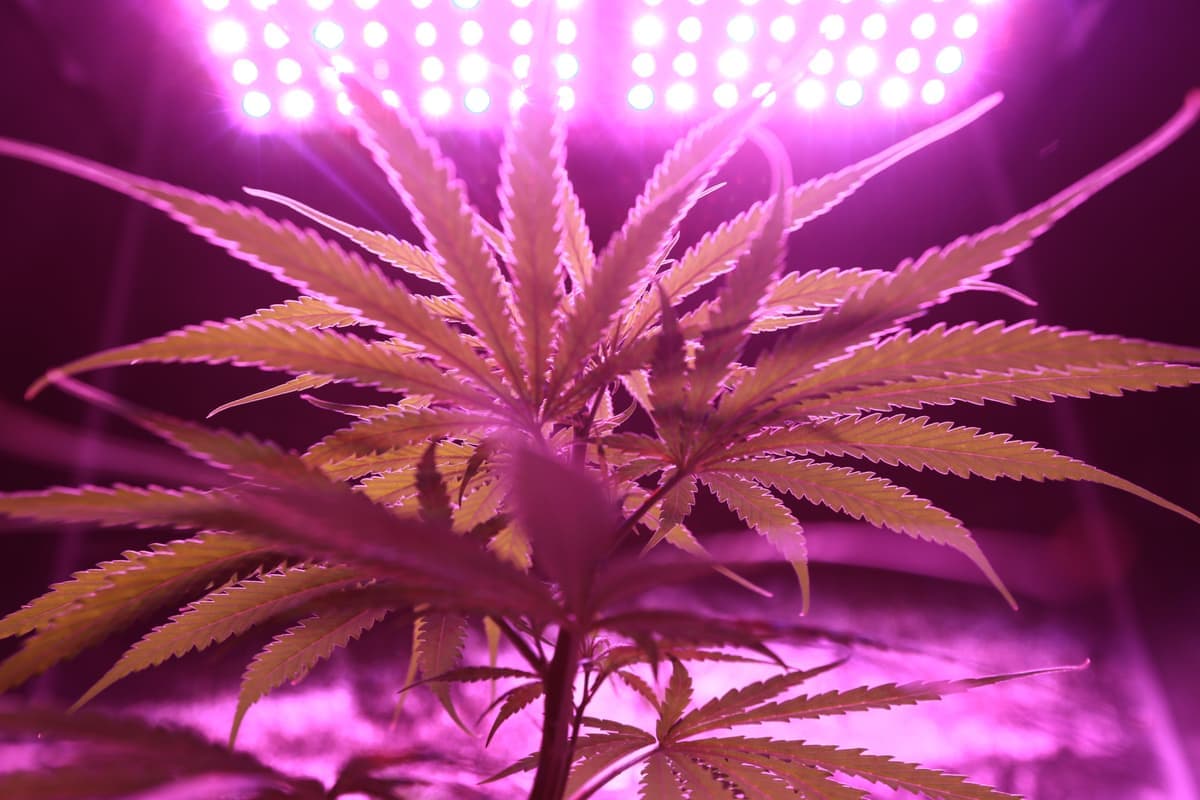
Photographs on this site are licensed stock and are illustrative of the fixture type. We do not own the units we write about.
How this page is funded: the buy links here are Amazon Associates links, and we earn a commission on qualifying purchases at no extra cost to you. We have not been paid to feature anything on this page, we accept no free product, and commission plays no part in the ranking. Full disclosure.
We have not tested these units. Everything below comes from the manufacturer’s own published specifications, or from arithmetic we have shown our working for. Where a figure is not published, we say so instead of estimating one. Read the method.
The reasoning
We have not tested this fixture. In this case that limitation bites harder than usual, because ViparSpectra has not published the figures we would normally compute from either.
What is published
100 W, described as comparable to a 250 W HPS. A 2.5 × 2.5 ft vegetative footprint at 16 inches and 2 × 2 ft flowering at 10 inches. A spectrum of 660 nm red, 3000 K and 5000 K white, 730 nm far red. Dimmable, and daisy-chainable up to 20 fixtures.
Two of those are genuinely useful details that other brands omit: a coverage claim with the distance it applies at, and a specific daisy-chain limit. The distance-qualified footprint in particular is better disclosure than most of this category manages.
What is not published
No PPF, no PPFD, no efficacy. Also no fixture dimensions and no rated lifespan. There is nothing to divide, so nothing about its light output can be computed before purchase.
This is not a small gap. Every sizing calculation on this site starts from a photon figure. Without one, the P1000 cannot be entered into the coverage calculator, cannot be compared with the SF1000 or the TS 1000 on output, and cannot be checked for whether its coverage claim is plausible.
What we can and cannot infer
The 100 W draw is a real electrical figure. If the P1000 achieves an efficacy typical of the current 100 W panel class — the fixtures we cover publish 2.3 to 2.75 µmol/J — its output would fall somewhere around 230 to 275 µmol/s.
We are not publishing that as its specification. It is a range derived from what comparable fixtures claim, not from anything ViparSpectra has said, and if their diodes or driver differ the real figure could sit outside it.
We include it only to make the point that the absence of data is not evidence of poor performance — it is an absence of evidence, and those are different things.
The HPS equivalence claim
“Comparable to a 250 W HPS” is a marketing comparison with no photon figure on either side of it, so it cannot be verified from public data. The direction is plausible — modern LED efficacy is high and HPS is older technology — but the specific ratio is not something we can stand behind. We take that apart at length in LED versus HPS running cost.
The hardware, which is the actual case for it
| Feature | Why it matters |
|---|---|
| Daisy chain to 20 fixtures | A multi-shelf rack becomes one plug and one timer instead of six |
| No fan | Silence, and no moving part to fail; important in a room you occupy |
| Coverage stated with distance | 2.5 × 2.5 ft at 16 inches is a usable claim; a bare footprint is not |
| Dimmable | Lets you match a fixture to a target rather than raising it and losing coverage |
Who should buy it
Someone building a multi-shelf setup who values the daisy chain and the silence, and who is comfortable buying on form factor and reputation rather than on published output. That is a legitimate position — it is exactly the position we take on Barrina strips for shelves.
If you want to compute what you are getting before you buy it, the SF1000 and the TS 1000 publish enough to let you, and the P1000 does not. Head to head, that comparison is in Mars Hydro versus ViparSpectra.
The fixture in full
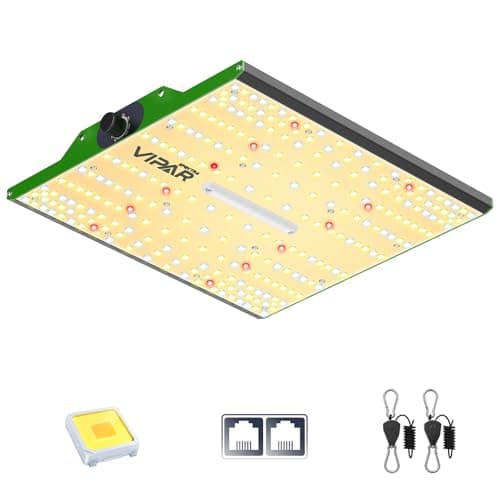
ViparSpectra P1000
LED panelGenuinely useful hardware — dimmer, daisy chain to 20 units, no fan — wrapped in a product page that publishes no photon data at all.
What ViparSpectra publishes
- Power draw
- 100 W (described as comparable to a 250 W HPS) (source)
- Stated coverage
- 2.5 x 2.5 ft vegetative at 16 inches, 2 x 2 ft flowering at 10 inches (source)
- Spectrum
- 660 nm red, 3000 K and 5000 K white, 730 nm far red (source)
- Dimming
- Yes, plus daisy chain up to 20 fixtures (source)
What ViparSpectra does not publish
- PPF in umol/s
- Photon efficacy in umol/J
- PPFD at any stated distance
- Fixture dimensions and rated lifespan
Who should skip it
Skip it if you want to compute coverage before you buy. With no published PPF and no published efficacy there is nothing to compute with, and we will not invent a figure to fill the gap.
Questions people actually ask
+What is the ViparSpectra P1000's PPF?
+Is the P1000 really equal to a 250W HPS?
+Is the P1000 a bad grow light?
+How much does the P1000 cost to run?
Sources
- ViparSpectra — P1000 product page — consulted September 2, 2026
- Spider Farmer — SF1000 published specification table — consulted September 2, 2026
- Mars Hydro — TS 1000 published specification table — consulted September 2, 2026
- AC Infinity — IONBOARD S22 published specifications — consulted September 2, 2026
- US Energy Information Administration — Electric Power Monthly, Table 5.3 (US residential average, June 2026) — consulted September 2, 2026
Read next

Reviews
Mars Hydro TS 1000 vs ViparSpectra P1000
Two panels in the same segment: one publishes photon data, the other publishes none.
Top pick
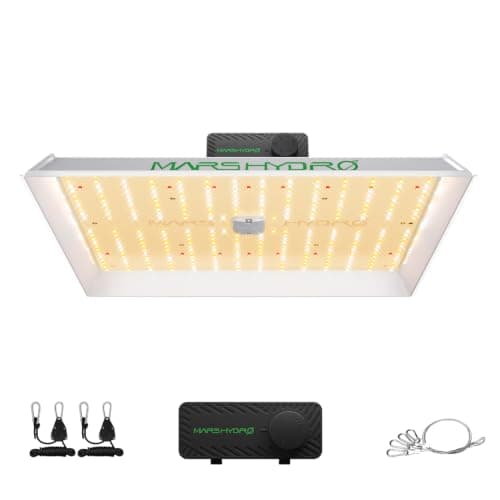
Mars Hydro TS 1000
Reviews
The Best LED Grow Light Panels
The 100 W panel class compared on published output, efficacy and internal consistency.
Top pick
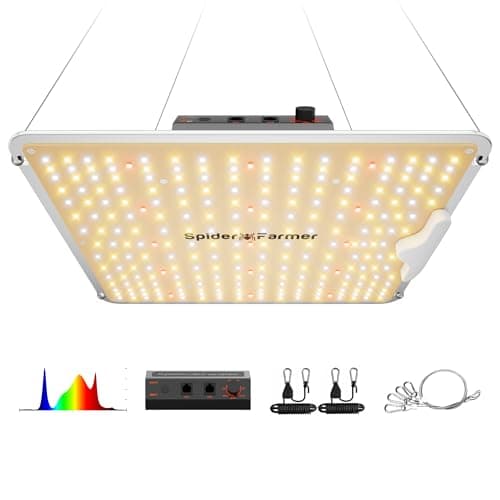
Spider Farmer SF1000
Spectrum & PPFD
What “Full Spectrum” Actually Means
The phrase is unregulated and carries no threshold. These are the numbers that replace it.
Top pick
Spider Farmer SF1000
Running Cost
LED vs HPS Running Cost
What an LED panel actually saves against the HPS lamp it claims to replace.
Top pick
Mars Hydro TS 1000
Where this sits
This page belongs to Fixture Reviews and Roundups. Every figure on it is either quoted from a named published source or derived in view — the full method is on our methodology page, and how the site is funded is on the affiliate disclosure.